
 More often than not, I find myself birding in the middle of winter….and not just occasionally. My husband and I do quite a bit of birding in the winter months. It seems to perplex our friends and family sometimes that we would pack the car and take to the road heading for the Atlantic Coast beaches in the middle of winter. So I took a little time and have compiled a list of ten good reasons we bird in the winter time. Of course, all good “Top Ten” lists start at the bottom with number 10.
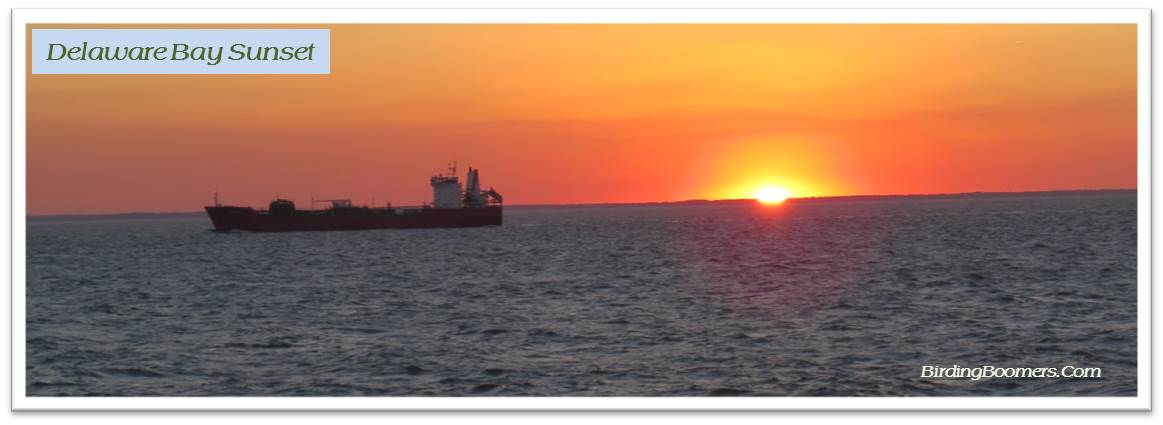
  10: You don’t need reservations on the Cape May Lewis Ferry. Once you are on board, you do not have trouble finding a good seat in the observation salon. If you want to check out the birds at Cape May, you can either take a nice relaxing ride on the ferry or you can make the three hour plus drive around the Delaware Bay by car. And you can look for sea birds and migratory birds while making the ferry crossing. A few years back, we had wonderful views of Northern Gannets as they crossed the Bay on their trip south. This year, we took a later ferry and missed the birds but got wonderful views of the sun setting on the Bay. On the other hand, the car trip around the Delaware Bay is not so bad either. There are quite a few birding hotspots along the way so you really cannot lose no matter which way you get to Cape May.
  9: Along the same lines, you can usually find the “Vacancy” light on at hotels along the way. Well, scratch that, “hotels” and make that “hotel” – singular. If you stay on a main road like, say, Interstate 95 or Delaware 13, you can usually find a Holiday Inn Express or a Sleep Inn, but once you get off the main roads, you begin to have some problems finding hotels that are open all year round. And, once you get to the shore, you are even further from a good night’s sleep if you did not plan in advance and know where you’re going to stay for the night. One year, we found ourselves in a hotel where we were the only occupants in one large spooky section of the hotel. I could not sleep a wink because I kept waiting for Jack Nicholson to come creeping down the hallway saying, “I’m here!” just like in the movie, The Shining1. As you can imagine, I was quite ready to move on the next morning. More recently, we rolled into Cape May just about an hour after dark on a cold damp evening to find that the town was pretty much closed for the season, as expected. I had heard that a hotel called La Mer was open through Christmas so we called ahead and, sure enough, they had a lovely waterfront room available at a very reasonable price. We had no idea what we’d find when we arrived but it turned out to be a lovely hotel. And, much to my relief, there were other people staying there. We had a beautiful ocean view from our balcony although it was way too cold to spend much time sitting out admiring that view. Likewise, we found a great oceanfront room at the Holiday Inn Express in Ocean City, Maryland – a suite, in fact, at a price that was unbelievable.
 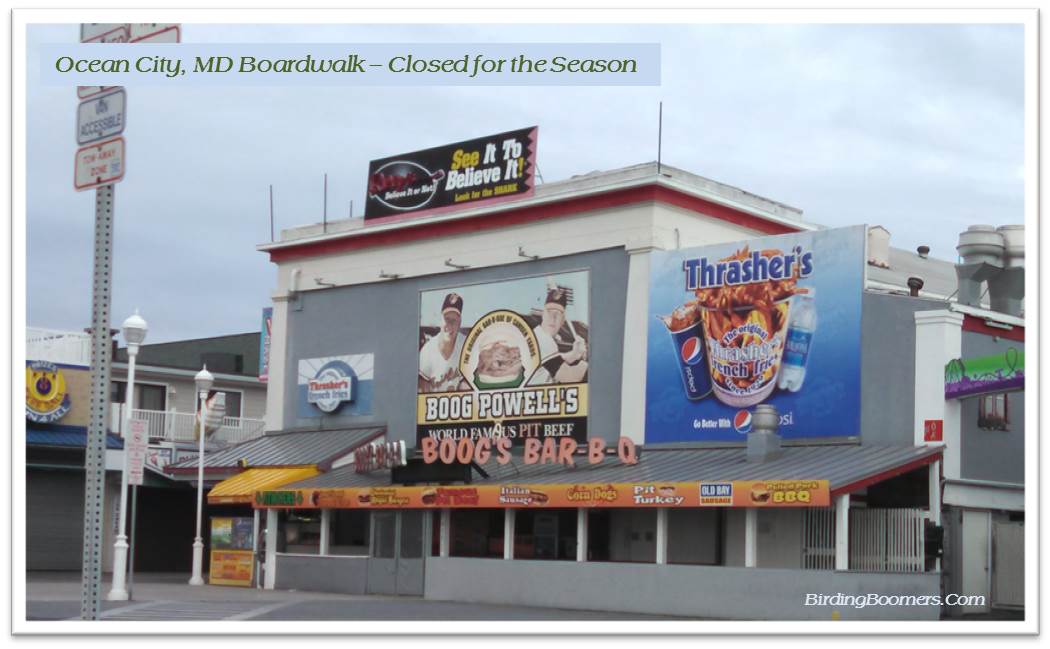 8: The beaches are empty: Of course, if you take a blanket to the beach, you have to wrap up in it rather than sit on it. There are very few people enjoying the beaches in the winter time. There are fishermen strewn along the beaches but, for the most part, the beaches are deserted. This goes for parks and refuges and preserves too. Places that would be packed with people in the good ole summertime are beautifully empty in winter. Well, empty except for the birds and other birders and nature enthusiasts. I will be the first to admit that it is way too cold to go swimming unless you’re a bird, of course, and most of the birds on the beach are gulls but, hey, give it a go. It is a great time to work on your gull identification skills. And, you never know when something rare will fly in from the sea and make you trip all the more memorable. On the down side, I do have to say I am not crazy about all the hunters in the National Wildlife Refuges (NWR). I have nothing against hunters in general. I grew up down in north Georgia and I am no stranger to eating a little venison. Hunters who kill to feed the family are okay by me…..although by the time you factor in the rifle, the bullets, the truck, and maybe the dogs, the price for a pound of meat goes up considerably. But, continuing with my thoughts on hunting, there is just something “not quite right” about hunting on a wildlife refuge. The whole name of the place sounds like a place where animals can be safe from predators with rifles and shotguns. And, yes, I know about deer population growth and management of the herds…and I know that hunters buy most of the duck stamps and hunting licenses that help financially support the refuges and preserves….but somehow knowing all that doesn’t offset the emotional mindset that people should not be killing animals in a “refuge” or “preserve”.
  But, let us pause for a “station identification and a word from our sponsor”. Let’s talk a moment about duck stamps. Duck stamps are issued by US Fish & Wildlife to hunters for a small fee ($15). A hunter will add the “stamp” to his/her license to show they are allowed to hunt waterfowl – ducks and geese mainly. I suppose a hunter could shoot a Coot but am not really sure if the license only covers certain waterfowl or even if anyone would be interested in killing and eating a Coot. But then again, I have heard of hunters killing and eating Bobolinks and Sparrows even though I cannot fathom why someone would go to so much effort to kill such a little bitty bite of food…..really, how many sparrows would you need to kill for one meal? (Guess it depends on how hungry you are.) But, back to the duck stamps which are bought by hunters and, in the past, that meant it was the hunters who were providing a revenue stream for the refuges. According to the USFWS website, ninety-eight cents out of every dollar goes to the purchase or lease of wetland habitat. In recent years, the birding community has been identified as a new major user of the refuges so it stands to reason that birders could and should contribute to the upkeep of the refuges. This also goes for any other wildlife enthusiast or photographer who walks, hikes, kayaks, canoes, or otherwise visits a refuge for any reason. Buying a duck stamp shows your support for the refuges and also allows you to get into the parks free of charge for a year. Duck stamps are very economical – only $15 per year – and, since some refuges charge about $3-5 per visit, you recoup your money in as few as 5 visits. So, the American Birding Association (ABA) has started a program for birders to purchase the duck stamps through their website (here). This will allow the ABA to keep a record of how many birders are buying the duck stamp on an annual basis and to approximate how much birders are contributing to the refuge when compared to hunters. Today hunters are the primary users but, perhaps, someday, birders will constitute the primary user of refuges and, as a group, have more of a say in how the refuge is used by the public in the future. Of course, you can always buy the duck stamps at wildlife refuges or directly from USFWS (here).
  7: Holidays, like Veteran’s Day, are “free” days at US National Parks. Likewise, tolls on some bridges on the coast are free during winter months. No downside to this practice. We visited the Assateague Island National Seashore (the upper part in Maryland) on Veteran’s Day and the parking lots were empty. Again, a few fishermen on the beaches and we noted a campground that had only three campers. I do question the sanity of people who camp in winter but I am told that it is absolutely an amazing time for camping and getting out into the woods and communing with nature. I can’t see it but I will admit having a whole campground to yourself would be pretty nice. And, since some people question my sanity for being out there birding, I suppose I cannot point fingers at crazy people camping.
 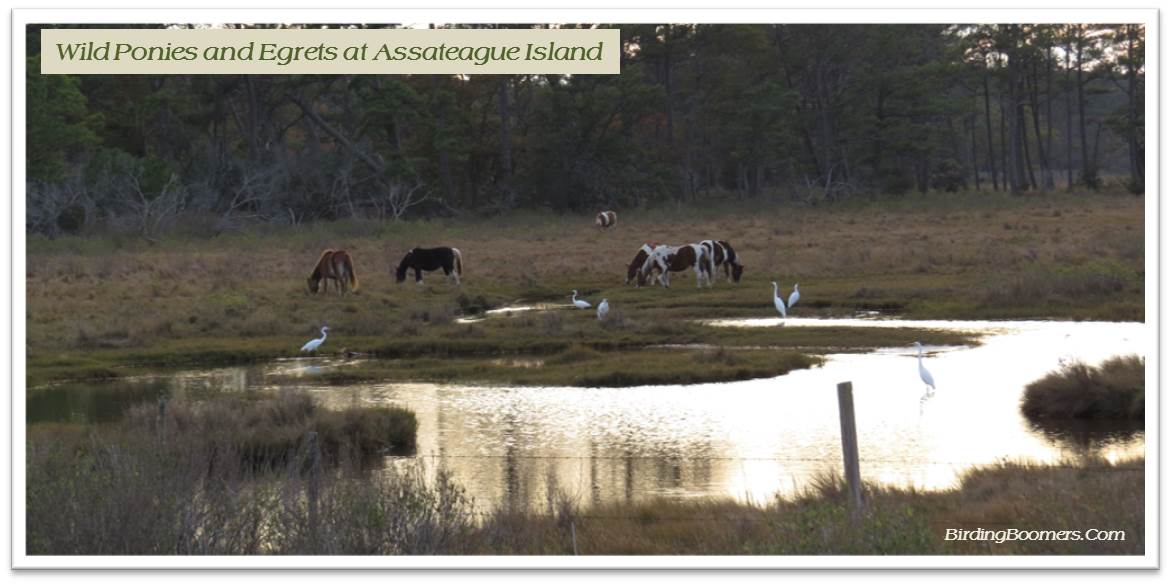 6: You can find wonderful new birding spots along the way. Following through on the “no traffic” idea, you cannot beat just meandering around through the parks and neighborhoods looking for places where migratory birds might be congregating. You can also use eBird.org on your smartphone to find local hotspots to check out on your way. Of course, there is a problem with service out on those back roads and beaches. You get no bars – no 3GL or 4GL or no tapping into the WiFi at some resort or hotel or pizza place – nada. It helps to map out a few options the night before using the hotel’s WiFi before heading out roaming in the morning. I did find a wonderful and FREE asset in Cape May. The New Jersey Birding Trail pamphlets are great and, as noted, are absolutely free. We picked up a couple while at the Cape May Bird Observatory (CMBO) and used the trail map for the Cape May County as we drove up the shore from Cape May to Atlantic City. We followed the map from one hotspot to the next and it became a bit of an adventure trying to find some of the points on the map. If you are going to head up to New Jersey to do a little birding, check the NJ Birding & Wildlife Trail website and download or order the birding trail maps. We have had good luck with the Virginia and North Carolina birding trail guides also but the VA and NC are in book form and are not free. They are nicer, relatively cheap, can be ordered from Amazon.Com, and are worth the money. Then again, free is always better.
  5: You can always find a pizza place near the shore in New Jersey…and they are not very crowded so you do not have to wait in line for your pizza or Stromboli or Calzone. In fact, pizza places were the ONLY places we found that were open in winter as we drove up the Jersey shore until we got closer to Atlantic City. Now, of course, there were other places open in Cape May and in Ocean City, Maryland but not many other places. You can find a pancake house or two open here and there for breakfast – well, one at least was open. I saw something I had never seen before or ever expected to see near Avalon, NJ and it wasn’t a life bird. I saw a McDonald’s that was boarded up and closed down for the season….said right there on the sign that it was closed for the season. I didn’t think McDonald’s ever closed down. I suppose there are a few that actually go out of business but I think that might even be rare….how can you go broke when you sell a bajillion hamburgers a year? On the other hand, to my delight since I am a junk food junkie, I found a Burger King that sold whoppers for breakfast along with the usual breakfast fare. I also found a Burger King with Elvis that I also didn’t expect to see in New Jersey.
  Just to make this a for-real birding blog, I have to note that I read an article recently on how smart crows are and on product branding. The article said that studies show that crows recognize the McDonald’s golden arches logo and are big fans of good ole McDonald’s French fries…along with the rest of us. It seems that, if you offer crows (the ones in the study at least) fries in two bags – one plain brown bag and one McDonald’s bag – the crows will go for the McDonald’s bag every time.

 4: You meet interesting other birders who are more willing to stop and chat a spell because no one else is about and it can get pretty lonely on those empty beaches and marshlands. And, sometimes when you are driving a nature loop like Beach Road down at Assateague Island National Seashore (the lower part in Virginia) near Chincoteague Island, you keep meeting the same birders over and over. There were two main groups birding the road the last time we were there. We were visiting friends who have a vacation home on Chincoteague Island (CI) so that’s one group and then there was a group of retired engineers from Canada. We kept meeting up at the areas along the road where the birds were congregating and chatting about the birds we were seeing. We spotted and photographed Black Crowned Night Herons, Great Egrets, Great Blue Herons, White Ibises, and learned a little about each other along the way….except their names (the guys…not the birds). How could we talk about birding and where have you been so far and where are you going next and is that a Snowy Egret or a juvenile Little Blue Heron and never even share the most basic information about ourselves…..like our names? We got that they were retired and engineers and from Canada although one was originally from Scotland and that they were birding up and down the east coast and might be headed to Bombay Hook Refuge next and they were using a well-worn copy of Sibley’s but we didn’t get their names. Just doesn’t seem possible but I suppose their names just wasn’t as important at the time as figuring out if that juvenile heron (or maybe egret) over across the canal in the pine tree had black legs or not.
  3: There are no lines at the bathrooms in the national and state parks. Now, you might be asking yourself why is this little item is a number 3 whereas other items such as lodging and food are lower on the list. Then again, if you’ve ever been out hiking in the middle of nowhere and realized that you need to rush to get back to the trailhead to try to find a bathroom only to find either a very smelly port-a-potty (and, yes, they do not smell as bad in the winter) or see a bus pulled up with a whole procession of school kids lined up at the one bathroom at the nature center, then you will totally understand why it is so nice to have a whole bathroom by yourself. Over the years and regardless of the weather, I have learned that hiking out is a whole lots quicker than hiking in when nature calls….the time it takes to walk a mile is totally relative based on two variables — how cold you are at the moment and how long it has been since you’ve eaten. But I do have to say that there is no cold that is colder than the cold of the icy breeze arising from the composting toilet at a state park when it is less than 30 degrees Fahrenheit outside…..I’m just saying that it is a whole mess of cold even if you didn’t have to wait in line to get there.
  2: Beach vacations in the winter keep your non-birding friends confused and perplexed as to what the heck is wrong with you since no one is crazy enough to go to the beach in winter except crazy fishermen and even crazier birders…and maybe a few crazy campers and photographers. Note that the emphasis is on crazy from the perspective of our sun-loving friends. But sometimes keeping your friends guessing is reason enough to do something.
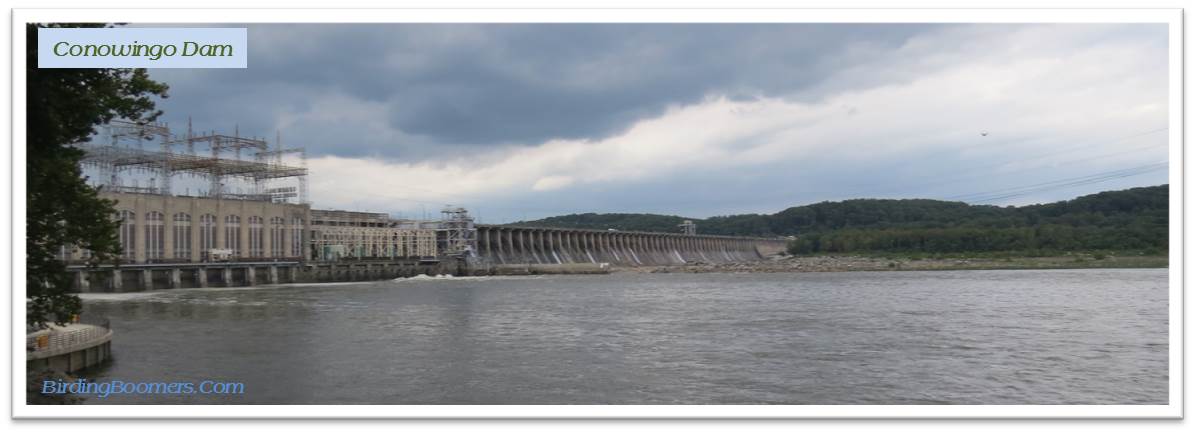
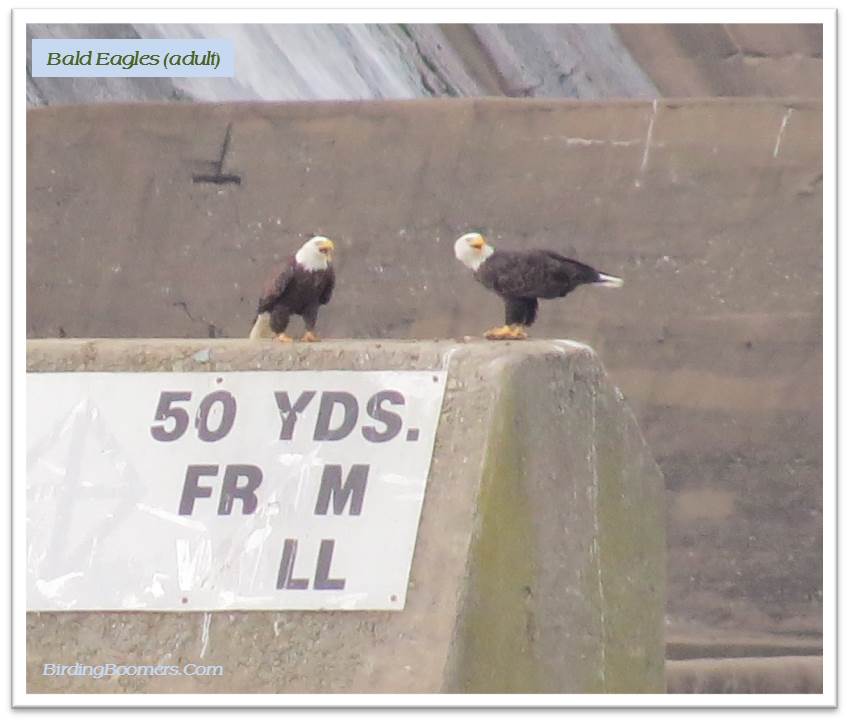
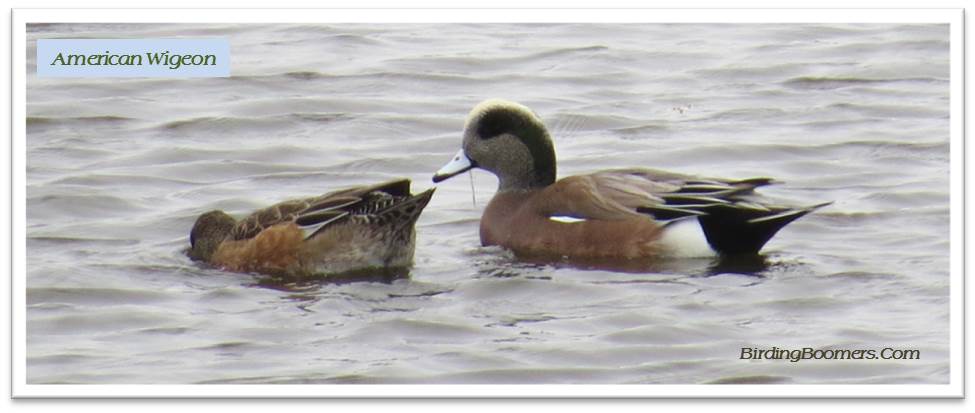 And, finally (drumroll please), the number 1 reason to go birding in the winter is that it is where and when the birds are….with emphasis on migratory waterfowl – ducks, geese, swans, coots, wigeons, pintails, grebes, etc., not to mention the hawks and eagles that prey upon said waterfowl. We make several trips in the winter to the shores of Delaware Bay, to Assateague Island in Virginia, to Blackwater Refuge and Conowingo Dam in Maryland, to Lake Mattamuskeet in North Carolina, and to numerous other hotspots along the east coast where migratory birds congregate in the wintertime. There is absolutely no experience in life that can match the sight of thousands of Snow Geese circling the marshes and wetlands or the sound of an equal number of Tundra Swans cooing and calling as they come to rest on the lakes and wetlands in the evenings. We have driven miles out of our way following flocks of Red-Winged Blackbirds moving from one farmer’s field to another. And like everyone else in this part of the country last season (2013-2014), we took several road trips to catch a glimpse of a Snowy Owl during their irruption last year. A bird lover will travel down miles of bad road to see a rare bird…no doubt about it. If you like birds at all, you will find yourself outside on the coldest of days bundled up like a snowman, stomping your feet walking around in little circles with your binoculars clinched in those cold-numbed hands hoping to get just another good look at that special bird. It is so much warmer when we go birding in Florida but we still bird up here in winter because, quite simply, the birds are here.
Places we visited, birded, or otherwise checked out in November 2014 (moving south to north):
- Chincoteague National Wildlife Refuge (Virginia)
- Assateague Island National Seashore (Virginia & Maryland)
- Causeway between Chincoteague and Wallops Islands (Virginia)
- Pocomoke River State Park (Maryland)
- Assateague State Park (Maryland)
- Ocean City (Maryland)
- Delaware Seashore State Park (Delaware)
- Prime Hook National Wildlife Refuge (Delaware)
- Broadkill Beach Road (Delaware)
- Cape May Lewes Ferry (Delaware/New Jersey)
- Cape May Point State Park (Cape May Diamonds Trail — New Jersey)
- Sunset Beach (Cape May Diamonds Trail — New Jersey)
- Cape May Bird Observatory (Cape May Diamonds Trail — New Jersey)
- Cape May National Wildlife Refuge Two Mile Beach Unit (Cape May Barrier Islands Trail — New Jersey)
- Hereford Inlet Lighthouse and Gardens (Cape May Barrier Islands Trail — New Jersey)
- Nummy Island (Cape May Barrier Islands Trail — New Jersey)
- Stone Harbor Point (Cape May Barrier Islands Trail — New Jersey)
- The Wetlands Institute (Cape May Barrier Islands Trail — New Jersey)
- Avalon Seawatch (Cape May Barrier Islands Trail — New Jersey)
- Townsend’s Inlet (New Jersey) Lake Lenape (Great Egg Harbor River Romp Trail — New Jersey)
- Michael Debbie Park (Blueberry Heaven Trail — New Jersey)
- Hawks Bridge Road (New Jersey)
- Bombay National Wildlife Refuge (Delaware) DuPont Nature Center at Mispillion (Delaware)
1. ‘The Shining”; Stephen King; January 28, 1977; US; Doubleday Publishers (Movie: Producer – Stanley Kubrick; 1980; Starring – Jack Nicholson and Shelly Duval)





 Birding Boomers