
 First there are gulls – there are always gulls. Of course, if you are near the water anywhere in the world, you will see gulls.
 When you are on a river boat cruise, you spend a good portion of your time either on the boat or on a walking tour of the towns where you are docked for the day. And I found out that you do not spend as much time birding as you might have planned to do back months ago when you were planning the trip. Prior to the trip, I had ordered guides for the area from Amazon.com® – actually I ordered three guides. Now that might seem like it is at least one guide too many but I have never been known to walk away from a good deal. I found two great deals on used guides at Amazon….when you can get a used guide for less than $5, then you pretty much just have to buy it just in case you might need it…and think how much money I saved by buying three discounted guides rather than one at full-price (Joannie logic for sure). One turned out to be too technical with not enough color photos but the other two turned out to be just right – right size, right number of photos, right amount of technical information for a more casual birder like me. So those two went into the suitcase and were carried on the trip with me.*
I also went online to birdingpal.org and tried to make contact with birders in Amsterdam. We had a free day before the ship sailed and I was looking for a little help in doing just a little birding and asked for suggestions of places to go to in/around Amsterdam. I sent several messages but, alas, got no responses. So my first experience with birdingpal turned out to be… not so good. But, knowing that even common birds in Europe would be new to my husband and me, we decided to wing it (pun intended)….when it comes to birds, you mostly have to wing it anyway and timing is everything.
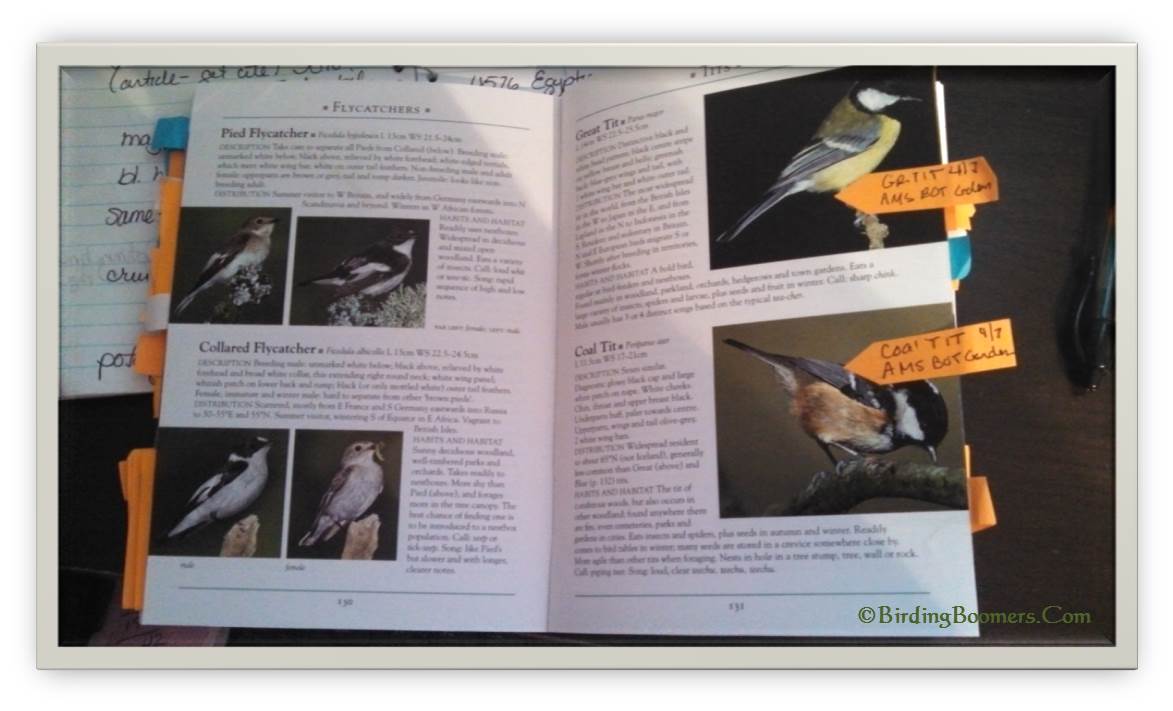 Before I move on, one little travel hint. I have a little trick I use to keep track of the birds I see while on a trip. I tuck little Post-It® flags in with my guidebook and when I see a bird, I add a flag to the photo and description in the guidebook. I add the date and location of the sighting. Later when I am back at the hotel room or, in this case, the boat, I can go through the guidebook and note down all the birds I have seen that day and check descriptions against the photos I might have managed to take during the outing. Ultimately, when I am back home again, I can flip through the guidebook and prepare my trip bird listing and I remove all the little flags from the book before stowing it away until next time. Now, I know that more serious birders would have already uploaded their daily lists to eBird and may not need this hint but it is a little trick that I have found helpful for me when traveling.
But getting back to gulls, we didn’t see as many as I thought we would see. Or at least, I didn’t see as many different kinds of gulls or other seabirds as I thought I would see. For the most part, there were Black Headed Gulls (Lorus ridibundus) which were new to me and therefore okay by me. I am more used to Laughing Gulls (Leucophaeus atricilla) with black heads back on the east coast in the States so getting to know another gull with a black head was just fine. I did see quite a few Herring Gulls (Larus argentatus) which were very familiar to me and a few Greater Black-Backed Gulls (Larus ridibundus) but there just didn’t seem to be as many other kinds as I would have expected when taking a river cruise.
 There were tons of pigeons and, being pigeons, came in all shapes and sizes (mostly big) and were absolutely everywhere. Every tour guide we met seemed to have a complaint about the pigeons. Among them were Wood Pigeons (Columba palumbus) and Collared Doves (Streptopelia decaocto), both new to me. Although people complained a bit about the number of pigeons in the cities, I just tried to enjoy the view and pick out the ones that were different from the rest and were new to me.
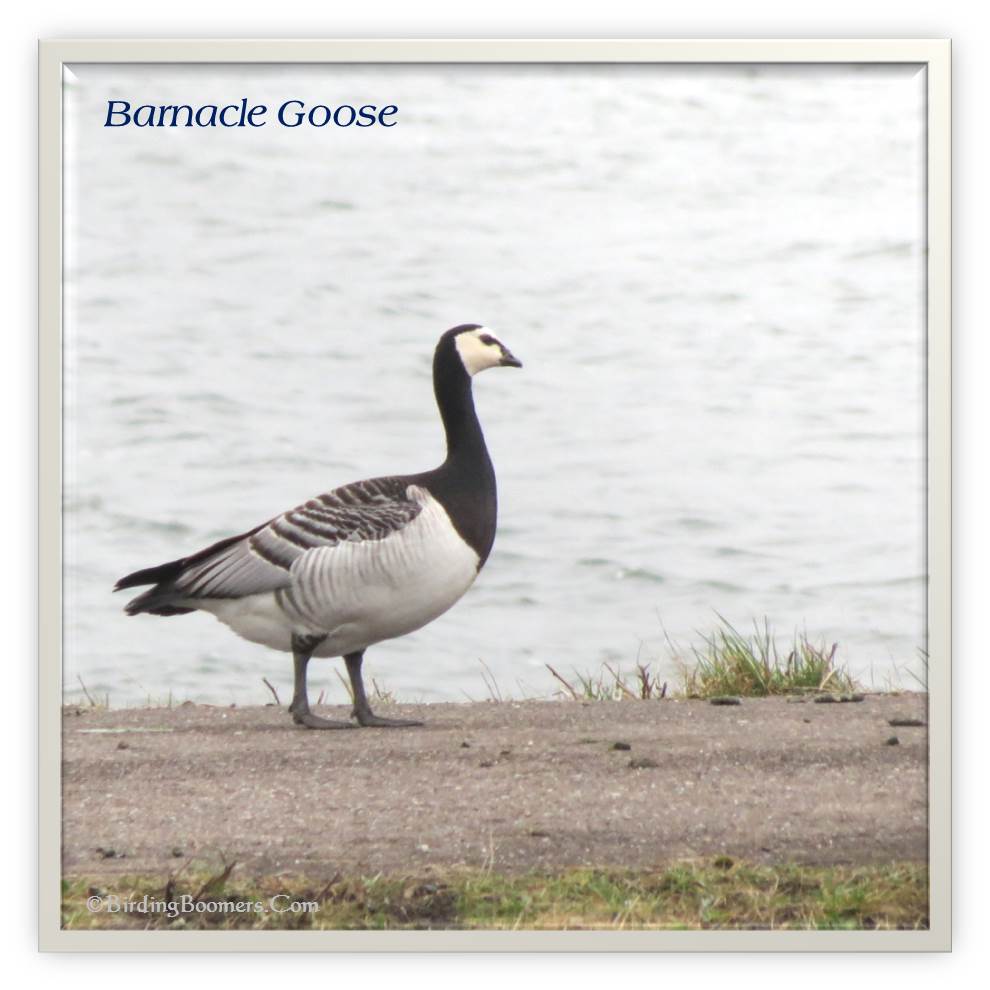 Birding while cruising turned out to be rather difficult considering the boat is moving down the middle of the rivers, channels, waterways which was usually some distance from the shorelines where most of the birds were hanging out. Add the 6 knot cruising speed of the boat…which sounds very slow until you try to focus on a bird on the shore before it is long gone…and you have a challenge. But we did okay in spotting birds notwithstanding the difficulties. We got distant views of a good sized flock of Barnacle Geese (Branta leucopsis) and closer looks at several Oystercatchers (Haematopus ostralegus) that were spotted on a grassy area near a lock along with numerous other Mallards (Anas platyrhynchos), Coots (Fulica atra), and other ducks.
 Now, the Mallards are pretty much the same as those we have back home in Maryland although there seemed to be quite a few hybrids. This is not unusual since Mallards are known to breed with American Black Ducks (Anas rubripes) but the Mallards here seem to have intermixed with domestic ducks so we saw many brown splotched Mallards. It reminded me of the pigeons with all the variation on basic colors possible.
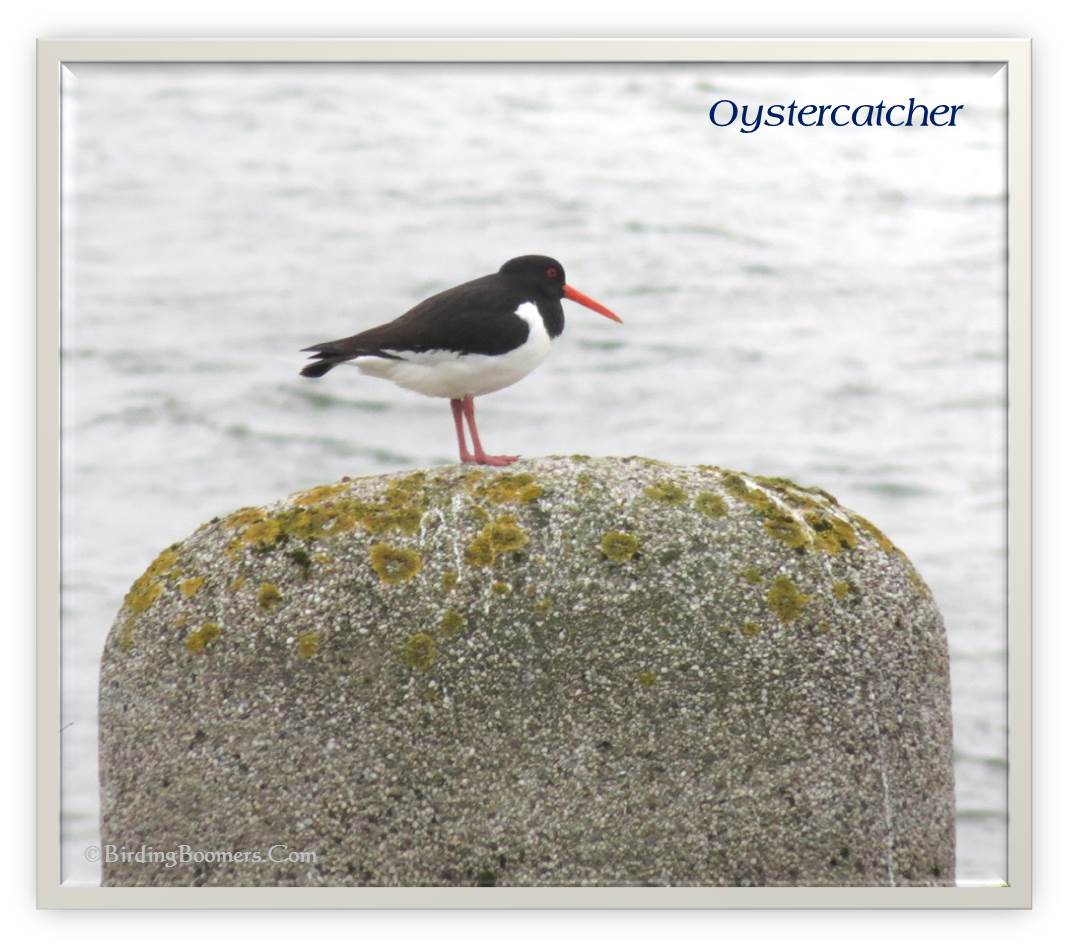 On the other hand, the Coots and Oystercatchers were very similar to their American counterparts but were different enough that you can tell they are an old world species.
Speaking of Coots, don’t you love the blue feet on that bird? I cannot remember ever seeing a Coot out of water, so was very surprised at the size and color of their feet.

It was the same with the Grey Heron (Ardea cinerea) which looks remarkably like the Great Bearded Heron (Ardea herodias) in America but is decidedly different when photos of the two birds are viewed side by side.
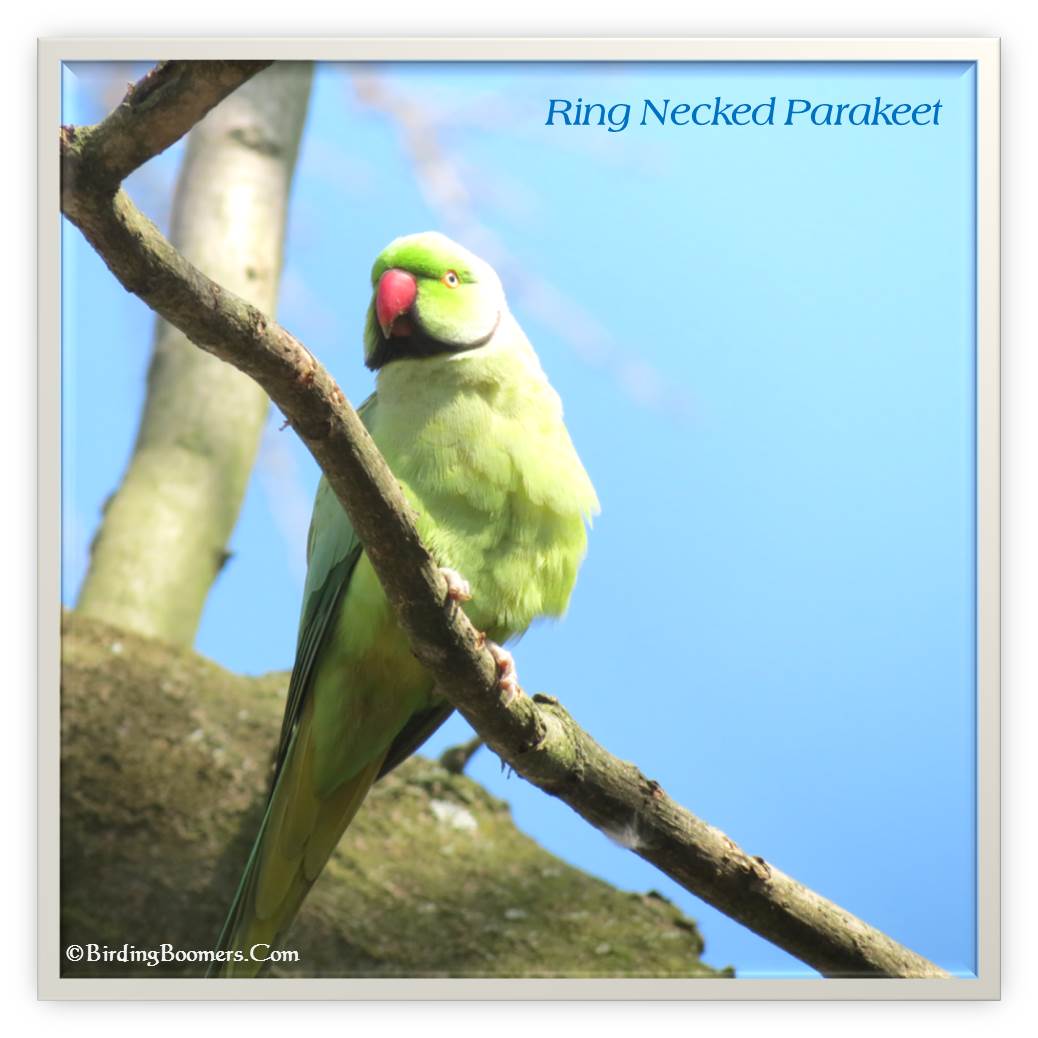
 Most of our birding luck on the trip came in the towns when we managed to squeeze in time before or after a walking tour. I have written already about our visit to the Amsterdam Botanical Garden several weeks ago in the post, Birds in a Garden, so I won’t go back over the birds we saw there in this post. (Except for adding a photo of the Ring Necked Parakeet (Psittacula krameri), of course.)
 We did manage to find birds also along the way as we followed the tour guides through the towns but one of our best birding moments came in the town of Hoorn when we found a wonderful park by a canal totally by chance when we sort of got lost looking for something else.
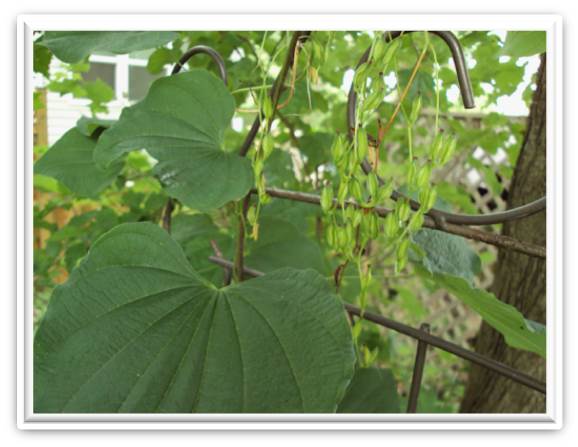
The day before we left for the cruise, I had spent some time working in our garden back home and was tackling the removal of some Virginia Creeper (Parthenocissus quinquefolia) that had gotten totally out of control and was rambling about everywhere. Now, what I didn’t realize was that Poison Ivy (Toxicodendron radicans) had grown up in the Creeper and was hiding there like some sneaky snake ready to pounce on those of us who are most susceptible to its evil poison. Only I could get a poison oak rash the day before I left on vacation….and then not realize that I had it. So, about the second day of the trip, I found out that I had a nasty rash in several places on my hands and arms and a day or so after that I figured out what it was exactly. Fortunately, it was a relatively light case so I wasn’t totally miserable and didn’t need a doctor. But I am in Europe with poison oak and I am not even sure that they have the plant over there, let alone any idea of whether or not they had anything resembling calamine lotion with which to treat it. And who takes calamine lotion on a cruise? Nobody, that’s who.
After about three days, I am thinking I need to find anything that might help the incessant itching. We found ourselves with a little time after the walking tour of Hoorn but before we had to be back to the boat for lunch and decided the time was right to find a drugstore, or an Apotheek as the locals call it. We got directions to go down a half a block and turn left and proceed for a couple blocks and the pharmacy would be right there – has a big green cross on front of the building — couldn’t miss it. Have you ever noticed how local people have no real idea of distances when it comes to their home town? Everything is just right there, not far at all, and you can absolutely never miss it, whatever it is. Well, we went down the block and turned left….so far, so good. But the distance to the next intersection of any size was more than just a couple blocks; it was more like 1/2 mile. And, of course, the pharmacy wasn’t just right there – well, it was but it wasn’t exactly what we were expecting. We stood there a bit before realizing the store was on the corner but just wasn’t obvious…it didn’t look like a pharmacy…it looked like just another building. Having found it, we went in and inquired about calamine lotion and somehow or another made the pharmacist, who was perhaps the only person in the Netherlands we met who didn’t speak English, understand what we were looking for and why. Turns out they did carry calamine lotion and had a single bottle left in stock which we happily purchased for 9 Euro – not cheap by any means but I would have gladly paid more at this point. (Note: I just found out by looking at answerbag.com that poison ivy/oak is a North American native plant and is non-existent in Europe. Now I am wondering what they do with calamine. Oh well, I am just happy they had that one bottle when I needed it.)
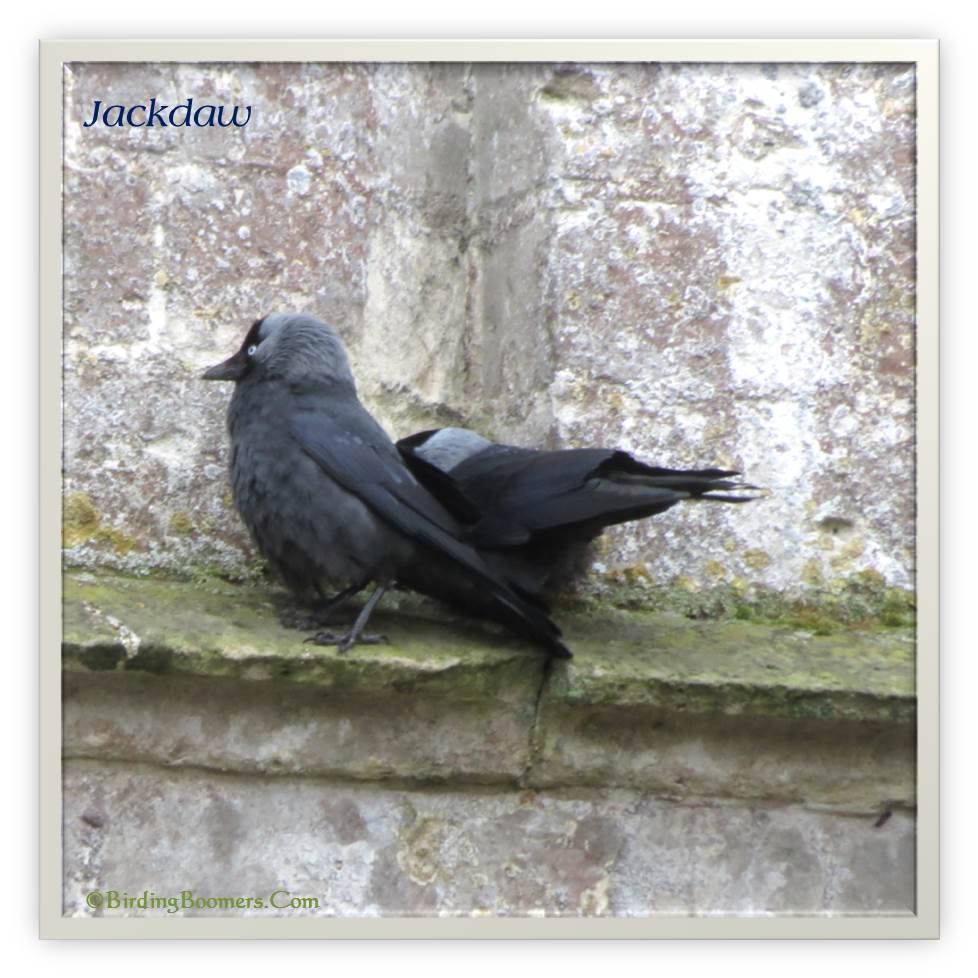 As we left the pharmacy and headed back to the docks, we noticed a lovely park that ran along a canal and backed up to the houses and back gardens of the houses along a parallel street. And where there is water and there are gardens and, more importantly, where there is open space, there are birds. We took the long way back through the park and we did get lucky with views of a Jay (Garrulus glandarius), Jackdaws (Corvus monedula), and a Redwing (Turdus iliacus) and more views of Magpies (Pica pica), Great Crested Grebes (Podiceps cristatus), and Coots (Fulica atra).
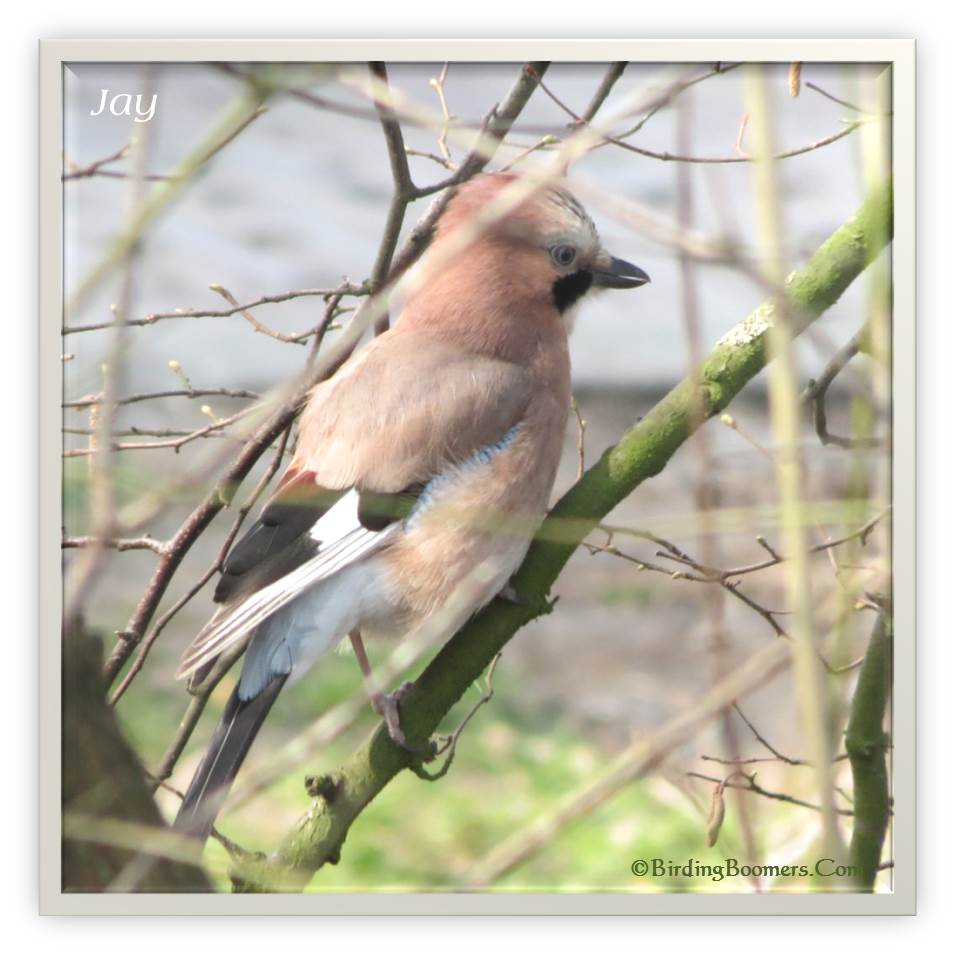 Now a Jay is one bird you would never get confused with an American Blue Jay (Cyanocitta cristata)….totally different birds.
Mission accomplished with several new life-birds on the list and a bottle of calamine, we headed back to the boat, promptly got lost following my finely honed sense of direction, then got back on track when the husband took the lead and we made it back in time for lunch. But don’t tell him that I ever admitted that I got us lost and he got us back on track…..I might never hear the end of it.
 All in all, without really looking or doing any serious birding, we saw 42 different species that we could affirmatively identify. We saw several hawks overhead and from a distance, plenty of gulls that were not close enough to see discriminating marks, and other birds we just couldn’t identify so we do not include them in the count. Since this is the first time we have looked for birds in Europe at all, most were life-birds and added to our combined life list quite nicely. Notably missing from the list were woodpeckers. We just did not see any woodpeckers although we did hear a bird that sounded very much like a Red-Bellied Woodpecker (Melanerpes carolinus) from back home.
I also expected to see Starlings (Sturnus vulgaris) everywhere since they are very invasive in the States but I was surprised by how few we did see in the Netherlands. There were Starlings at the airport when we arrived in Amsterdam but we never encountered them elsewhere. The birds might have been everywhere else….we just didn’t see them anywhere else. Maybe the pigeons keep the starlings in check. Finally, I expected to see more migrating birds, especially waterfowl but, other than the flock of Barnacle Geese, we did not see large flocks of any ducks or geese although the area is in a migration flyway.
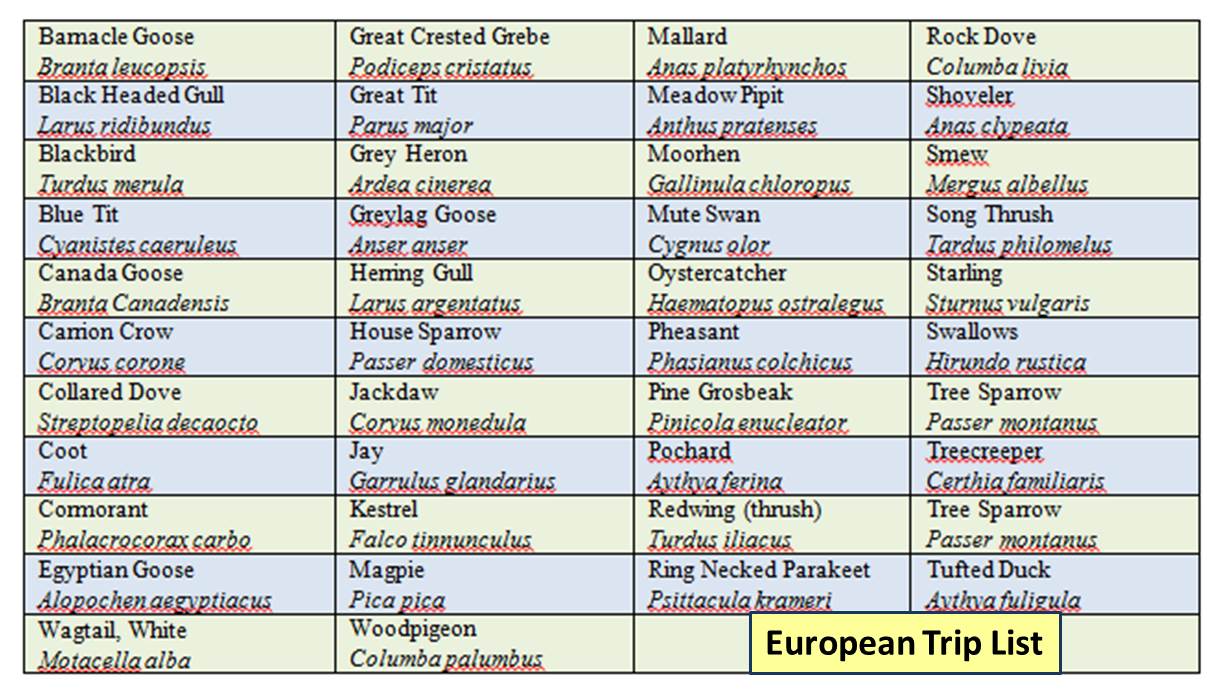 It was an excellent trip and we did see awesome birds although that wasn’t really the purpose of the trip. I do wonder how many new species we would have seen if we had actually gone birding with a guide, found a few more parks and gardens, or had more than 10 days in which to look……something to think about and to plan for on future trips.

* Guidebooks:
“A Naturalist’s Guide to the Birds of Britain & Northern Europe”; Peter Goodfellow & Paul Sterry; Beaufoy Books; 2010; (purchased from Amazon.com®)
“Birds of Britain and Europe, Photographic Field Guide”; Jim Flegg & David Hosking; New Holland Publishers; 1990; (purchased from Amazon.com®)



 Birding Boomers