Israel 2022: In This Valley

Battles had been fought here. The site is a strategic one. As we stood at Megiddo and looked out over the Jezreel Valley4, war was just about the furthest thing from my mind. The view was incredibly beautiful. The sky was incredibly blue with soft white clouds scattered to the horizon. In the distance across the valley, we could see farms divided into neat squares either planted with winter crops or being prepared for the summer in ombre layers of green and brown and tan. 

View of the Jezreel Valley from Tel Megiddo

Just to my right I saw a couple of cows grazing with the requisite Cattle Egret which I had to take a picture of, of course. It was a bird, after all, and everyone knows how much I love birds. At that moment, there was only peace; nothing in that place, in that valley, spoke to me of war or battles or the end of time.

How could I not include the photo of the cows & Cattle Egrets?

I was standing on the top of Tel Megiddo1. A “tell” is an archaeological mound built over hundreds of years as cities rise and fall in the location and new cities are built in the same location using the previous ruins as foundations for the new cities. Archaeologists believe that there are about 20 levels or strata of ruins at Megiddo with an overlap of Egyptian, Hittite, Mitanni, Assyrian, and Israeli peoples occupying the site at differing times over the centuries with the primary inhabitants being those of Israel, Philistia, and Phoenicia.

Circular altar in Tel Megiddo’s “High Place” (temple) from the Bronze Era

Megiddo is strategically located near the mountain pass through the Carmel Ridge. This is the ancient trade route called Via Maris2 (“by way of the sea”) taken by traders traveling between Egypt and Assyria and Babylon – from north Africa to Asia. This area has been inhabited since about 7000 BCE (before the common era) or BC (before Christ) to me. The pass was always guarded so Megiddo was always fortified…. it is listed as one of Solomon’s chariot cities where many of his horses were stabled and war chariots were kept. Invariably, as long as this city controlled the pass through the mountains to the east, there would always those who would fight to control it.1   

King Solomon’s (or possibly King Ahab’s) stables at this “chariot city”. This could hold about 30 horses; the northern stables could hold about 300.

Three major battles have been fought in the area that were named the “Battle of Megiddo” (see references 5, 6, & 7 below) and a whole plethora of no-named skirmishes. I got totally caught up in the online reading about these battles and the history of this place. It is such fascinating history. But I will spare you with all the details.

Megiddo City Gate possibly built by “forced” labor (slaves?) during the time of King Solomon

But I am not thinking about all this war stuff when we visited the site. From the top of Tel Megiddo, the peaceful Jezreel Valley was laid out before me. This valley is one of the most fertile spots in all of Israel. When we embarked on this tour, I had a vision of Israel as a dry hot desert – you know the kind of geography – with Jesus walking around in dusty leather sandals in the wilderness hungry & thirsty in the sweltering heat while being tempted by the devil. I suppose I thought that all of Israel would be that way – hot, rocky, dry, and dusty.  

In this valley, you just cannot imagine the devil tempting Jesus – maybe I could see him tempting Adam & Eve to eat of the fruit of the tree up here at Jezreel…. but certainly not tempting the son of God to turn stones into bread (Matthew 4:1). For how could anyone go hungry or thirst up here in the land of plenty? Surely, this is the promised land that Joshua scouted out way back there in the book of Numbers (chapter 14).  This is definitely not the wilderness where Jesus was tempted…not even close.
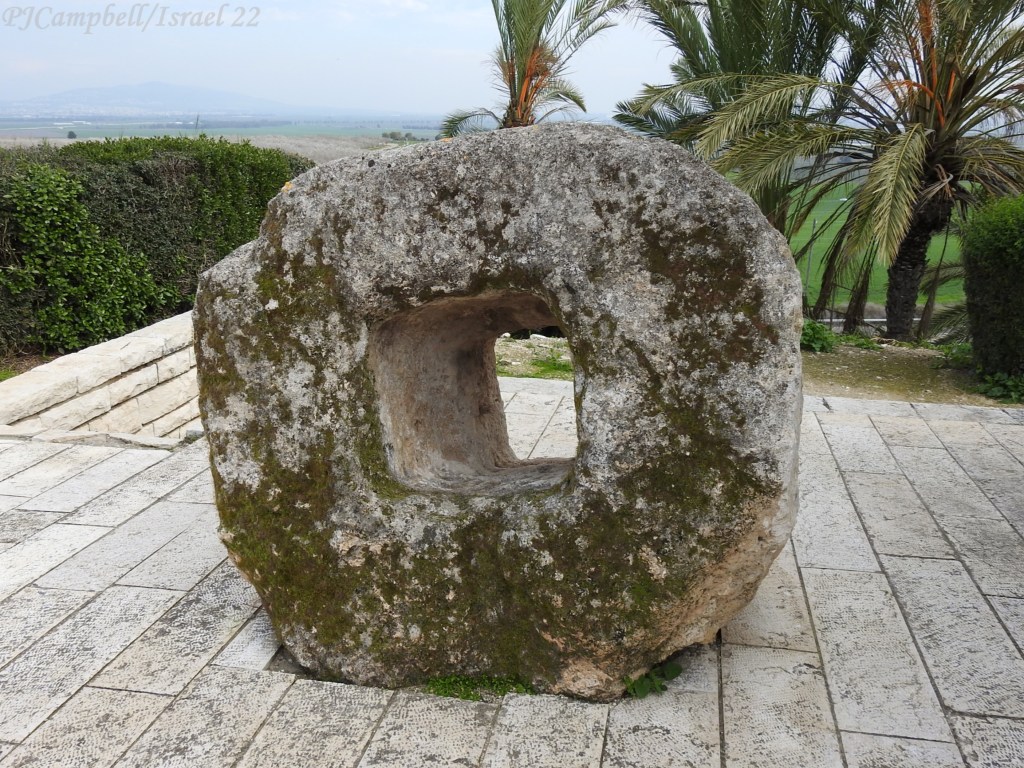
Old millstone on Tel Megiddo

The land here is good and there is plenty of water from the springs at Carmel.  Even the name “Jezreel” is derived from a Hebrew word, “Yizre’el” meaning “God sows”4. They grow all sorts of things here like oranges and watermelons and wheat and beans and cotton and sunflowers and chickpeas – of course, chickpeas, you just can’t make hummus without chickpeas. I cannot imagine what the restaurants in Israel would do without hummus and pita bread!

And I cannot imagine war here in this peaceful beautiful place.

Flowers in bloom on Tel Megiddo

But this is Armageddon.  The place where it is prophesied that the war to end all wars will be fought. From the Greek “Har” (mount) and “Megiddo”, we get Armageddon9. It is the place noted in Revelation 16:16 where nations will gather in the final confrontation between the forces of good (God) and the forces of evil (Satan) “for the great day of the Lord” from Revelation 16:14. Over the past two thousand years, the word has come to mean any world ending catastrophe, any great conflict that would end life as we know it here on earth. Prophecies about the end times abound throughout the Bible. Yet the only cite in the Bible predicting that last great battle to be fought at the Valley of Jezreel or Armageddon is Revelation 16:16. Some theologians and historians say that the battle to be fought in this valley is all symbolic and not necessarily ever going to happen at all…. that the reference is all about conflict in the middle east in general. 

At Tel Megiddo

But I’m a literalist when it comes to scripture – if the Bible says there will be a final confrontation in this valley at this place, then you had best believe that it’s gonna happen in the Jezreel Valley – right there in that same valley I could see spread out in front of me as I stood on Tel Megiddo.
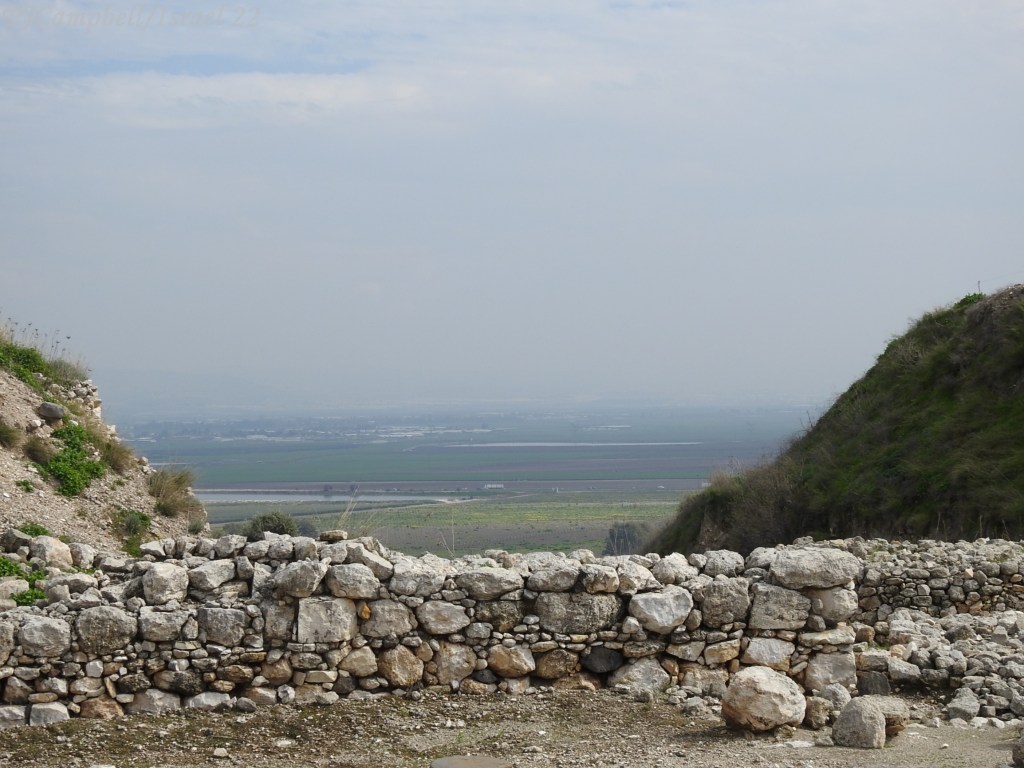
View of the Jezreel Valley – Armageddon – from Tel Megiddo

Scriptural Cites:

  1. Joshua 12:21 – In the list of kings defeated by Joshua, the king of Megiddo.
  2. Joshua 17:11 & 12 – Megiddo was given to the tribe of Manasseh although Manasseh never conquered the city/land.
  3. Judges 1:27-28 – Manasseh fails to drive the Canaanites out of Megiddo.
  4. Judges 5:19-20 – The victory song of Deborah & Barak speaks of the waters of Megiddo.
  5. Judges 6:33 – Gideon defeats the Midianites, the Amalekites, & the “children of the east” 3 in the Valley of Jezreel.
  6. Joel 3:2 – All nations will be brought to the Valley of Jehoshaphat which is believed to be the Valley of Jezreel.
  7. Zechariah 12:2-11 – On that day, the day of wailing in Jerusalem will be as great as the weeping of Hadad Rimmon in Megiddo.
  8. 1 Samuel 28:4 – Philistines gather against Israel & King Saul at Gilboa in the Jezreel Valley.
  9. 1 Samuel 29:1-6 – King Saul defeated by the Philistines in the Jezreel Valley
  10. 1 Kings 4:12 – King Solomon’s governors include Baana in Taanach & Megiddo.
  11. 1 Kings 9:15 – King Solomon uses forced labor to build cities including Megiddo
  12. 1 Kings 10:26 – King Solomon’s chariots and horses kept at the “chariot cities” one of which was Megiddo
  13. 2 Kings 23:29–30 & 2 Chronicles 35:22 – King Josiah is killed at Megiddo by Necho II of Egypt
  14. 2 Kings 9, King Jehu (10th king of Israel) killed all the family members of the House of Omri (King Ahab & Queen Jezebel) in the Jezreel Valley.
  15. 2 Kings 9:27 – King Ahaziah of Judah in the battle with Jehu escapes to Megiddo, is wounded & dies there.
  16. 1 Chronicles 7:29 – Holdings of the descendants of Ephraim are shown to include Megiddo.
  17. Matthew 4:1 – Jesus tempted in the wilderness.
  18. Revelation 16:12-16 – Place of end times gathering of nations/kings identified as Armageddon
  19. Numbers 14:36-38 – Joshua & Caleb sent to the promised land.

Sources for Additional Information About Megiddo & The Jezreel Valley:

(Other than the Biblical cites listed above, my research comes from Wikipedia as shown below.)

  1. Tel Megiddo – Wikipedia
  2. Via Maris – Wikipedia
  3. Canaan – Wikipedia
  4. Jezreel Valley – Wikipedia
  5. Battle of Megiddo (15th century BC) – Wikipedia
  6. Battle of Megiddo (609 BC) – Wikipedia
  7. Battle of Megiddo (1918) – Wikipedia
  8. Revelation 16 New American Standard Bible (biblehub.com)
  9. Armageddon – Wikipedia
  10. Book of Kings – Wikipedia
  11. Book of Chronicles – Wikipedia

ICYMI (In case you missed it) – Previous blogs in the Israel 2022 series:

Pinch Yourself – April 4, 2022

Israel 2022: Caesarea Maritima – Birding Boomers – April 11, 2022

Israel 2022: Contested on Mount Carmel – Birding Boomers – April 20, 2022
Israel 2022: Contested on Mount Carmel

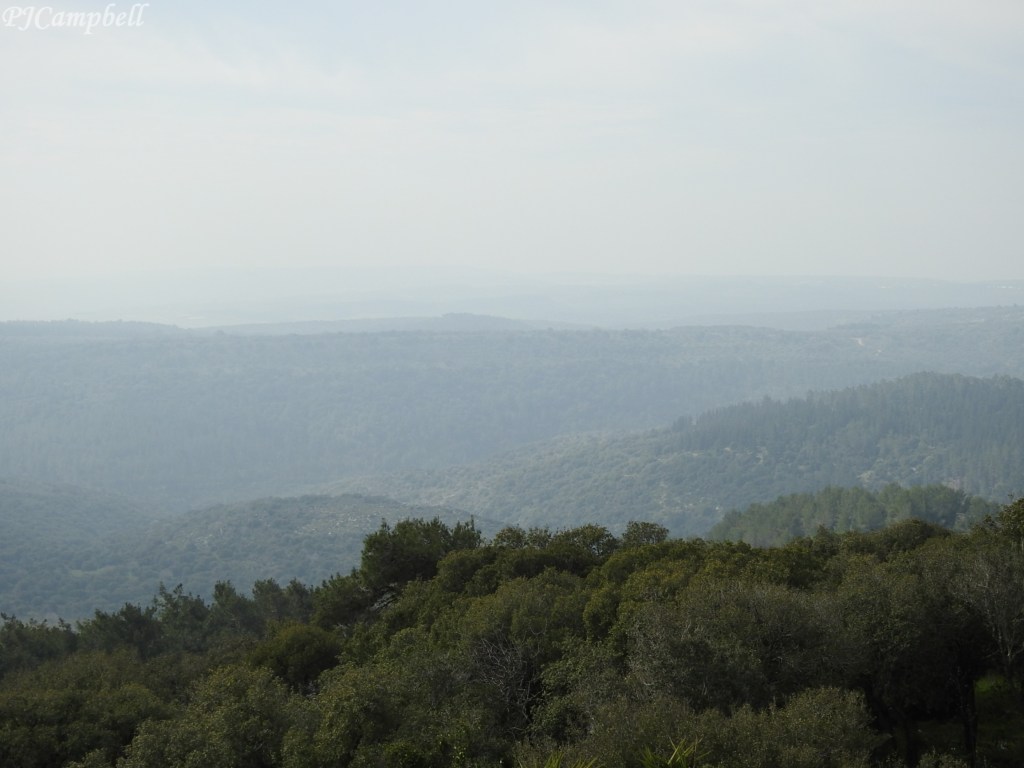
View from Mount Carmel

Let’s have a little contest – simple really. Your gods against mine. Who is stronger? Who is more powerful? Baal? Asherah? Yahweh? Who is worthy of the worship and adoration of the Israeli people (or, anyone)? Who is the one and only God of the universe?

Elijah, the prophet, called the people to come up to Mount Carmel – beautiful Mount Carmel – sacred ground to the people of Israel.  He had commanded Israel’s King Ahab to bring the prophets of Baal (450 of them) and the prophets of Asherah (400) to the mountain to meet with him.

Mount Carmel, one of the ancient Canaanite “high places” in Israel where the people had come to worship and make sacrifices for thousands of years. The Egyptian Pharoah, Thutmose III listed a “holy headland” considered to be Mount Carmel among his holdings in Canaan. Even into the Common Era (CE)…or, as we continue to call it, Anno Domini (AD), the mountain was referred to as the most holy of all mountains by Pythagoras and Tacitus mentions knowing of an oracle located there.  The Catholic Carmelite Monastic Order originated there in 1209 AD.  The Druze people settled on Mount Carmel in the 15th – 16th century. There is even a religious group called the Baha’i Faith that established a headquarters on the mountain at Haifa in the 19th century. 1

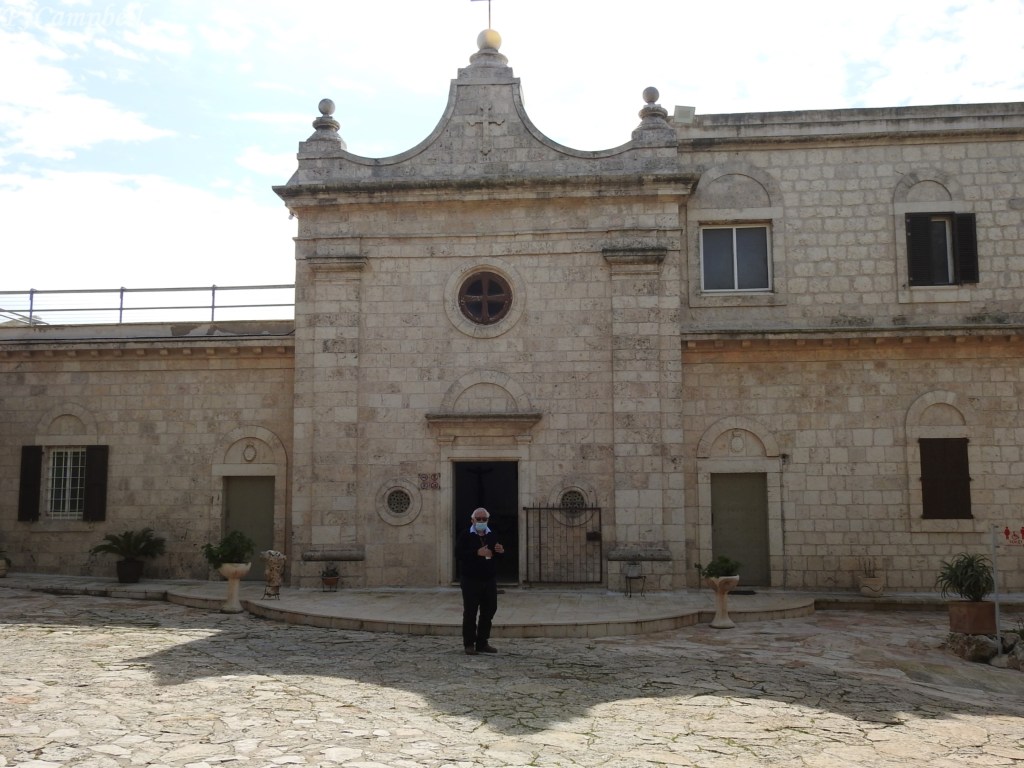
Entrance Area to Carmelite Monastery Chapel on Mount Carmel

The coastal mountain range known as Mount Carmel stretches from the Mediterranean Sea to the Plain of Esdraelon (Armageddon) in Israel.  In Arabic, the range is known as Mount Mar Elias – Mount Saint Elias/Elijah1. The word “Karmel” which means “garden land” could have been taken from “Kerem” & “El” literally meaning “vineyard of God” or from ‘kar male’ meaning “full kernel”1. The name itself speaks of the beauty and fertility of the land at Carmel.

According to BiblePlaces.Com, Mount Carmel is also known as Antelope-Nose, Har Karmel, the Holy Headland, Jebel Kurmul, Mar Elyas, Mount of User, and Rosh-Kedesh.3 I don’t really know what all those names might mean but I particularly liked Antelope-Nose so I included the little factoid.

On the drive from Mount Carmel, a tomb showing a stone door.

When people speak of Carmel, they could be talking about the whole mountain range or just the northeast portion of the range, or just the headland or highest point. The range is formed primarily of limestone and flint with many caves and volcanic rocks. Those caves include many springs and have provided refuge for criminals for many hundreds of years. It also provided a place for prophets such as Elijah and Elisha seeking a safe place to hide from persecution and death.

Our tour group had traveled from Caesarea Maritima to Mount Carmel and we had all gathered on an outside roof platform at a Catholic chapel that is part of the Carmelite Monastery overlooking the Kishon Valley.

Carmelite Monastery Chapel on Mount Carmel
Inside the Chapel on Mount Carmel

Dr. Bramer2, one of our tour leaders from Dallas Theological Seminary (DTS), was telling us the story taken from 1 Kings 18 of Elijah and the false prophets of Baal that the queen, Jezebel, had brought into the land pulling the people away from worship of the true God. The odds were greatly stacked against Elijah. Just one prophet of God, Elijah, pitted against four hundred and fifty prophets of Baal.  

A little backstory: Ahab became the 7th king of Israel (871-852 BC/E)7. He had married this Jezebel, the daughter of King Ethbaal of the Sidonians. Remember Tyre & Sidon? Ahab and Jezebel had brought worship of Baal back to the Israelites in a big way. Some believe the “Baal” in question was Melqart, a Phoenician god, also known as the Son of Baal, king of the underworld and protector of the universe.1

This evil of bringing the worship of Baal back to Israel had caused God, working through Elijah, to hold back rain from the area for three years. Ahab and Jezebel did not like Elijah at all. Elijah was the only prophet left after Jezebel had ordered the other prophets of God to be killed.

Ahab called Elijah “the troubler of Israel” (1 Kings 18:17) when he met with Elijah who commanded him to bring all the prophets of Baal to Mount Carmel. Of course, Elijah was not the problem, he was the one bringing the solution.

View of Kishon Valley from Mount Carmel

Elijah admonished the people who had gathered that day at Mount Carmel:

How long will you waver between two opinions? If the LORD is God, follow Him. But if Baal is God, follow him.” (1 Kings 18:21)

Elijah proposed a contest.  He called for two bulls to be sacrificed to the gods.  The altars would be built, the sacrificial bulls would be placed on the altar with wood for fire to burn the sacrifices, but the actual fire would have to be provided by the gods. The God who answered with fire would be the true God.  The people agreed that it sounded like a good thing to do.

The prophets of Baal would go first. They began to call upon Baal to light the fire and accept their sacrifice. They gave it their all, calling for hours…all day long, leaping and jumping around the altar and even cutting themselves allowing their own blood to flow around the altar…. all to no avail. They tried. There was no answer…. not even when Elijah taunted them saying perhaps the gods of Baal were sleeping or busy elsewhere and that the prophets should yell a little louder.

Using twelve stones for the twelve tribes of Israel, Elijah rebuilt the ancient altar to God that had previously been destroyed. He then had a trench dug all around the altar. The sacrificial bull was laid on the altar along with the wood for the fire. He directed the people to fill four large jugs with water which was then poured on the sacrifice, the wood, and the altar… three times the water was poured onto the altar and, draining off, completely filled the trench surrounding the altar.

Then Elijah prayed.

 “O LORD, God of Abraham, Isaac, and Israel [Jacob], let it be known this day that You are God in Israel and that I am Your servant and have done all these things at Your command.  Answer me, O LORD! Answer me, so that this people will know that You, the LORD, are God, and that You have turned their hearts back again.” (1 Kings 18:36)

The fire of God came down, consumed the sacrifice, the wood, the stones, and even the dust…everything! It completely consumed all of it, even drying up the water that had filled the trench surrounding the altar. The test was over. God had triumphed. The people then realized that the Lord was indeed God.

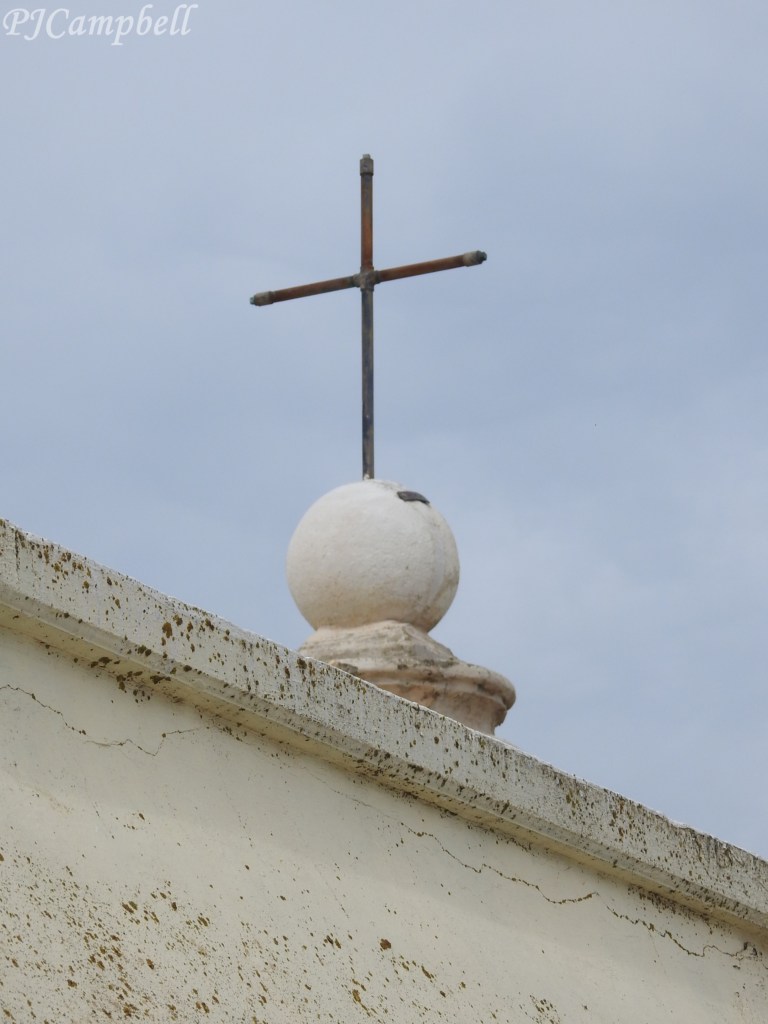
Cross on the top of the Chapel at Mount Carmel

As Dr. Bramer2 had told us in his narration – “Numbers don’t count, and the odds don’t matter” when you are dealing with the God of the universe… something well worth remembering.

And what became of the prophets of Baal whose false gods did not answer their cries?  Elijah had them taken down to the Kishon Valley and they were killed….every last one of them.

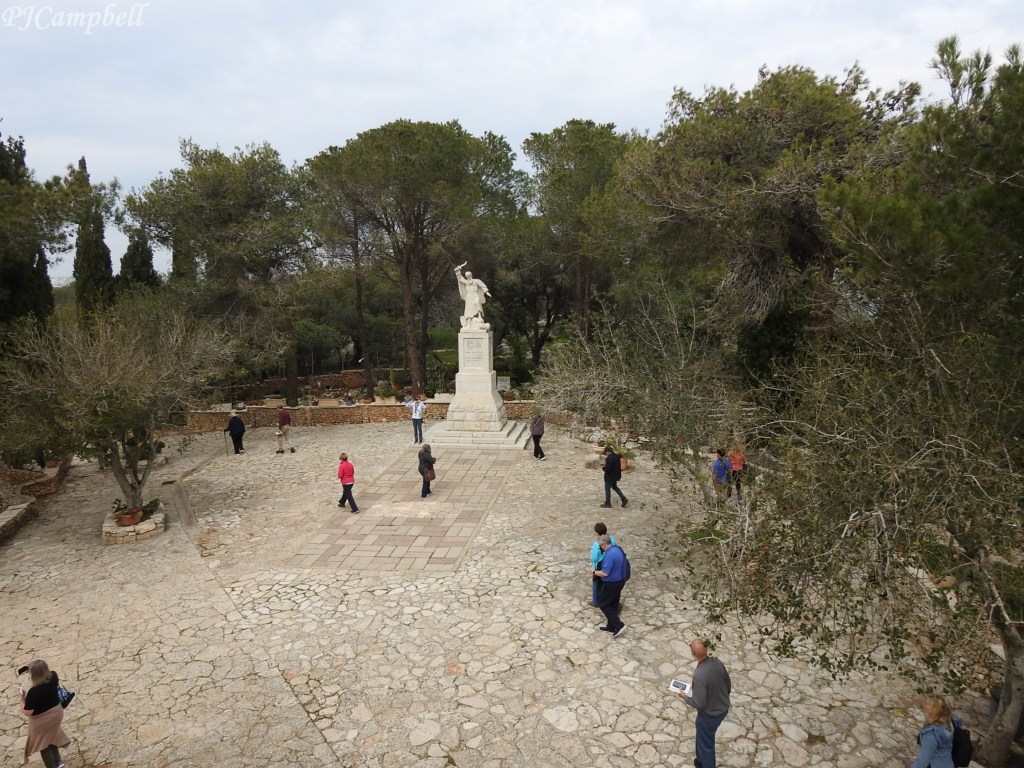
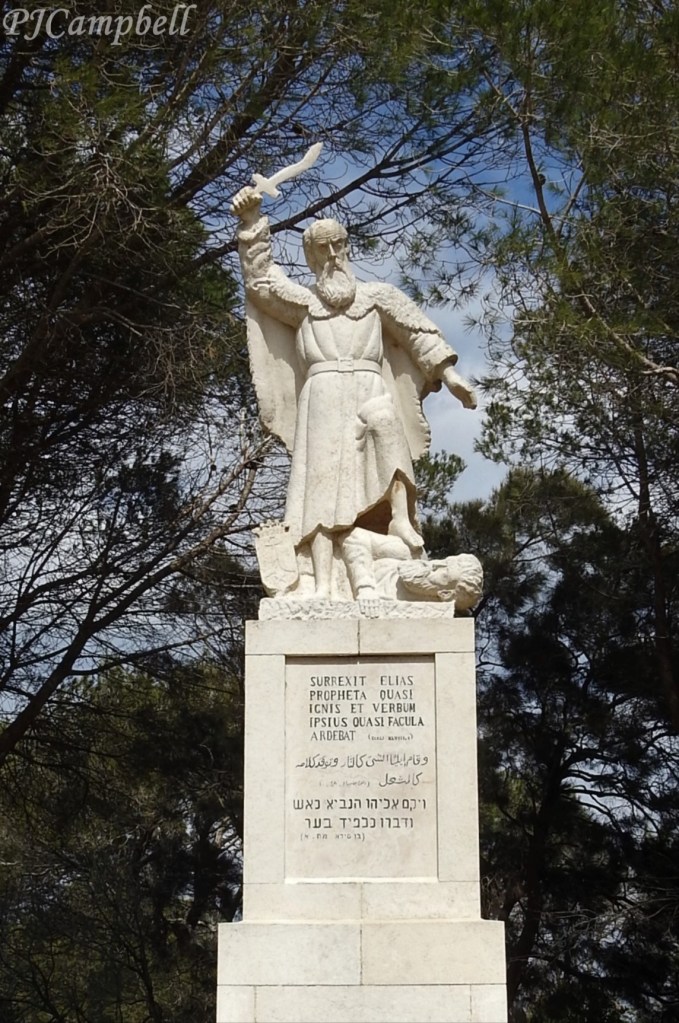
Statue of Elijah Slaying the Prophets of Baal

As you can imagine, Jezebel was not happy.  But that’s another story for another day.

Scriptural Sources for Mount Carmel from BibleHub.Com:

  1. 1 Kings 18 for the story of Elijah and the prophets of Baal.
  2. Song of Soloman 7:5 – Your head crowns you like Mount Carmel.
  3. 2 Kings 2:25 – Elisha went to Mount Carmel.
  4. 2 Kings 4:25 – The woman from Shunem visits Elisha at Mount Carmel.
  5. Isaiah 35:2 – The deserts will be given the splendor of Carmel.
  6. Isaiah 33:9 – The land dries up…..Bashan and Carmel have been plundered.
  7. Amos 1:2 – The Lord roars from Zion….the grass on Mount Carmel will wither & die.
  8. Amos 9:3 – Though they hide themselves on the top of Carmel, I will find them.
  9. Joshua 19:26 – On the west, the boundary touched Carmel.
  10. Micah 7:14 – Shephard your people….in the midst of Carmel.
  11. Nahum 1:4 – Bashan and Carmel wither and the blossoms of Lebanon fade.
  12. Jeremiah 46:18 – One will come who is…….like Carmel by the sea.
  13. Jeremiah 50:19 – I will bring Israel back…..they will graze on Carmel and Bashon.
  14. 1 Samuel 25:2 – Wealthy man from Maon who owned property in Carmel.

(I found no references to Mount Carmel in the New Testament and I found that to be quite interesting. If you have any thoughts on that or know of any references to Mount Carmel in the NT, let me know.)

Sources for More Information about Mount Carmel:

(Other than the Biblical parts, my research comes predominantly from Wikipedia1 and Bible Places.Com3 websites.)

  1. Wikipedia Mount Carmel
  2. Stephen J. Bramer (dts.edu)Dallas Theological Seminary.
  3. BiblePlaces.Com – Mount Carmel
  4. New Advent (Catholic) – Mount Carmel
  5. Haifa – Mount Carmel – Camp S’dei Chemed International (mystical Jewish)
  6. Gems in Israel – Jezreel Valley
  7. Wikipedia – Ahab

ICYMI (In case you missed it) – Previous blogs in the Israel 2022 series:

Pinch Yourself – April 4, 2022

Israel 2022: Caesarea Maritima – Birding Boomers – April 11, 2022