
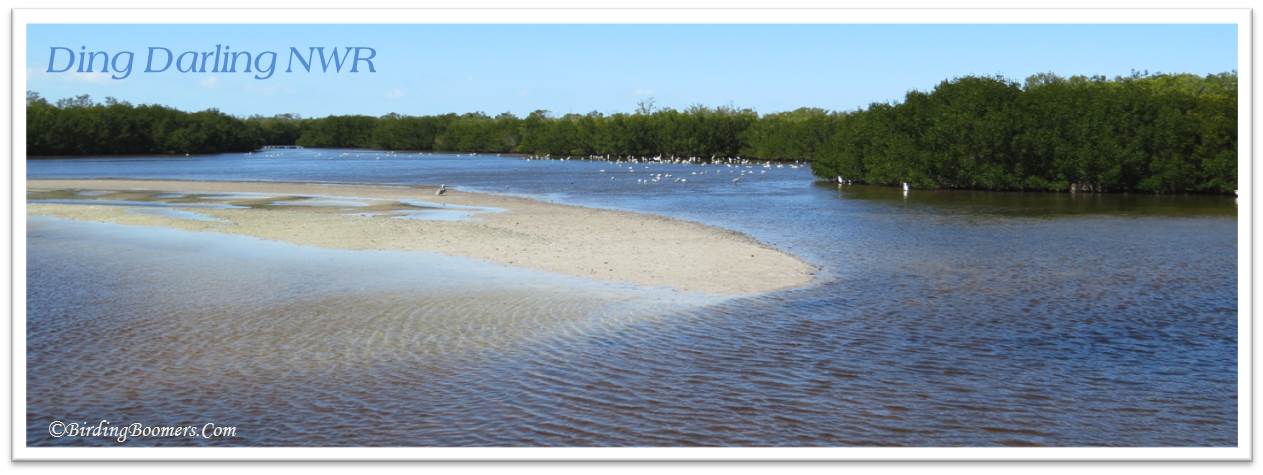
 We had a plan….a good plan…..a well thought out plan to take us through southern Florida and some of the best birding ever and all in 30 days (more or less). Well, I thought it was a good plan and I had done considerable research and had created a nice short eleven page listing of places to see with links and directions and notes and big plans to see every single place on the list. It was to be the best trip ever with birding extraordinaire and all in a place where it was warm and it wasn’t snowing and there were no ice storms or winter weather warnings and, more importantly, no signs that read, “Bridges Freeze Before Roadways”. HA! There would be no bridge freezing at all – we were just not going to have any of that in the Sunshine State. End of story – just sunshine and birds and maybe some fishing. Because you see, I HAD A PLAN.
 I know you’re thinking about my last blog (Snowbirds Test Flight) and how the best laid plans get all hosed up in the implementation stage. Well, you’re wrong. The plan worked marvelously. We spent a glorious thirty-four days (longest vacation ever) doing exactly what we set out to do.
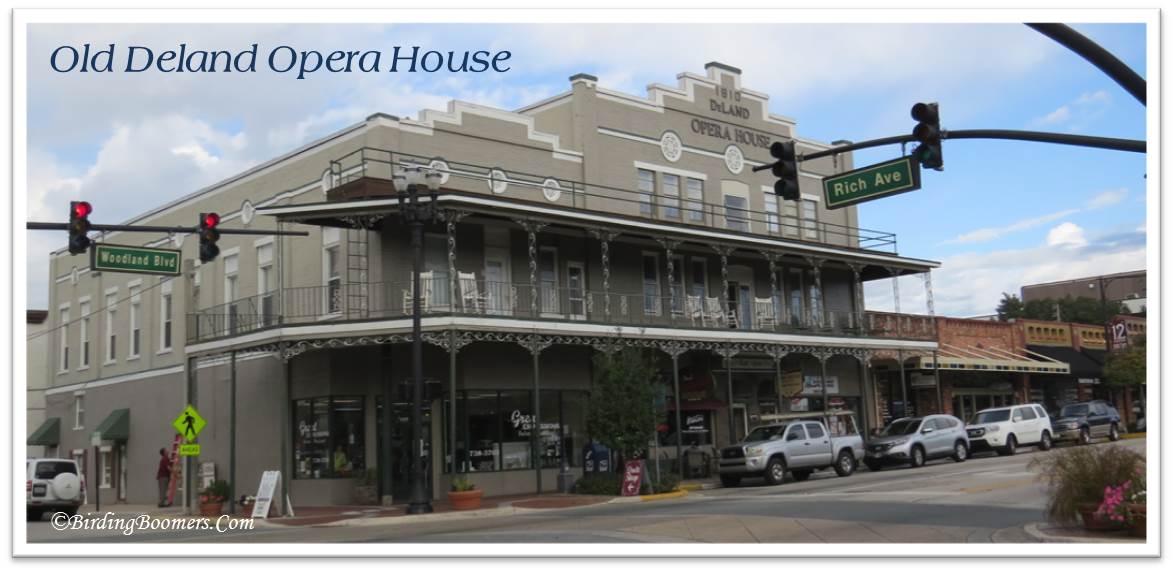
I mentioned my list. It was a bit optimistic but it was a good starting point. It wasn’t our first trip to Florida so we had an idea about the lay of the land (very flat) and the type of birds we’d be seeing (lots of Herons and Egrets and Hawks and Ibises and Pelicans) and a few rare birds that we wanted to see (Kites and Burrowing Owls and Scrub Jays). We knew the Auto Train would drop us in Sanford so we planned to travel first up the road to Deland and visit an uncle who would show us around while trying to convince us mightily that we should pack up and move to Deland. It is always good to find someone who is excited about where they live and who loves to show you the sights around town.
 Our plan was to go from there straight to the east coast and the Atlantic and, more specifically, Merritt Island National Wildlife Refuge. We’d been once before in summer but we’d heard the best birding is in winter so we were going back. From there we would head down the east coast and bird the areas around the main corridors of Route 1 (yep, the same one that begins and Maine and ends in Key West) and Interstate 95. We would head down to Miami and then work our way across Florida on the Tamiami Trail. Once on the west coast, we’d hit the highs around Fort Myers and then head north. We’d incorporate a visit with friends at Bradenton for the fishing part….at least for my better half. I have found that he will do a tremendous amount of birding day in and day out if he knows there is fishing somewhere in the mix. Then we’d continue north along the Gulf Coast up past Tampa (with a short visit with my sister thrown in) to Crystal Springs and then over to Ocala to visit an aunt. Finally, we’d bird our way back to Sanford and catch the train back home. I had taken to calling this “the loop” since a look at a map of Florida shows us looping our way through the southern part of the state and ending up in Sanford right back where we started.
 And, pretty much, that is exactly what we did. The first part of the plan went very well except for the part about finding that hotel rooms wouldn’t be as easy to find as we’d thought (as I explained in my last blog). The only real changes to the plan came on the Gulf Coast part of the loop. My sister’s move to Tampa was delayed and then our aunt called to say that she would be out of town taking care of some unexpected business so we ended up bypassing Tampa and rethinking our plans for Ocala. So, we ended up in the lake district outside Orlando. I know you’re thinking, “Orlando…Disneyworld…kids…..traffic…Yikes!” but Orlando is actually more than Disneyworld and turned out to be good for birding and good for just plain roaming around checking things out in the central part of the state. Besides, what’s wrong with Disney except for all that traffic near the park?
 All in all, we visited 53 parks and refuges and preserves that I counted specifically…..some parks were little more than community recreational ball fields with minimal birding opportunities so I didn’t really count them. I had used the Great Florida Birding Trail and eBird to plan many of the sites on my list. Otherwise, we discovered we liked the Florida State Parks which had apparently been voted the best in the United States in the past by some authority or another. We bought an annual pass and checked out their nifty guide to state parks and started incorporating the parks into our trip. We also found that there are quite a few county and local parks that have pretty good walking and hiking trails. Since water is pretty much everywhere, even in the dry season, there are apt to be birds everywhere. I do have to mention that the birds are not all huddled up in one spot just waiting for you though. They are spread out all over the state so you do have to go out looking for them…and they can be darned hard to find sometimes!
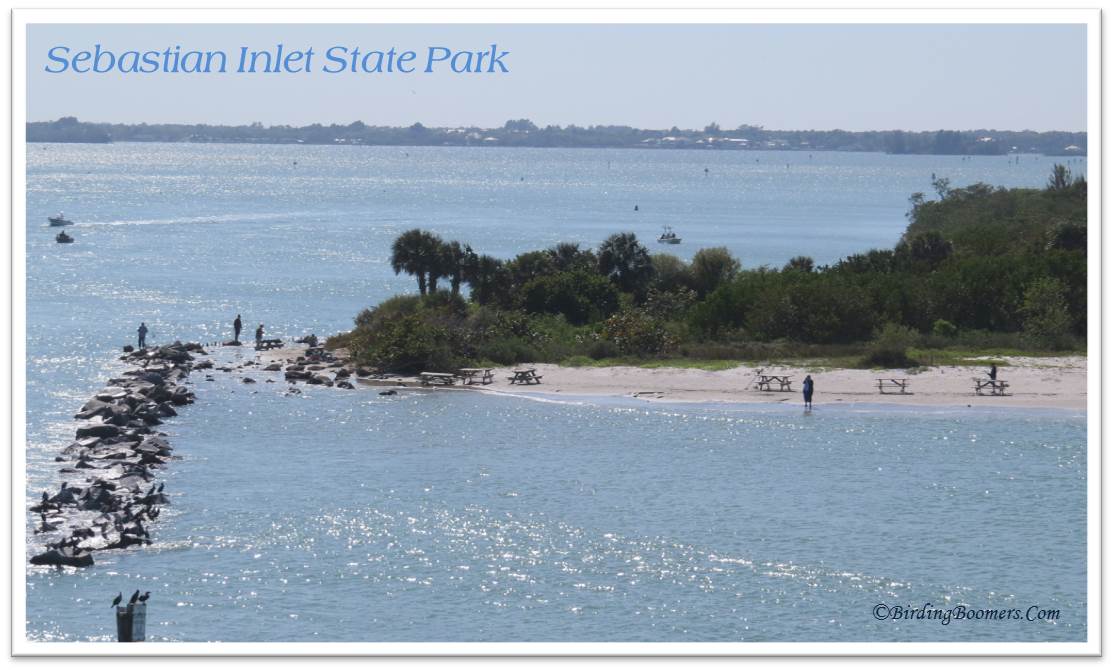 Now, having said that, I have to say that Florida is about the best state that I have visited for birding and hiking if you are older or have arthritis or not in the best of health or physical shape. Many of the refuges and preserves have extensive boardwalks through the wetlands and excellent nature centers. There are regularly scheduled activities for all age groups throughout the year. In the bigger parks, most of the boardwalks are fully accessible and walking trails are paved. I was amazed at how many of the parks included some sort of boardwalk or observation deck that accommodated wheelchairs and walkers. There are, of course, wilder areas with unpaved paths and rustic facilities (those dreaded porta-potties) for those who swear that you can only enjoy wildlife if you are hot and sweaty, plagued by mosquitos, ants, and bees, and you have to hike over rough trails for miles on sore feet. But I like my creature comforts so I was pleasantly surprised at how many good birding sites were also great parks in general that can be very easily enjoyed by all ages no matter what shape you are in.
 I was also impressed by the Florida water management practices and how many wetlands are water treatment facilities that are set up with boardwalks and walking paths or that allow you to drive through the impounds. It seems birds like water and really like water that smells quite yukky because we saw lots of birds in the impoundments at water treatment facilities and we got great opportunities to bird while breathing very carefully through our mouths and not directly through our noses. Notwithstanding the smell, I do wish more states would consider driving and walking trails through treatment facilities or, I suppose, landfills too. But, then again, maybe it is only birders who would visit such places.
But I digress (how unusual is that?). Back to the plan and the birds, I recorded 112 species on eBird with 15 lifebirds on more than 70 checklists. Of these 15 lifebirds, there were 5 that we had seen before so technically weren’t lifebirds for us….they just hadn’t ever been recorded by us on eBird before. To add 10 new lifebirds on any trip was big and we were quite pleased with these results. As noted, there were plenty Egrets, Herons, and Pelicans but, as we meandered, we seemed to be birding more inland sites away from the shoreline so we really didn’t record very many shorebirds. There were gulls a plenty everywhere we went but they were mostly Laughing Gulls so we didn’t really see many rarities in terms of gulls or shorebirds. I did hear a non-birder refer to a Swallow-Tailed Kite as a Frigate bird but it really wasn’t and we were not really anywhere near where we might actually see Frigate birds (too far inland) although it would have been nice…but it wasn’t… so no bingo there…..although I found myself wondering if he went home and told everyone about the Magnificent Frigate Bird he spotted in the northern part of the Everglades. I know I would be.
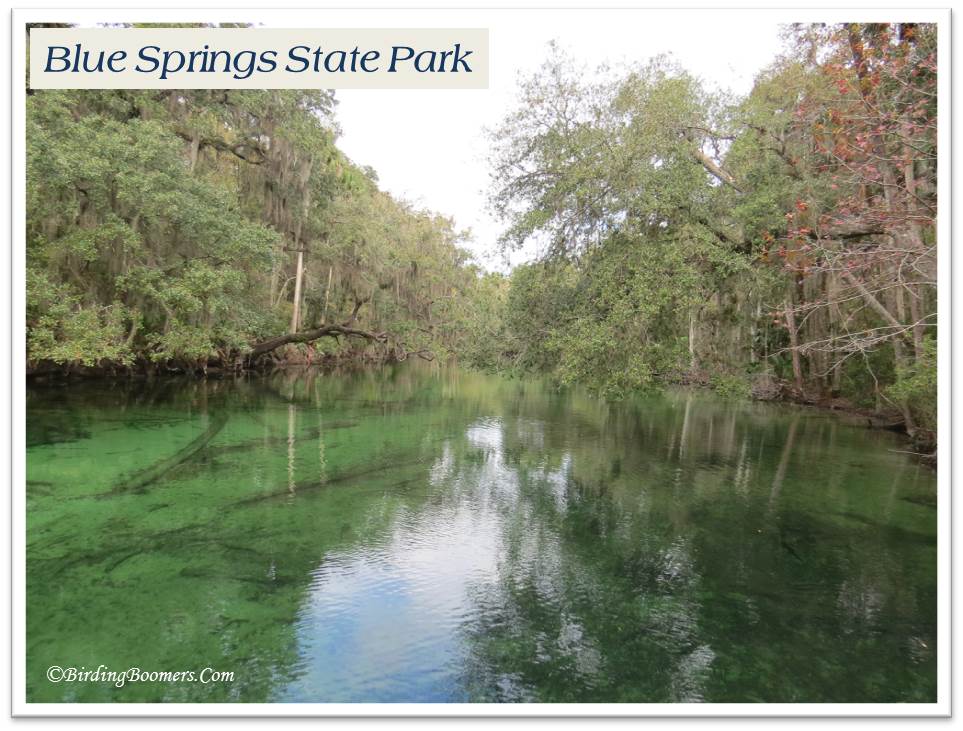 The most birds at any one site were spotted at Merritt National Wildlife Refuge. The least birds we saw at any one site had to be at Seminole Collier State Park (but that was just a drive through so who can say how many birds we might have tallied had we gotten out and walked the trails?) The most crowded place (in terms of people not birds) we birded was at Green Cay Nature Center & Wetlands – who knew so many just plain tourists would want to walk the boardwalk through the wetlands? I have to admit that Green Cay was also one of the nicest birding venues we visited so I can totally understand all those people taking a weekend stroll through the preserve.
On the other hand, the most crowded place we went to and almost birded was Wakodahatchee Wetlands. We went twice and could not even get into the place. The first time, we couldn’t even turn into the parking lot from the main road. The second time we made it into the parking lot but there was a line queued up getting to the boardwalk. A LINE!! Can you imagine waiting to get onto a boardwalk to go birding? Just unbelievable! We didn’t stay. We put Wakodahatchee on the list for next time with a note to go at odd hours on weekdays.
 The least crowded place we visited was the Florida Panther National Wildlife Refuge. No, we didn’t see any panthers and we didn’t see many birds. There were wildflowers and it was very peaceful and quiet but very empty, or at least to me, it appeared that way. We were the only visitors when we arrived so headed out on a looping trail. We were about a quarter mile into the refuge when we stopped at an observation platform to check out some wildflowers when a young couple walked up behind us and just about scared the socks right off of me. They went on ahead of us but then turned back after a bit so, for the most part, we were left alone on the trail. We never saw another person during the remainder of our two hour walk until we arrived back at the parking lot where we found a young couple with car trouble waiting for roadside assistance and another photographer/birder who quickly disappeared down a trail. We checked to make sure the young couple was okay and then headed out on our way.

I suppose one might wonder where we saw the “best birds”. It’s an impossible question to answer for me, or, perhaps, for any birder. A friend once asked me what my favorite bird was. I thought about this for several minutes ticking through a mental list of scores of birds we’ve seen over the past few years and the only answer I could come up with was, that my favorite bird is the one I’m looking at right now…at any given moment. Every bird is beautiful – yes, even the vulture – and fascinating in its own way. Every memory of birds we’ve seen is just as nice as the others. I suppose some stand out but then, once I think of another, that one gets my attention and is great too. I just cannot pick one that I like more than the others. I’ve tried. I just cannot pick a favorite bird.
I will certainly tell you more about the places we visited in blogs to come. Suffice to say, our plan worked, we had great birding and we would do it again in a heartbeat. Besides, I’ve updated my list and there are still plenty of places to go in Florida….and there’s Wakodahatchee to get back to at some point. As long as birds have wings, we’ll probably be out there, binoculars in hand trying to find them.







 Birding Boomers