
 It’s time. The daylilies are blooming in my yard so I know that they are also blooming over in Faith’s garden. I know because, other than the regular orange “ditch” lilies and a single “Stella D’Oro”, almost all of the daylilies in my yard came from Faith’s. (Okay, I will allow that the more common orange daylilies are probably Tawny Daylilies and not really called “ditch” lilies even though the best place to see them is probably in the ditches along the highway.)
Who is Faith? She is simply the daylily lady as far as we are concerned. Faith is a daylily grower and collector….the absolute best. Her garden is a show garden for the American Hemerocallis Society. She does not hybridize them to create new specimens but she does grow quite a few. I’ve heard she has about 1300 – yes, that is 1300 – growing in her yard. Every year, she opens her garden to the public and shares its beauty with the rest of us. While daylilies are the stars of the show, her garden also includes a delightful array of perennials including everything from hostas to clematis to ferns. It is the place to see daylilies in Anne Arundel County.
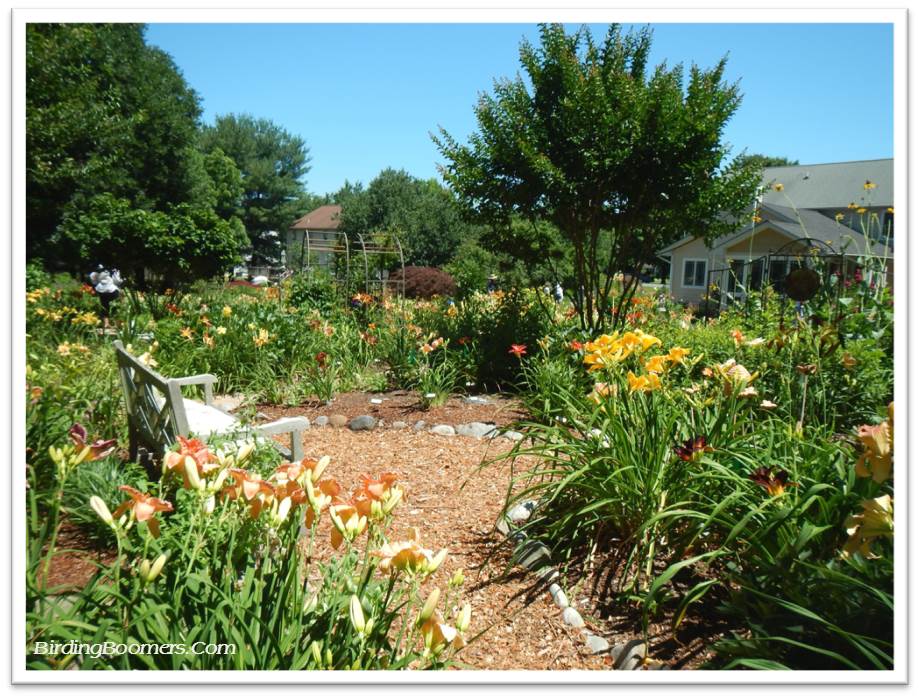 We’ve been going to see this beautiful garden since 2006. The first year I saw an ad in the local paper and went out of curiosity to just check it out. Heraclitus (an ancient Greek guy) said, “No man ever steps in the same river twice.” Likewise, Faith’s garden is different every year and not just because the flowers bloom in ever changing combinations. Like all gardeners, Faith is constantly changing and improving on the garden so that the place is never the same twice. I do not think I shall ever grow tired of seeing what she’s got growing or going on in any given year. So every year we go. So far, I have not been disappointed.
 That first year, I ended up buying eight (8) daylilies of my own. I have amassed quite a collection of daylilies over the years. Although I promise myself and my husband every year that I will not buy even a single additional daylily ever again, I have not held to that promise – ever. I have learned to just shrug and say, “I can’t make any promises” when he asks me about buying more daylilies or any plant for that matter. And so, my flower beds are gradually being filled with daylilies from Faith’s Open Garden.
 I do have to be clear though that all of the daylilies I have purchased at Faith’s do not actually come from Faith’s garden. The Hemerocallis Society sets up each year and sells daylilies. If you want a daylily specifically from Faith’s garden, you need to identify the particular plant and add your name to a list. When Faith divides the daylilies later in the year, she will call you and arrange for your purchase at that time…if she is dividing and selling the particular cultivar that you want that year.
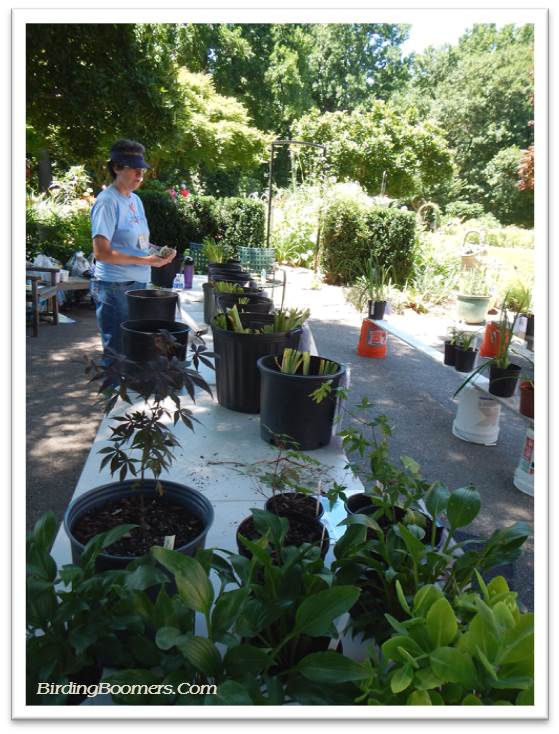 Now, I have to say, buying daylilies can be expensive. At least the rare cultivars can be expensive. Most on sale at the open garden are very economical at about $8 per “fan”. I do recall being on the waiting list for several years in a row for a daylily called “Ram” that I had fallen in love with that first year we visited the open garden. Well, Faith finally emailed me with the particulars (i.e., price) for “Ram” and several others I had asked about. The price for “Ram” was steep (for me) – maybe $35. I found that I didn’t love it that much although, in retrospect, it is the daylily I didn’t buy that I always wondered if I should have. On the other hand, I did find a couple others on my list that went for about $15 that I liked just fine. (Of course, once they are in the garden, they are all the same. It is difficult to remember their names let alone what you paid for them.)
 Let me stop here briefly and give a plug for the American Hemerocallis Society database. When I buy the plants, I have a tendency not to mark them and, so I tend to forget the names and what is planted where. The best place to search for daylilies is the database on the American Hemerocallis Society website. It’s easy to use and has all the information you might need on daylilies. Nuff said on that.
Now back to my expensive daylily tastes, last year I spotted a beautiful cultivar called “Rose F. Kennedy” so I asked about it. It goes for about $85. I didn’t even bother to put my name on the list for that one – it was just a little too expensive for me. But, all was not lost, as you can probably guess; I found a daylily with similar colors and a more reasonable price (for me) and brought it home. Of course, it is not exactly like “Rose F. Kennedy” but it works for me and it is very beautiful too in its own right.
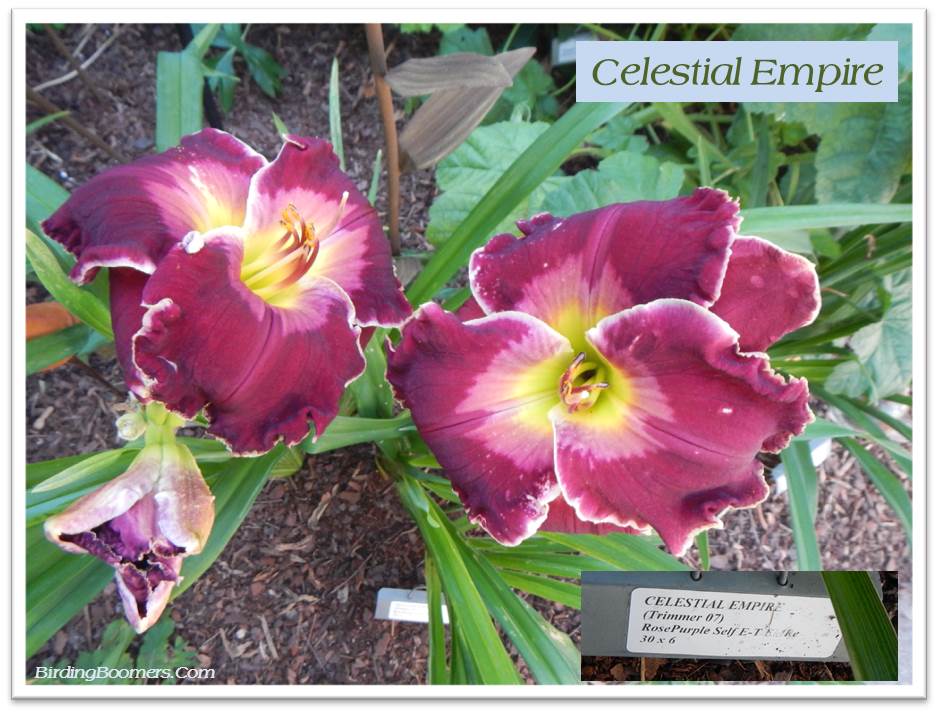 This year, my favorite was a beauty called “Celestial Empire”. The price is about $49. Again, I did not put my name on the list for it but I am thinking I will email Faith and ask her to add me to the list in case she divides it in the next few years. I keep going back and forth about the price. I think maybe this is what separates me from the collectors and growers like Faith. I love daylilies but am not ready and maybe never will be ready to take the next step and become a more avid collector.
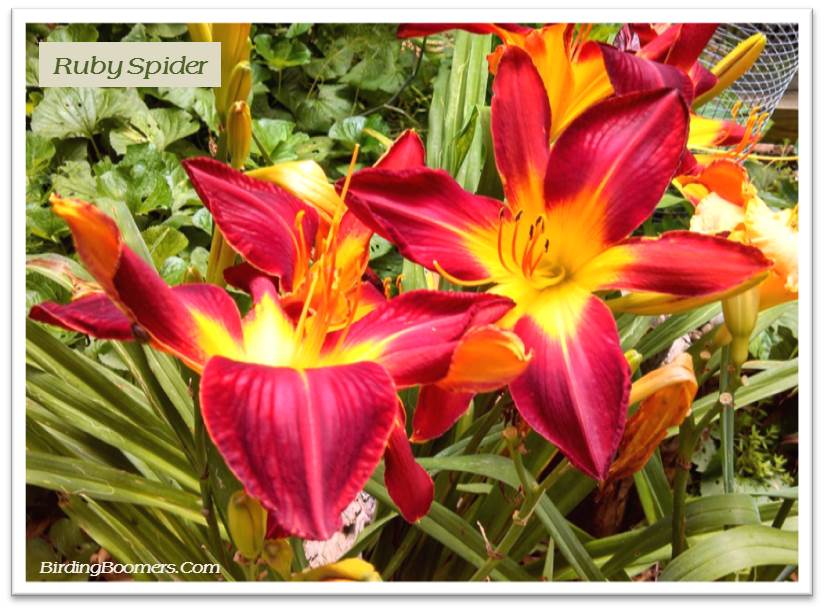 But, even if you do not collect them or you never join the Hemerocallis Society, it is hard not to love daylilies. They are easy to grow, can take lots of abuse like full sun and heat, and they multiply very nicely so you can divide them and share them with friends when your garden gets full. One in particular comes to mind called “Ruby Spider”. We bought it several years ago in memory of a family member named Ruby who died of breast cancer. It has thrived and blooms magnificently every year. Our neighbor (who we hooked into going to Faith’s with us a few years ago and who now has his own burgeoning daylily collection) admired “Ruby Spider” from across the fence. Last year, I divided it and he now has his own beautiful “Ruby Spider”. All the daylilies we have purchased are doing very well and I expect that several of my other friends will reap the benefit over the next few years.
After all, why garden at all if you cannot share with your gardening buddies and friends?
 For more information – Faith’s Open Garden. This link is an article from the local newspaper about the garden written in 2012. Each year, the date is announced locally, and is generally in the last weeks of June or the first week of July when the daylilies are blooming.







 Birding Boomers