

The other night just before bedtime, I was reading an article in AFAR magazine by Tom Downey about his travels in Bangkok, Thailand. (1) It was a typical “what to see while you’re there” article about traveling in that country and described the writer’s experience exploring a previously unknown section of Bangkok. He decided to follow a group of locals heading down a nondescript and ever-narrowing lane and found himself in an area of shops that sold “burnable offerings” to be used at a nearby temple. He did not mention what religion or what gods might be worshipped at the temple, but did mention that the “offerings” being sold were fake money (both American dollars and Thai baht) and a cardboard pair of sneakers that were branded as “New Balance”.
The writer went on to talk of other travel related things like food and transportation and other tourist attractions but that brief sentence about the offerings caught my attention and it is still with me.
Offerings to be burned in the temple…..fake dollars and fake sneakers…..you know my thoughts about this are just jumping all over the place. Questions I have to ask are filling my mind…like who are these gods that accept fake offerings rather than real ones?
(Although a quick search on the internet tells me that the predominant religion in Thailand is Buddhism, other religious groups represented there are Muslims, Hindus, Sikhs, Baha’i, and Christians [about 0.9%].) (2)
But the “which gods” questions might not be as important to my mind as the “why”……like why give a well-known brand name to a cardboard pair of sneakers you plan to “sacrifice” to the gods (Shiva? Buddha?) at the temple?
Do these gods prefer “New Balance” to…say….”Nike”? Will the gods find an offering of one cardboard shoe better than another? What blessings will you receive if you go all in and sacrifice a real pair of sneakers rather than a cardboard pair?
And, what about the fake money? Is there a reason to sell both types of fake money – American dollars and Thai baht? Is one worthless piece of paper somehow better than the other when making an offering?
And why “fake” offerings? Wouldn’t that seem to be a contradiction of the whole purpose of making a sacrifice to your gods in the first place? Economically speaking, it is probably more advantageous to burn fake money and sneakers rather than real money or shoes. You make the offering and still get to keep the goods as it were; but how do you suppose these gods would view the offering?
It seems to me (as a Christian) that this was what Cain did way back in Genesis in the Old Testament. (5) Cain (a farmer) gave an offering from his crops while Abel (a sheep herder) also brought offerings from his flock. Two offerings that were relatively similar overall that were made to God with only a note that Abel gave the firstborn and fattest of his flock.
Would giving whatever is handy, plentiful, or convenient denote a repentant heart desiring to show reverence and devotion to your god? If society allows it and seems to approve of it or maybe even requires it, is it okay to just give what you feel like giving? It certainly wasn’t okay for Cain. We all know that his offering wasn’t acceptable at all and his feelings about being rejected while Abel’s offering was accepted drove Cain to murder his brother.
I am also reminded of the widow who gave two small mites – all she had. Jesus remarked on her offering as being more acceptable than all the wealth of others making offerings at the temple that day because she didn’t just give some, she gave all she had to give and gave it with a willing heart. (3) Would her tiny nearly worthless coins have been just as acceptable if she had traded one of them for a little bit of “fake” money and offered that instead so she could at least have kept one mite for herself?
[“And He looked up and saw the rich putting their gifts into the treasury. And He saw a poor widow putting in two small copper coins. And He said, “Truly I say to you, this poor widow put in more than all of them; for they all out of their surplus put into the offering; but she out of her poverty put in all that she had to live on.” Luke 21:1-4 KJV ]
Is the meaning of the gift just a symbolic gesture that can be made with any old substitute or is there something more to giving that needs to be considered?
And, what of the vendors selling offerings in the temple that angered Jesus to the point that he drove them out of the temple telling them that they had made a mockery of God’s house….they had made it a place of business rather than a sacred place to worship God?
[“And the Jews’ Passover was at hand, and Jesus went up to Jerusalem and found in the temple those that sold oxen and sheep and doves, and the changers of money sitting: And when he had made a scourge of small cords, he drove them all out of the temple, and the sheep, and the oxen; and poured out the changers’ money, and overthrew the tables; And said unto them that sold doves, Take these things hence; make not my Father’s house an house of merchandise.” John 2:13-16 KJV] (4)
Were the vendors and money-changers chastised by Jesus any different from the vendors in Thailand who were selling fake money and cardboard sneakers?
When I studied this passage at my church in Sunday School many years ago, I was taught that Jesus said that the merchants had made his Father’s house into a “den of thieves” as noted in Mark 21:43. (4) Somehow I prefer that phrase to “house of merchandise” as it seems so much more descriptive of what was really going on there in the temple and why Jesus would find it so offensive.
The Jewish vendors and money-changers would, no doubt, have justified their activities as a necessary part of Passover. How else could people who had traveled for days obtain a proper sacrifice to atone for their sins during the past year? How else could those who came from nearby countries buy their offerings without the right currency? Why…….with a little creative thinking on the part of the vendors, justification could be made that these sellers of lambs and doves (maybe even cardboard or clay replicas) were a vital and most necessary part of the local economy and the whole offering process and they were just doing God’s work making sure every sinner who needed to repent had the proper offering to do so.
I think that Jesus certainly saw through the ruse…..saw it for what it had become….just another money-making enterprise. Buy your doves here and God will surely forgive your sins…..wouldn’t He?
I was in a church recently that included a bookstore, a gift shop, and a coffee bar. Is this somehow different from selling offerings in the temple? In retrospect, I think the coffee might have been free; and, I suppose you could say that selling a Bible in church is a good thing….giving it away might be better….but getting the scripture in the hands of those who need it can only be a good thing, right?
I’m not sure selling (or even giving away) a cup of coffee or a sentimental trinket in the church lobby is the same as selling “offerings”…although the concept of the profits going to the church might be blurring the lines a little bit these days. You could say that you’re only buying something to help out the church or contribute to the missions programs. Then again, no one buying a latte in church has any intention of giving it up as an offering to God. More likely, the heart-felt intent is just want to stay awake during the service.
But I digress….back to the basic question. What is giving? What is a proper offering? What is good enough to please God? I think that it is important that we give something up….something of value. In my mind, to be relevant, an offering would require some sacrifice on my part….giving to God something you wanted to keep or money that you could have used for something else…say a new pair of sneakers. And would have to be given with all your heart….no holding back on the gift.
Otherwise, providing an offering might have just become a ritual with little or no real spiritual meaning…just throwing a few coins in the plate on Sunday morning and patting yourself on the back for having done good and made the offering just like you’re supposed to do. But, are you giving out of obligation or because of tradition or out of reverence and love for God?
Fake money? Cardboard sneakers? What is the point in the overall scheme of things? It may actually be more like throwing things in the trash than making a sacrifice to the gods….your offering might as well be those cardboard sneakers or fake money. What is it, after all is said and done, that makes an offering, the gift, proper and effective?
Thinking back to the time that Jesus cleared the money-changers and vendors out of the temple, it seems to me that the temple needed to be cleared at that time. In a way, it had to be made ready for the ultimate sacrifice, the one that would change things in this world forever, and the final offering that was provided at no cost to us whatsoever. The temple would be prepared for the only sacrifice that would ever be acceptable.
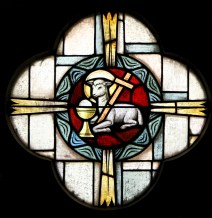
The perfect lamb had already been provided…he had walked the earth and prepared the way. We would not need to buy doves or goats (or fake money or cardboard sneakers) to stand proxy for our sins anymore. No longer would money-changers and vendors be needed or allowed in the temple to provide questionable offerings to those who came in repentance and devotion. There was only one lamb that was pure of heart and free of sin who was willing to be this one true offering……only one.
Like the poor widow with only two pennies, Jesus would give all that he had to give with a willing heart…and the temple would be cleansed for good……for all time….for the good of us all.
Notes:
- Buddhism and Religion in Thailand; http://factsanddetails.com/southeast-asia/Thailand/sub5_8b/entry-3212.html
- “Cities we Love: Bangkok”; AFAR Magazine; September/October 2017; pp 98-108; Author – Tom Downey.
- King James Bible; New Testament: Luke Chapter 21, Verses 1-4; https://www.kingjamesbibleonline.org/
- King James Bible: New Testament: John Chapter 2, Verses 13-16; http://biblehub.com/context/john/2-14.htm . This incident is described in all four gospels of the New Testament of the King James Bible…see also Matthew 21:12-17, Mark 11:15-19, and Luke 19:45-48.
- King James Bible; Old Testament: Genesis Chapter 3, Verses 3-8; https://www.kingjamesbibleonline.org/Genesis-Chapter-4/







 Birding Boomers