
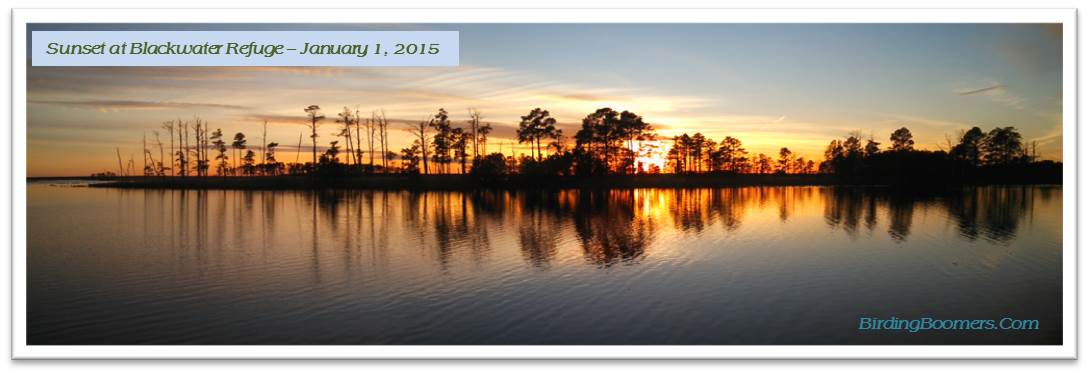
 Happy New Year! Once again, my faithful companion (husband and fellow bird watcher) decided that the best possible thing we could do on New Year’s Day was to go out and do a little bird watching. Now, I know most folks (me included at times) opt to just say “birding” to describe what bird and nature lovers do when they go out and tramp through the woods and roam the coastlines looking for birds but I am not so official and scientific or organized in my hunts (haunts would probably be the better word) so I generally describe myself as a bird watcher or bird lover rather than a birder. But, then again, when we go out in the forests and to the beaches with binoculars and camera we are really hunting for birds and hoping to spend some time watching them. On the other hand (YIKES!) the word hunting brings up all sorts of negative connotations. We certainly do not shoot them….except with a camera, that is. So, I guess the best way to describe the hobby is bird finding….because we certainly are in hopes of finding them and getting a few good photographs along the way.
But, as usual, I digress. The point is that we started a bit of a new tradition last year and going for two years in a row, we headed out again this year to do a little bird finding on January 1st. Last year we explored a local park that we had never birded before and you can read about that HERE. This year I wasn’t too sure where I wanted to go. There are several new hotspots in the area that I want to check out and there were lots of reports of a pair of Snow Buntings being seen at another local park – Sandy Point State Park – and there were reports of a Cape May Warbler being seen regularly at a local “park & ride”. Temptations were many but we had narrowed the options down to two – Bombay Hook National Wildlife Refuge and Blackwater National Wildlife Refuge – both birding hotspots for wintering waterfowl and both beautiful places to visit even if you never saw one bird. But that would be pretty much impossible – there are always birds at Bombay and at Blackwater.
On the plus side for Bombay Hook: There have been reports of hundreds of Snow Geese and Canada Geese along with a few reports of a Snowy Owl and lingering reports of a Sandhill Crane which had been a regular visitor during the fall months. We had visited Bombay during our November trip to bird along the Jersey shore and had enjoyed a wonderful day there seeing plenty of ducks and Coots and Pintails but had missed seeing the Sandhill Crane. And, I had read one birding report that there was a Screech Owl living out of an owl house way over by Bear Swamp and that would definitely be a life bird for me if I got lucky enough to catch the little guy at home. Yes, Bombay was very enticing but it is a little further away from us over in Delaware but certainly do-able for a day trip although we prefer to stay overnight and catch the refuge in the afternoon on the first day and in the morning on the second. But other obligations meant that we could not stay overnight so would have to limit ourselves to a day trip which, as noted, was certainly possible.
 Now, on the other hand, we hadn’t been to Blackwater Refuge in the past year and were certainly due a trip there to check out the newly renovated and re-opened Visitor Center. Also, we’d been hearing of Tundra Swans and Snow Geese at Blackwater too so, where ever we went, we knew we’d see quite a few birds…although mostly Geese and Ducks. And, while there are Bald Eagles at Bombay, in the past we have generally seen lots of Bald Eagles at Blackwater. But tipping the scales firmly in favor of Blackwater is a little place called Oakley Street.
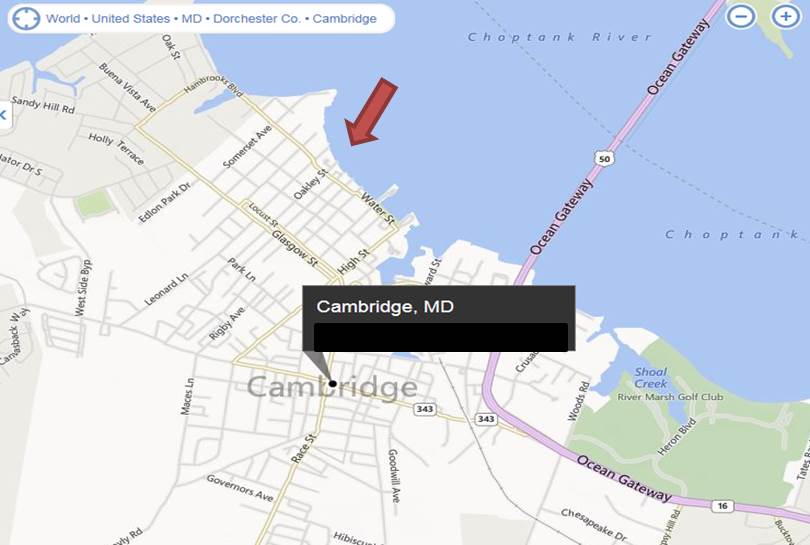 Now, Oakley Street is not a part of Blackwater Refuge. It is just a waterfront street in downtown Cambridge nearby where birders and mainly bird photographers have, over the years, taken to feeding the wild ducks that winter over there on the Choptank River. The ducks cooperate by moving in close to the shore thereby allowing the photographers to get excellent close up shots of birds that are usually not possible. We had heard of the spot and were anxious to check it out. So, the decision was made. We would head out early (for us), swing by Oakley Street and then on into Blackwater for a delightful day of bird finding and watching.
And, it was a beautiful day. I wasn’t sure about where exactly on Oakley Street the “sweet spot” could be found but I figured we’d put Oakley Street into our trusty GPS (otherwise known as the Road Witch because of the female voice which nags us to make U-turns when we miss a turn we’ve been instructed to make or otherwise get off course) and drive up and down the street until we find the “feeding” place. I needn’t have worried. Oakley Street is only about a mile long and dead ends at the waterfront. Once you turn right onto Oakley, you have nowhere to go except the end of the road where we found an older gentleman sitting in a chair pulled up to the concrete bulkhead with a camera whose lens was as long as my arm. He had a small bucket of shelled corn and occasionally tossed a handful over the bulkhead which, of course, brought the ducks in to dive for the quickly disappearing kernels of corn.
We parked and got all jacketed and gloved up (yes, it was frightfully cold although sunny and clear), grabbed binoculars and my camera and headed over. A nice lady from one of the waterfront apartments stopped and chatted with us for a few moments. She noted that she should just allow birders to come and watch the ducks from her apartment where it was warm…..for a small fee. I think she was just making conversation and joking about charging for people to use her apartment to see the ducks so we didn’t pursue the opportunity….but it was mighty tempting.(Hmmmm….maybe I should have asked what she was offering to drink before I turned her down.)
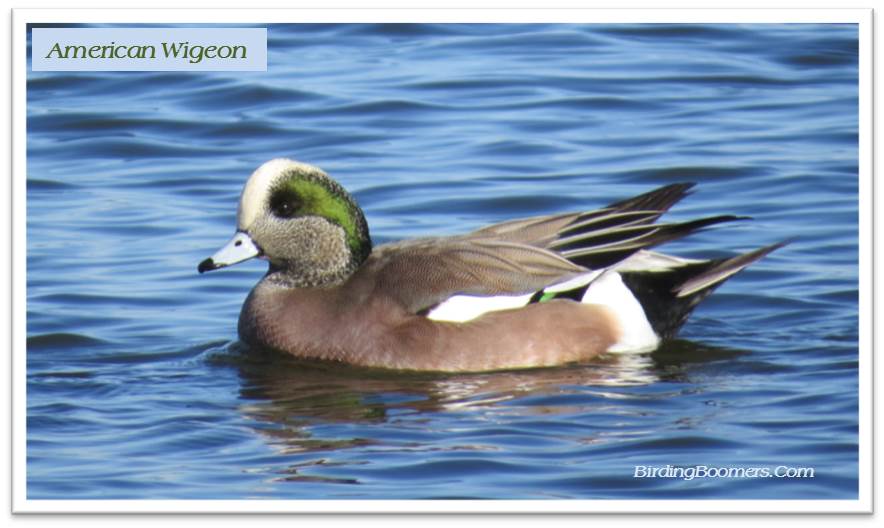
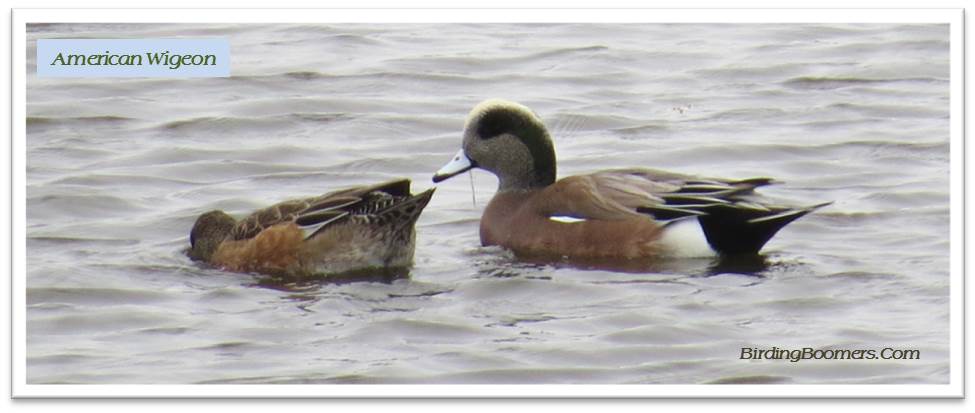
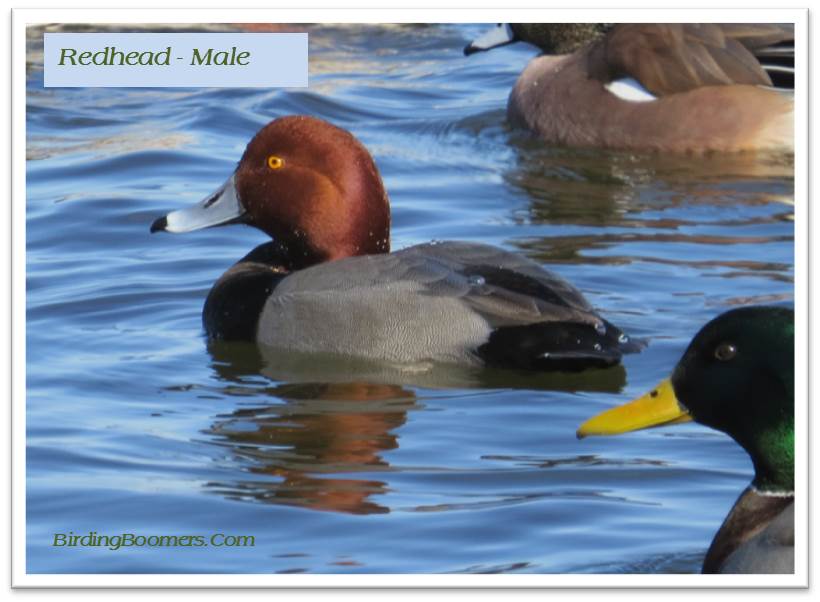 There were quite a few ducks and geese there…predominantly American Wigeons and Canvasbacks. In among the Canvasbacks were a few Redheads that were difficult to pick out for photographs. Since I do not have a camera with a long lens, I loved that the Wigeons and Canvasbacks came in close to the shoreline. There were also a few Canada Geese and way out in the distance a small bunch of Buffleheads.


 Another group of local folks out walking told us we should head further down the shoreline where we would see lots of Redheads and some Swans. So after a bit, we headed back to the car and decided to explore the neighborhood a little further. We headed back up Oakley and took a right onto Belvedere Street. We could see a park with a beach near the water so we headed in that direction. We found Great Marsh Park almost immediately. It was a beautiful neighborhood park where we found maybe 150 Ring-Billed Gulls. If you ever wanted to study Ring Bills, this was the spot. I think they had been attracted by someone feeding them earlier in the day and were hanging around in hopes of more. We could see the promised Swans and more Canvasbacks further down the shoreline so we headed on out to explore the area further.
 We found the Swans – 6 of them – on Bellevue Avenue that runs along the shoreline. We also found a Bald Eagle high up a tree surveying his domain and possibly the buffet spread out before him on the river. The Redheads turned out to be Canvasbacks although there might have been a few Redheads in the mix. There were also quite a few Ruddy Ducks and Scaups (although I cannot say whether they were Lesser or Greater) in the mix. We found an unusual Nativity Scene from Christmas and a single Double Crested Cormorant. Since we usually see loads of Cormorants in/around the Bay and its watershed, I wondered that we only saw one on this day. But, most of all, we found about 500 Canada Geese sunning and eating grass in someone’s yard by a pond.
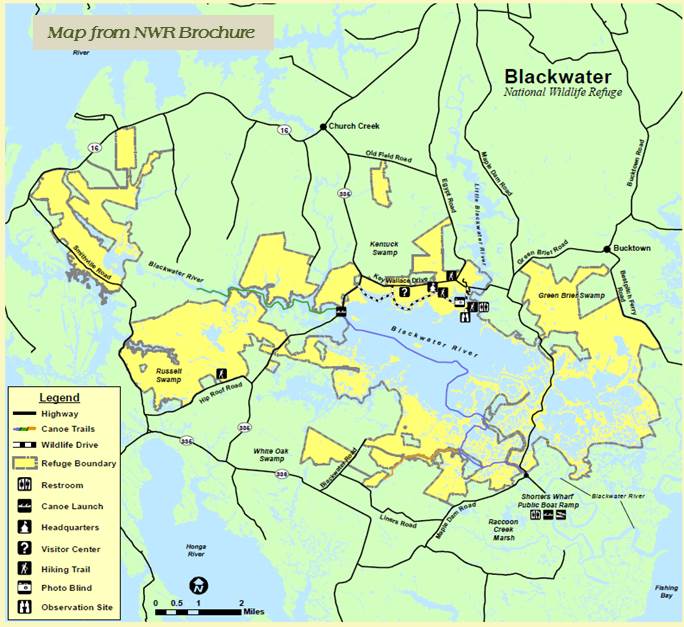
Speaking of eating, we were getting hungry so headed out to lunch on our way now to Blackwater. Blackwater National Wildlife Refuge is just outside Cambridge and probably no more than 10 miles from Oakley Street. This makes it convenient to visit both hotspots on a single trip to the area. The Refuge was established in 1933 and encompasses more than 28,000 acres which include marshes, hardwood and pine forests, freshwater wetlands, and cropland. It is smack dab in the middle of the Atlantic Flyway so attracts thousands of migrating waterfowl each winter and probably hundreds (maybe even thousands) of birders and nature enthusiasts.
 It also boasts a rather large population of Bald Eagles and the refuge has mounted an eagle cam that you can access HERE. Although it is winter and the Osprey have long since headed south for the winter, I would be remiss if I didn’t mention the Osprey Cam which, in summer, can be seen HERE. However, if you go to the Osprey Cam site today, you’ll probably see a pair of Bald Eagles who have taken over the Osprey platform and have made it their own. I do not believe they are nesting there but they are certainly hunting from the platform and eating there.
 The new visitor center is as marvelous as it promised to be. There is a small souvenir shop along with an interactive museum. Upstairs there is a lovely observation area where you can sit inside where it is warm and watch the masses of geese wintering over in the impound just behind the visitor center.
 Although there are hiking trails, the big draw at Blackwater on a cold winter day is the Nature Drive – a four mile circuit that passes between the impoundments and the Blackwater River. If you turn right as you exit the Visitor Center parking lot, you will find the nature drive just about a mile away. Before you enter the nature drive, do take a few minutes and go on across the Little Blackwater River…..we have seen quite a few Bald Eagles and smaller ducks in the coves just east of the nature drive entrance along Key Wallace Drive.
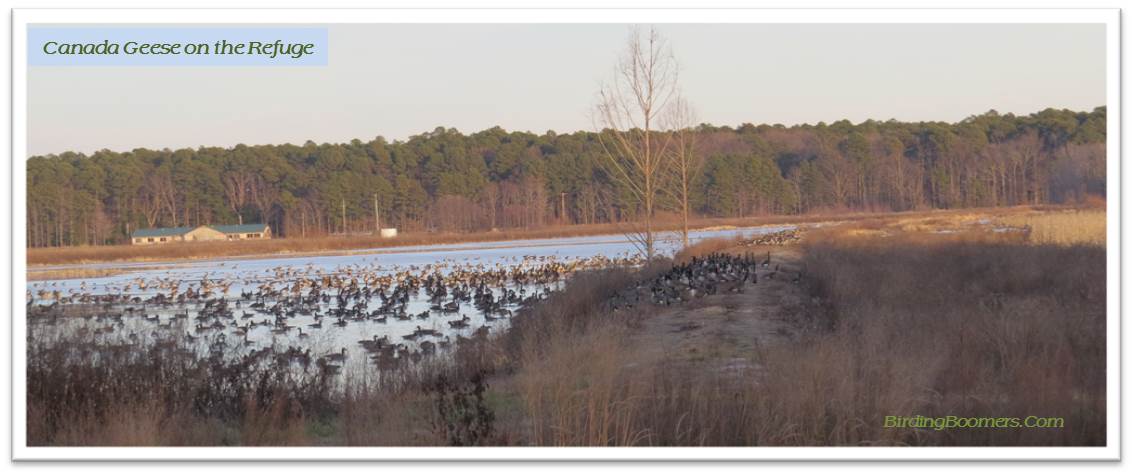 The Refuge was crowded today and the drive was filled with cars creeping along as folks checked out the geese along the way. I say most were creeping along slowly but there are always some people who drive through a refuge at 30+ miles per hour. I have never figured out how anyone can see any birds moving so quickly though a nature drive….but I have had the same thought about people out hiking quickly down a trail. How do you possibly see wild animals and birds when you do not slow down and stop to find them? Guess you have to decide – do you want to hike or do you want to bird. Oh well, we (among the creepers) slowly worked our way through the drive stopping here and there to take a few photographs and just enjoy our day. We saw about twenty species of birds, the highlights being the Bald Eagles (only 4 today), the Snow Geese (hundreds), a Northern Harrier (nice surprise though not unusual), the Canada Geese (thousands), the Tundra Swans (8), and several massive mixed blackbird flocks that flew through at sunset just as we were wrapping up our day.
 With only one little stop left to make on Kent Island – Adam’s Ribs to pick up supper – we headed on back over the Chesapeake Bay Bridge on our way west towards home. We hadn’t seen any new birds today but we saw a great many old “friends” that we had hoped to see…..all in all, a wonderful start to a brand New Birding Year.









 Birding Boomers