

The Susquehannock natives called the site Conowingo meaning “at the rapids”. Today, we (and quite a few other birders, nature enthusiasts, and photographers) think of it as the place with the dam where all the Bald Eagles come in winter to eat the remains of fish that don’t always make it through the big turbines alive. Well, I suppose fish do make it through…and I suppose also that some of the eagles (and herons and gulls and vultures) actually catch live fish when they are perusing the menu below the dam.
When the Philadelphia Power Company began construction of a new hydroelectric dam “at the rapids” on the Susquehanna River near the small town of Conowingo in 1926, I’m sure the intent wasn’t to provide such a magnificent winter feeding ground for the birds, but, as things happened, that is what developed…..along with a new continual source for about 500 Megawatts (MW) of electricity. (The hydroelectric plant is connected to the eastern portion of the continental electrical “grid” and how much is produced by Conowingo depends on how much is needed by the grid and the price per kilowatt on any given day.)
 Building the dam had some negative effects too. And there is a website (www.conowingodam.org) that lists all of them in detail. The dam changed the seasonal water flow (although I have to add, it also stops flooding downstream). It blocks the spawning runs for shad, eel, herring, and a variety of other fish. And it has, of course, changed the aquatic habitat and altered the river’s natural ability to purge itself of the sediment that now remains trapped behind the dam.

It took two years (amazing feat all by itself) to build the dam. It is 105 feet high by 4,648 feet long. The reservoir created on the Susquehanna River behind the dam is about 14 miles long and covers 9000 acres. Sadly, there are no more rapids “at the rapids” on this part of the river and the original town of Conowingo lies somewhere at the bottom of the lake. It happens.
We have visited the dam many times. I mean, really, it’s a no-brainer if you love birds and especially Bald Eagles; it is the place to go. And, on top of that, it is just about two hours away and great for a day trip up to see a few eagles, grab lunch somewhere, and head home before dark. Really, it is a perfect local birding spot. Even in summer when the eagles are scarce, there are always Vultures (but take care where you park because the big black birds have a taste for anything rubber that is attached to an automobile) and Cormorants and Gulls….plenty of gulls. I have read that, of the 170 species of birds recorded at or near the Dam, there are at least 11 species of gulls. And then there are the Herons…who doesn’t like to see a beautiful Great Blue Heron fishing along the river?

Just a quick note about the photographers: If you want to see thousands of dollars’ worth of “glass”, i.e., binoculars and super-sized zoom camera lens, just head up to Conowingo in December or January. Pick any Saturday – ah, just pick any day of the week – and you’ll see photographers and birders lined up along every inch of the rails and fence line along the river in Fisherman’s Park with their gear set up on expensive tri-pods (and some not so expensive ones) just waiting for that perfect eagle flying, fishing, fighting moment. And, trust me, they get the pictures. A quick stop by the Visitor Center at the top of the dam and you can see amazing photographs taken right there below the dam.
So, we too have stood on the banks of the Susquehanna below the dam at Fisherman’s Park (did I mention fishermen love the place too….for obvious reasons?) in the chill of winter with me freezing my patookas off watching the eagles scuffle with each other over the fish they’ve caught (or fish parts they’ve retrieved) looking up at that dam and wondering if they ever let anyone go inside and take a look around the place.
Turns out they do. If you call on a specially designated day in August (got this info from the Visitor Center when I stopped in one afternoon for a potty break before heading home), you can sign up for a tour in September when they have the Conowingo Dam festival….which is not to be confused with the Eagle Days Festival they have later (or is it earlier?) in the year. This year, I called in and signed us up. So, one fine hot Saturday in September (the 23rd), we headed up US Route 1 north of Belair to the dam and waited for our turn inside.

Actually, I was quite excited at the prospect of getting inside the dam. I had always admired its industrial art deco type styling sitting there straddling the Susquehanna River. You can tell from the outside that it is gonna be pretty cool inside too.

We donned hardhats and were issued ear plugs. There wasn’t any construction going on – we wore the hardhats because the fishermen outside were known to cast their lines out with heavy weights that sometimes broke off and came crashing through the windows in Turbine Hall. Just another hazard of working there, I suppose. The earplugs? Well, it was noisy with the turbines running.

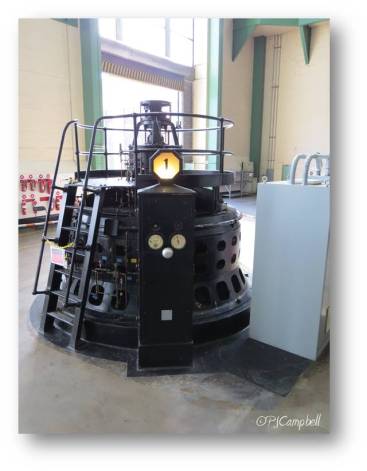
Our tour guide led us into a side door and right into Turbine Hall which is pretty much as far in as they let us go. But that was okay although I really wanted to go down into the bowels of the place and see the twenty-seven (27) foot butterfly valves that were originally used to control the water flow through the turbines. Nowadays the water is controlled by something called wicket gates which do not sound nearly as impressive as humongous butterfly valves. But, alas, we did not get to go that far into the dam….guess we would have needed more than hardhats and earplugs for that.
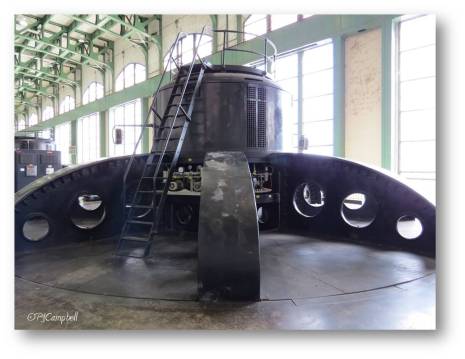

We did get to see the big beautiful turbines in the aforementioned Turbine Hall of which there are eleven (11). Although the dam was built to accommodate eleven (11) turbines, only seven (7) were installed when the dam was completed in 1928. The last four (4) higher capacity turbines were added in 1978. Each of the new turbines drives a 65 Megawatt (MW) generator increasing the dam output to about 548 MW. The original seven turbines produced about 252 MW. In total, the plant at Conowingo adds about 1.6 billion Kilowatt (KW) hours to the grid.
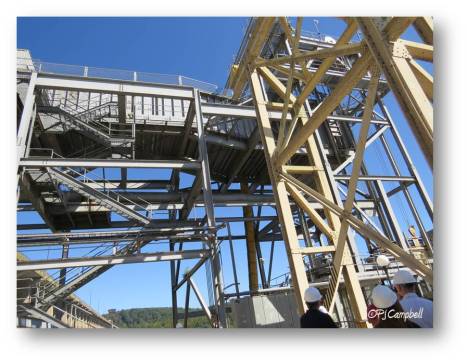
We also got a look at the two fish lifts that have been added to the dam to attempt to accommodate the spawning of the shad, herring, eels, etc. The east lift is very large and essentially a large elevator. The fish swim into the bottom and then the lift is raised the 100 feet to the top of the dam where the fish are released. This lift was at the top when we visited; I did not climb all the steps up to the top to see if there were fish inside when we visited although it is not the season so I expect the lift was empty.
The west lift is much smaller and apparently used by scientists to monitor the shad, count them during spawning season, and sometimes to collect the fish and transport them to creeks and tributaries up river which could be a daunting task considering the Susquehanna runs for 464 miles from Cooperstown, New York (yep, the home of the Baseball Hall of Fame) to the Chesapeake Bay at Havre de Grace, Maryland.
Our guide did tell us a bit of a tall tale about the fish coming through the turbines and then swimming over to the lift so that they could go shooting down through the turbine again….swirling around like on a roller coaster….but I think he was pulling my leg….I really do.
Susquehanna comes from a Len’api word – Sisa’we’hak’hanna – which means Oyster River or “river with the oyster beds” which probably works better for the end of the river at the Chesapeake Bay rather than the beginning up at Cooperstown. There are some who say the river still runs under the Bay and all the way to the Atlantic Ocean at Virginia Beach, Virginia. That makes sense as the Chesapeake is basically a relatively shallow estuary with the deep parts running right through the middle, i.e., the river. The Susquehanna is the longest river on the east coast of the US draining just about 27,000 square miles….so that accounts for quite a few tributaries to transport those shad to during spawning season.

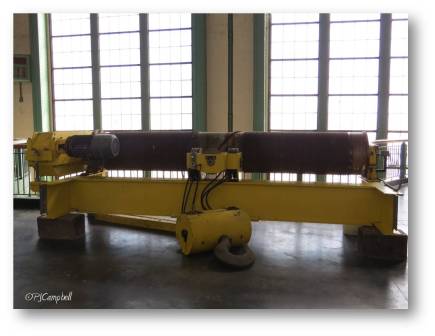
With all that water, you’re gonna need quite a dam. Conowingo Dam includes fifty (50) crest gates to control water flow from the reservoir. Less than ten (10) are open to the lower river at any given time – generally. But the dam is also used for flood control so that, as the water level rises in the upper river and reservoir, more gates are opened to the lower river and the Chesapeake Bay. The flood control gates are operated by overhead cranes that basically are hooked up to a gate at the top and then the gates are raised and lowered to allow water to escape the reservoir.

All fifty (50) gates have rarely been needed. The last time all the gates were opened was June 19-24, 1972 after Hurricane Agnes. The water levels were so high and the water pressure so great on the dam that explosive charges were laid on the eastern side of the dam as a precautionary measure. Fortunately, with all gates open, the water levels receded to a safer level and they did not have to destroy the dam. On the other hand, with all the gates open, Port Deposit just down river was totally flooded out…all that sediment and mud just washed right into the little town and pretty much buried it in muck. But the people who lived there had been evacuated in time so came back home and went to work. The town did recover. After all, in the past couple hundred years, Port Deposit had seen quite a few floods and, worse, ice flows being located so close to the Susquehanna. Nowadays, anytime the gates are opened, the operators at Conowingo have to give due notice to the officials at Port Deposit to allow time for evacuation if necessary.

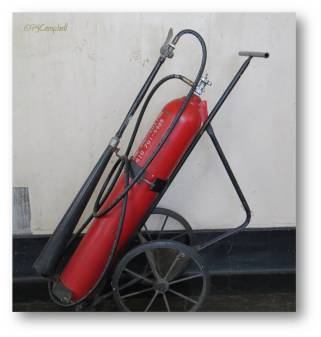
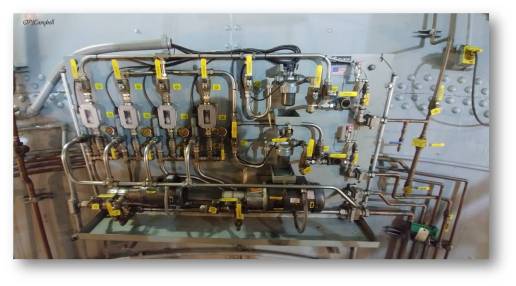
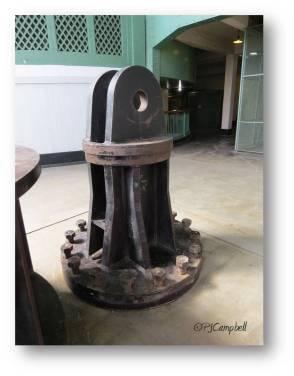 Today the dam is owned and operated by Exelon Power Corporation and is one of the largest non-Federally owned dams in the United States. Just shy of ninety (90) years old, it is not certain what the future holds for the dam. There are some who say the power being generated is not needed so much and the river should be returned to its original state allowing nature once again to take its course. Part of me agrees – take it down and let the river flow again “at the rapids”; but another part of me thinks it would be a shame to destroy the beautiful old dam. In the meantime, the eagles and cormorants and gulls and vultures and herons will come in winter to hunt and fish and fight. And, as long as they do, the birders and photographers will also show up to stand in the cold and watch the spectacle unfold.
Sources for Factual Information:
- Wikipedia Conowingo Dam – https://en.wikipedia.org/wiki/Conowingo_
- Conowingo Dam – http://www.conowingodam.org/issues/river-dam/
- Wildlife South Conowingo – http://wildlifesouth.com/Locations/Maryland/Conowingo_Dam.html
- Exelon Conowingo Dam – http://www.exeloncorp.com/locations/power-plants/conowingo-hydroelectric-generating-station
- Harford County Bird Club – Conowingo Dam – http://www.harfordbirdclub.org/conowingo.html
- Conowingo, Maryland – https://en.wikipedia.org/wiki/Conowingo,_Maryland
- Susquehanna River – https://en.wikipedia.org/wiki/Susquehanna_River
- For great information on visiting Conowingo, Emily Mitchell‘s blog/visitor guide: https://bellaremyphotography.com/2012/12/09/a-visitors-guide-to-the-bald-eagles-at-conowingo-dam/
 You enter Kings Canyon National Park via California Highway 180. Just inside the park, you can either take the General’s Highway (198) south to go through Sequoia National Park or continue on 180 all the way to the bottom of Kings Canyon and the end of the road. That is what we decided to do…explore Kings Canyon down to the end of the road…after all it was only twenty-six miles one way. What the heck, we could do that in a couple hours and be back up to the visitor center in time for a late lunch. Easy-peasy.
 And, duh, I didn’t consider that we’d been driving on nothing but mountain roads – up and down – looking over one precipice after another since we started this adventure in the Sierra Nevada Mountains. Yep, these mountains ain’t the Smokies that we know and love back east. In the Smokies you get lots of driving time on the ridge of the mountain where the road is relatively flat with lots of Christmas tree farms. In the Smokies, stopping at a scenic overlook doesn’t mean you’re on a tiny gravel pull-out trying not to look over the edge of infinity as you lean out of the car. I really think the powers that be in California should look into getting more guardrails for those overlooks.


 But Kings Canyon is not a new park at all. It was established in 1940 and includes 461,901 acres or about 722 square miles. That’s a big bigger than the acreage you could see driving on the 26 mile paved road. So, the part of the park we saw was very tiny compared to the rest of it. To fully appreciate the park, you’d have to get out of the car and do some serious hiking. It might take a while and you might not make it back in time for lunch but the trails are there if you want to see it all and you can get a trail map right there in the visitor center with the souvenir shop next door.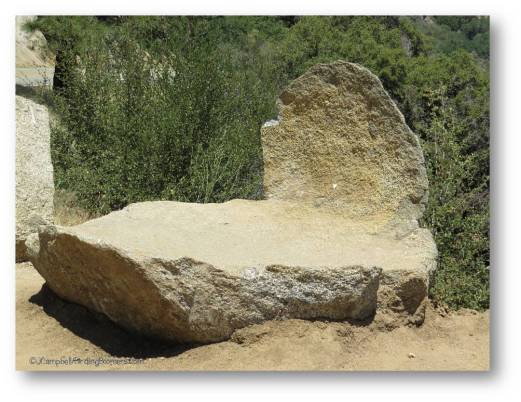

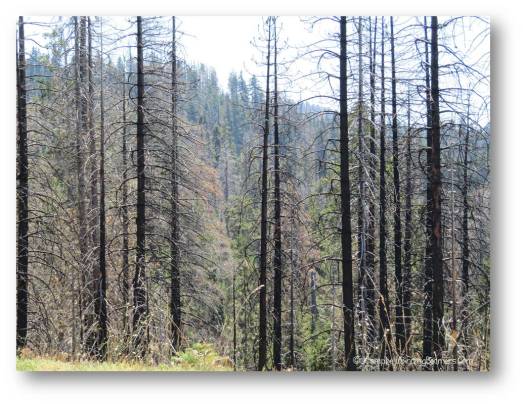

 As noted, the views on the road down into the canyon were spectacular. But the highlight for me was the opportunity to see the continent’s geologic transition zone showing the seam where two continental plates had collided.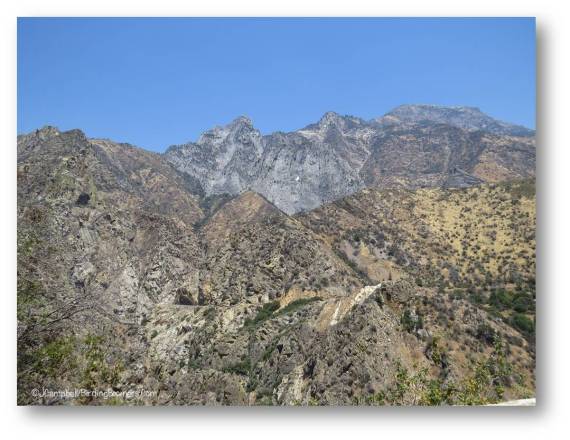

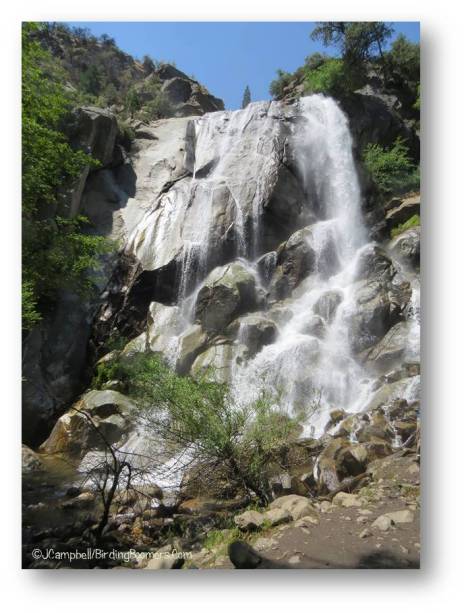
 Let’s see 26 miles in 3 hours puts us at a breath-taking speed of just about 11.5 miles per hour…..lots of curves and lots of scenic overlooks before we got to the end of that road. We had our lunch sitting on a rock by the south fork of Kings River…lunch with a view indeed.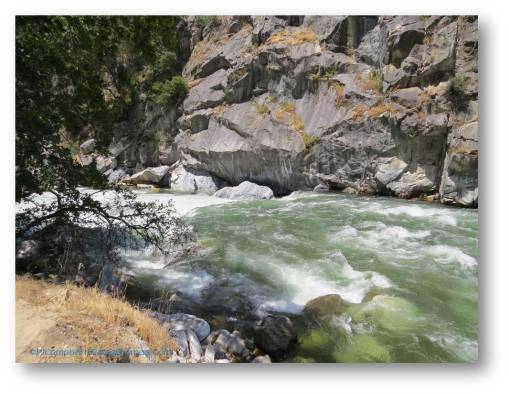
 Birding Boomers