
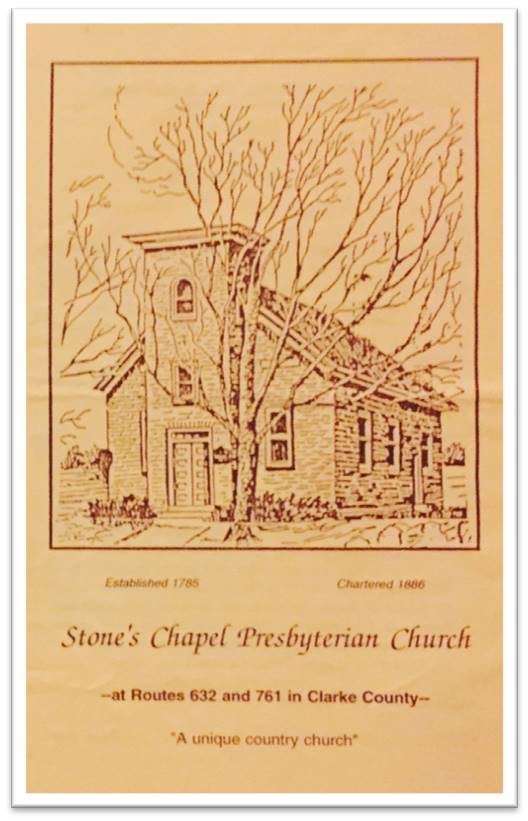
“This was the church I went to when I was a child. I remember going to church in the summer and it would be hot so they would open the windows to try to stir up a little breeze throughout the church. The church sat beside a pasture where cows grazed. When the congregation would start singing, the cows in the pasture would lope on over to the wooden fence and lean their heads over the fence and start to moo … singing right along with the people in church. I recall that they did not muuurrrr too much during the sermon but they certainly did seem to enjoy the hymns.” (Jerry Hanline)
Stone’s Chapel is still there on Crum’s Church Road in Clarke County near Berryville, Virginia. So is the pasture with its sturdy wood and wire fence. And there are still cows grazing in the field munching on clover and Queen Anne’s Lace and the native grasses that grow there. But the congregation is no longer there…..no longer gathering on Sunday morning for the worship service….no longer opening the windows to catch the breeze or to sing the old hymns from the old blue-backed Presbyterian hymnal. After more than two hundred years, the chapel is now as still and quiet as the graves in the cemetery outside.
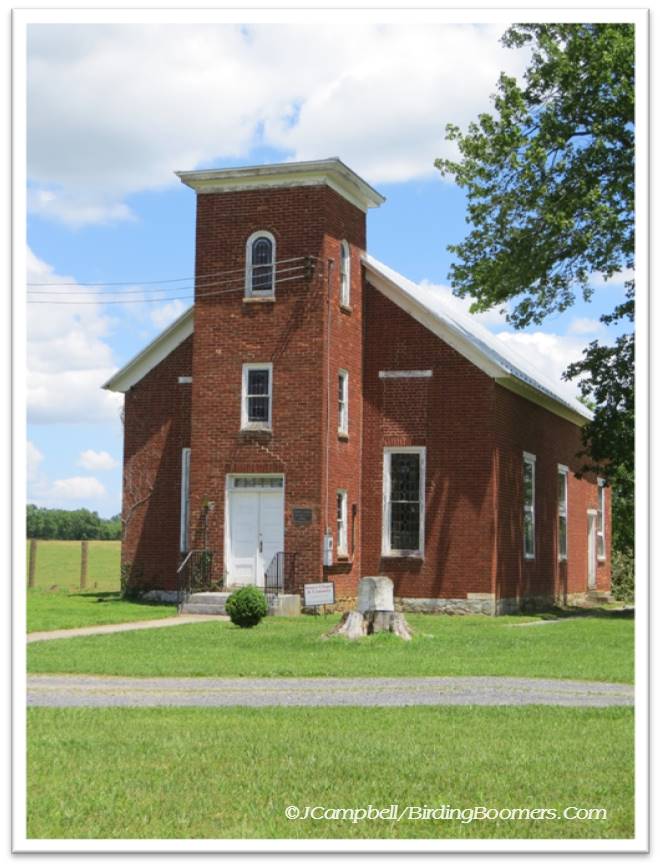
There has been a church at this site since 1740. Historical records note that there was a log building on the site as early as 1785. The first meetings were held in an old barn owned by Jacob Mauser. The earliest settlers in the area were mostly German and Scotch-Irish who were members of the Reform Church of Europe who worshiped God under the teachings of Martin Luther and John Calvin. In the new world, here in Berryville, the church building was used by both the Lutherans and the Calvinists for the first twenty-five years (25) of its existence.

The first Lutheran minister of record was the Reverend Christian Streit, a Lutheran Revolutionary War chaplain, who served his congregation from 1785 to 1812. Pastor Streit held the first communion at the church on October 30, 1785. How wonderful to consider these early American Christians gathering in a barn….no more than a stable really….to worship and take communion.

The Lutheran congregation knew their church as the Stenkirche Lutheran Church. In 1810, the Lutheran congregation moved to Union Church in Smithfield (now Middleway, West Virginia) but they continued to use the cemetery at Stone’s Chapel throughout the 19th century.

As for the Calvinists, Stone’s Chapel was first mentioned in local Presbyterian records in 1878. Prior to 1853 when the Berryville Presbytery was established, pastors were provided by the Winchester Presbytery. The first pastor for Stone’s Chapel was Reverend J.H.C. Leach who was appointed in 1824. Over the years several more pastors were provided by the Winchester Presbytery. Then in September 1885, the local Berryville pastor agreed to conduct services twice a month at Stone’s Chapel – a morning service on the third Sunday of each month and an afternoon service on the first Sunday of each month. On July 31, 1886, Stone’s Chapel was established as a separate church starting with just fifteen (15) members, eleven (11) of which had transferred over from the Berryville Presbytery.
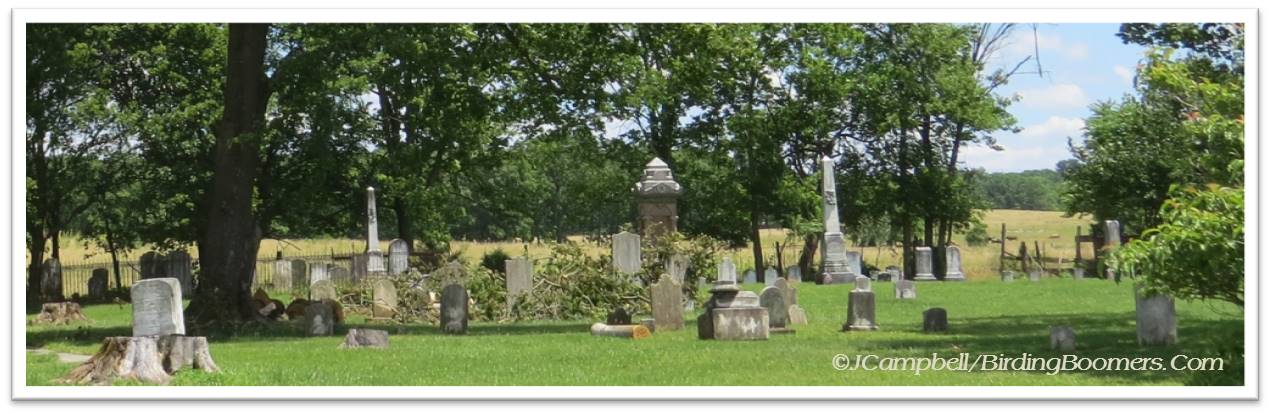
The chapel was named after Jacob Stone (formerly Stine) who donated land for the church cemetery which has about two hundred marked graves dating back to the 1700’s and includes the graves of at least three Revolutionary War soldiers. The first burial on record was the son of Daniel Hukedom on August 18, 1786. The deed which transferred the property from Jacob and Barbara Stone to the Trustees of the Lutheran and Calvinist Societies was recorded in 1793. Ownership and maintenance of the cemetery was taken over by the Clarke County Cemetery Association in the 1950’s. (Note: the church was also originally called Stine’s Chapel. The name was changed when Jacob Stine anglicized his name to Stone.)
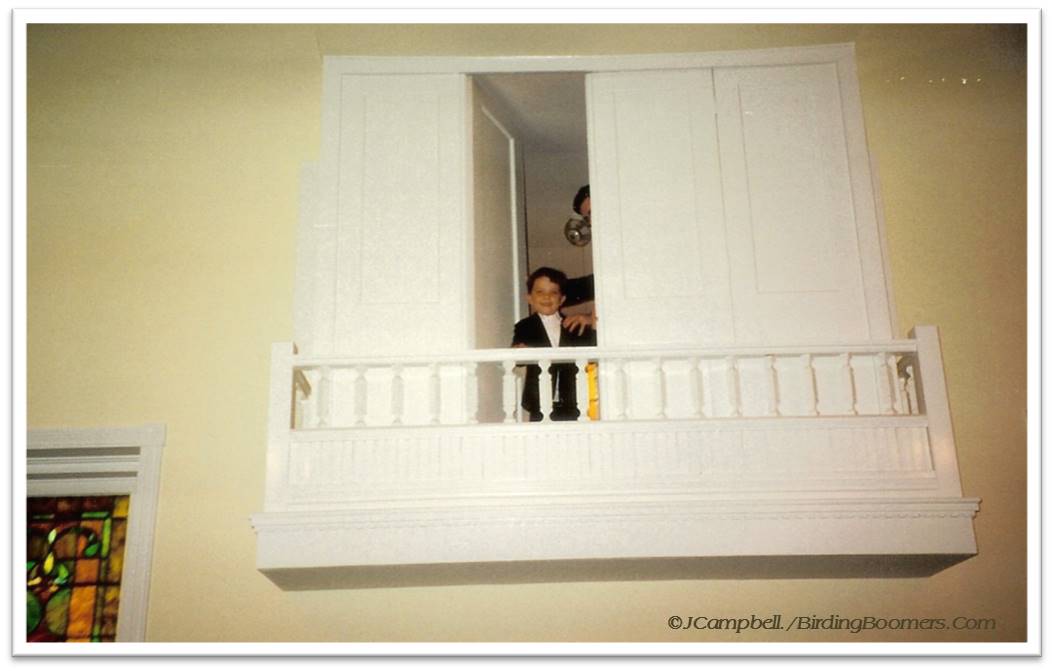
The current building was constructed in 1848. In 1905, it was renovated to add the vestibule tower and the back addition for Sunday School. At that time a new slate roof was added along with stained glass windows, a mahogany pulpit and a pipe organ. (I think maybe what we thought was a choir loft or gallery must have been home to the pipe organ.)
Stone’s Chapel was an active Presbyterian church until it was decommissioned in 2000. The Chapel had its last meeting on Easter Sunday, April 24, 2000.

I had the opportunity to attend this last meeting along with other members of my husband’s family who all traveled up to Berryville to attend that final service with their mother. It was a warm spring day and a lovely way to end more than two centuries of worshipping God there with the local assembly although I have to admit that I was sorely disappointed that the cows didn’t come on over and sing along with us.

Today the church is owned and maintained by the Stone’s Chapel Memorial Association. Donations for the upkeep and preservation of the chapel can be made to:
Stone’s Chapel Memorial Association
Post Office Box 844
Berryville, VA 22611.
- Source information for this article was found at https://stoneschapel.org/history/ .
- For information about the Revolutionary War veterans buried at Stone’s Chapel, see https://stoneschapel.org/cemetery/ .
- Other historical information was taken from the Stone’s Chapel Program/Pamphlet handed out for the final service on April 24, 2000.
- Stone’s Chapel is located on Crum’s Church Road – Routes 632 and 761 in Clarke County.
 This journey of mine is beginning to be amazing. I am now becoming a bit obsessed with old churches. Whenever we go meandering through the countryside and down country roads, I am not only on the lookout for birds and wildflowers, now I am on the hunt for old churches. It makes for some interesting journeys. If you thought we did not get anywhere quickly before, you can bet good money that we are definitely not getting anywhere fast these days. We do not drive more than a mile before I am saying, “Stop, stop the car….there’s another one” and it could be a bird, flower, or church. Take your pick, when you’re roaming around looking, there is always, always something to see and to photograph.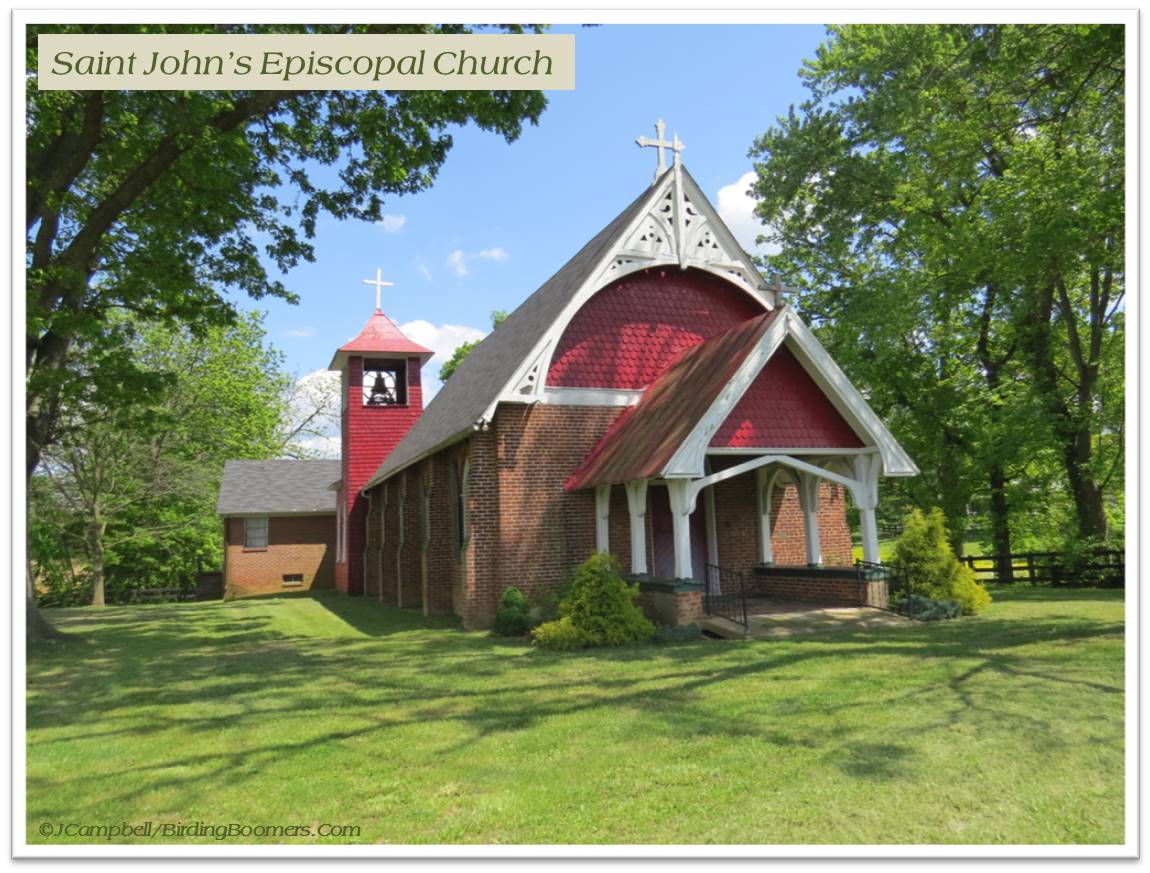
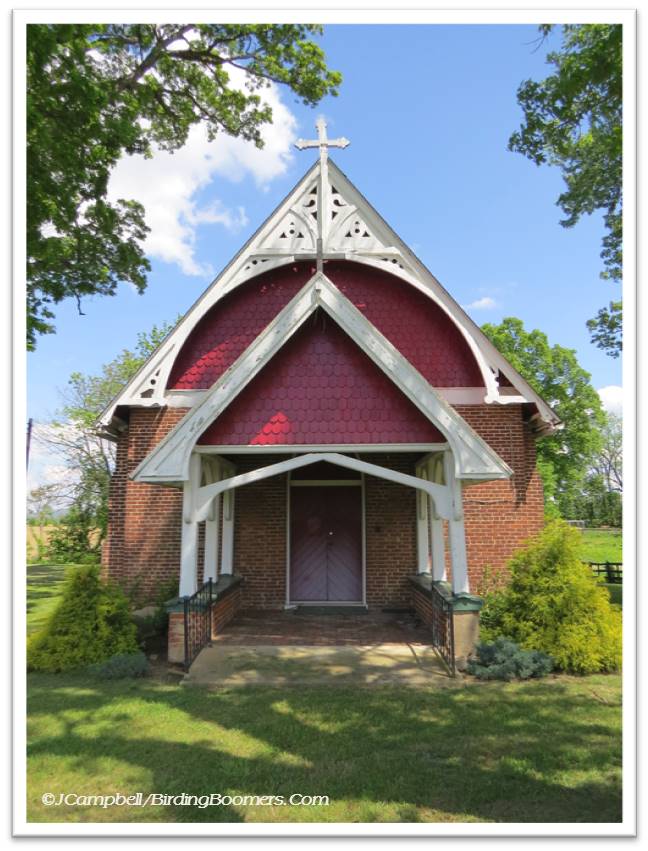 St. John’s Episcopal no longer has a congregation…or so that is what one of the websites I viewed said. What an interesting way to indicate that the church is no longer an active church…as if the shepherd somehow lost the flock one day never to find them again. I did find some information that the church was proposed to be used/being used as a shelter during the winter months (November – May) for homeless people from Charlestown. I do not know if this idea ever came to fruition – I have never noticed anyone at/around the church that would indicate it was now a shelter but that doesn’t mean that it isn’t. I also read that the parish hall had been used by the community for meetings, etc. so it appears that the church is still being used in some way or another to benefit the community.
 The small community of Rippon is also quite interesting in its own right. It formed in the mid-19th century at the crossroads on the Berryville and Charlestown Turnpike with Withers-Larue Road and Myerstown Road. The town is named after the
 One historical note – it seems that when settlers first came to Virginia, the established church was the Anglican Church (Church of England) and all Virginia residents were required to pay taxes and tithes to support the church. Many of the settlers who moved further west into the Shenandoah Valley and what is now West Virginia were dissenters and wanted to establish their own churches to worship in the religion of their choice. According to the link for
  While we are looking at African American Churches organized and founded in northern Virginia after the Civil War, I’ll add a church that serves a historically black community in the heart of Berryville in an area called the
  Today, many of the old buildings have fallen into ruin but the centerpiece of the historical area is the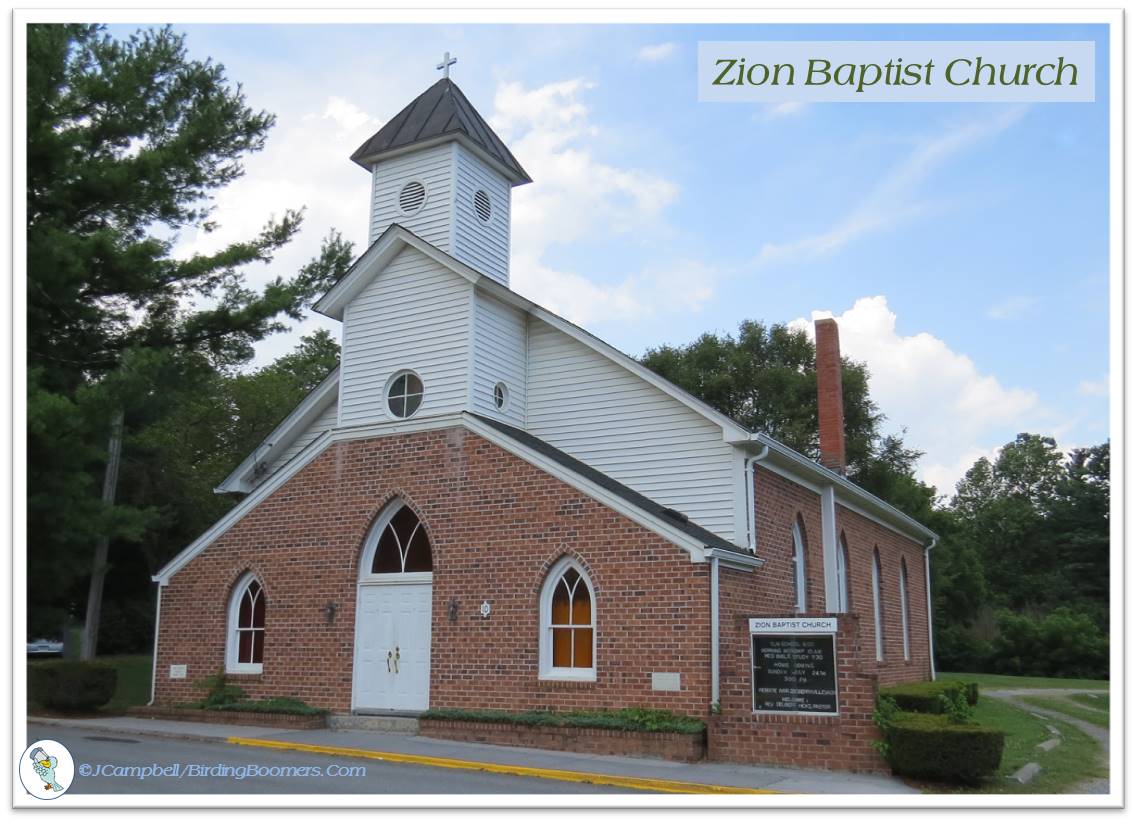
 The original church for this congregation – and this is still a very active congregation – is also on Josephine Street. The original Franklin Chapel is now the Franklin Annex and is located right across the street from the current church.
 The Frank Annex was built in 1882 on property purchased from Brother Benjamin Franklin for $2,379.00. The church was organized in 1875 by Brother Ben Franklin. When the new church built, the Annex was named in his honor. I do not know if Brother Benjamin purchased the land as part of the original land deals from the McCormick estate…but the timing is very close.
 (Do not be confused by the name. This is not
 Birding Boomers