
 It’s 7:15 AM and we’re heading out to go birding. It’s very early for me – way too early for me, in fact, since I retired. I gave up early mornings and 5:30 AM alarm clocks when I stopped having to head out at that some-unGodly time to fight traffic or catch a train to get to work. I used to think I was a “morning person” but now have decided I am definitely a “mid-morning person”. But we were up early (relatively) and heading out to do a little birding. Okay, only one more thought on ‘early’ – most birders have already been out, hiked 5 miles through the wetlands and parks looking for warblers and are, by 7:00 AM, showered, had breakfast, updated their life lists on eBird and are heading out to work. I applaud them for being the “early birder that gets the bird” knowing I am probably not ever going to be that kind of birder.
We grabbed a travel mug of coffee and headed up to the local WA WA (those of you in Maryland know the place) to get a ham, cheese, & egg croissant. We obviously cannot go birding on an empty stomach and can’t waste any more time getting our usual bowl of cereal and fruit at home. That done, we headed on down the road to Governor Bridge Natural Area. I had been reading about all the birds there from a friend’s blog. Hugh is an avid birder and nature photographer who birds every day – come rain or come shine, or more lately, come sweltering August heat and oppressively high humidity. He posts his beautiful photographs at his blog site, My Birding Photos. We hadn’t been down to Governor Bridge in many months so I figured it was time to check the place out again.
Did I mention rush hour traffic delays? Yeah, guess there are quite a few people who slept past 5:30 this morning and were out on the roads just when we wanted to go somewhere. Then again, it could have been that all those early morning birders were now on the road trying to get to work. We took every back road and alley way we could think of to get off the main roads and get down to our destination without too much traffic stress.
As we drove into the preserve, I recalled that I had meant to download trail maps since we hadn’t been there in a while. Oh well, we can just follow the sound of birds singing in the trees. Then again, maybe not. It’s now about 8:30 AM and the cicadas, katydids, and grasshoppers are buzzing and droning and scratching their legs together and making an awful racket as they are inclined to do in hot summer heat.
 Hmm. Bugs. Thank heavens, we have bug spray in the car. Vowing to stay on the trails and away from possible tick and chigger zones, we spray down anyway just in case. Good move as it turned out to be a buggy day….saw some rather unique ones along the way.
I asked a gentleman getting out of his car about the trails and he very kindly and generously pointed out the main trial we could take up to a little bridge, turn left onto the trail that encircles the lake. As an alternative, we could take a smaller but closer trail and go back towards the ponds. Wow, it has been a long time since we were here. Lake? Ponds? Maybe I have this preserve confused with another one we have visited in the past. I notice that he heads off in a completely different direction towards the canoe/kayak launch….guess he thought the river would be more peaceful and quiet than the ponds or lake…or taking the same trail we were taking.
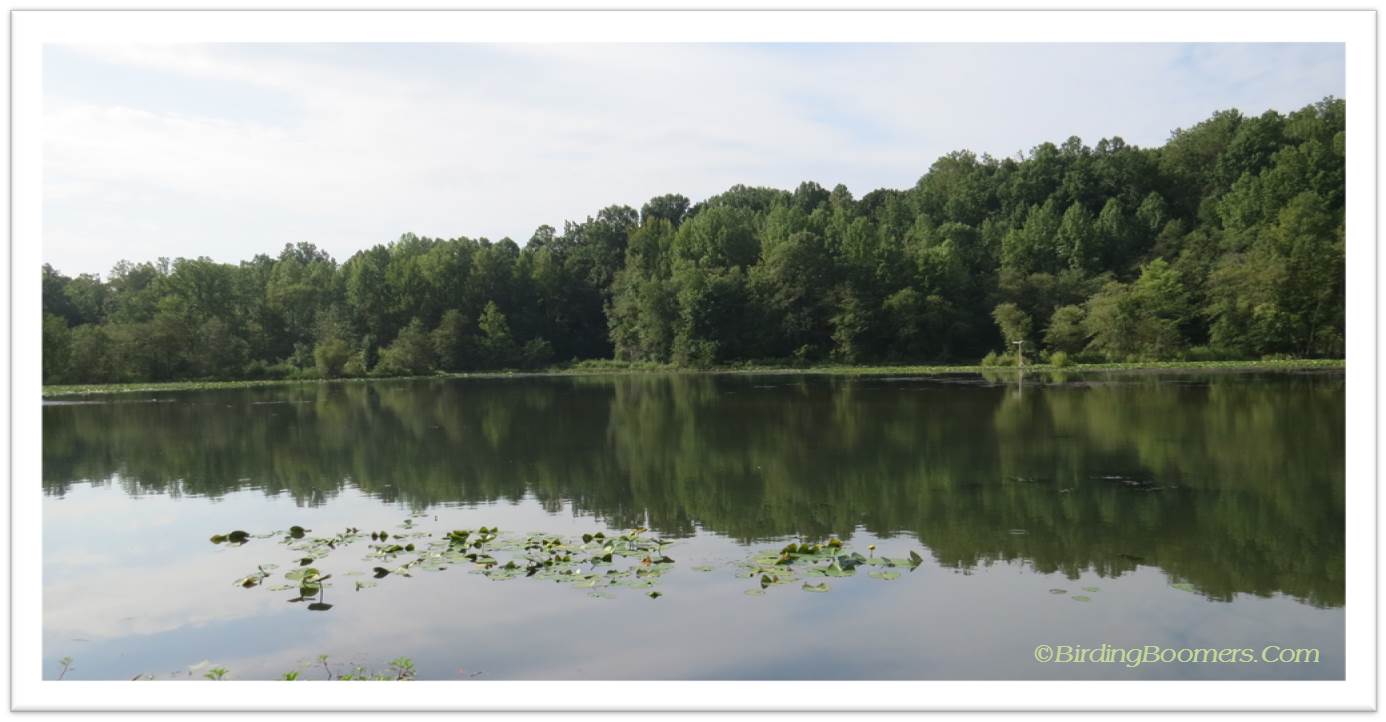
 Now that didn’t take long so we’re moving up an old service road towards the lake area by 8:35-ish. There is a slight breeze that is a cool relief from the heat. I immediately hear an Eastern Wood-Pewee (Contopus virens) calling in the woods and hoped that we will spot him (or her) at some point on our walk. We found the bridge with no problems. We stopped and took a couple photos and headed over to the lake which was beautiful in the early morning sunlight. There were wildflowers and bugs everywhere but no birds. There did seem to be a funny looking branch on a snag on a little island in the middle of the lake. Holey moley, it’s a Belted Kingfisher (Ceryle alcyon)…..and a beauty too. Too far away for a great photo but I gave it a try all the same.
 At times like this, I think maybe I should have opted for a better camera with a bigger zoom lens. Then I remember that I don’t like having to tote around a big ole heavy camera and long lens and heavy tripod and I am happy with my little Canon Powershot SX50 HS. The 50X zoom gives me enough to keep me satisfied and taking photographs but I will admit I miss out on some more distant birds. Like this kingfisher way out there in the middle of the lake. And the kingfisher was a delight flying back and forth to different perches here and there on the lake. It was very obvious that this bird had laid claim to that lake.
We found a bench and decided to take a break and maybe sit quietly to see if the birds would come to us. Not a chance. But there were bugs and butterflies and wildflowers to look at and take pictures of so I wasn’t in the least bit put out by the lack of birds. I hear again the distant call of the Eastern Wood- Pewee echoing through the area….Peeee-ooooo-weee. Drat, I just cannot get a good fix on the sound so could not know exactly where to look.
We decided to go around the lower part of the lake and then cut back through the woods to the ponds and, ultimately, back to the parking area. As we rounded the lake, I heard a tiny peep barely discernible over the din of the katydids. We stopped and were finally able to locate an Eastern Towhee (Pipilo erythrophthalmus) in a nearby tree. We could see him clearly with the binocs but I could not get a photograph through the leaves. Kind of made me long for winter and leafless trees.
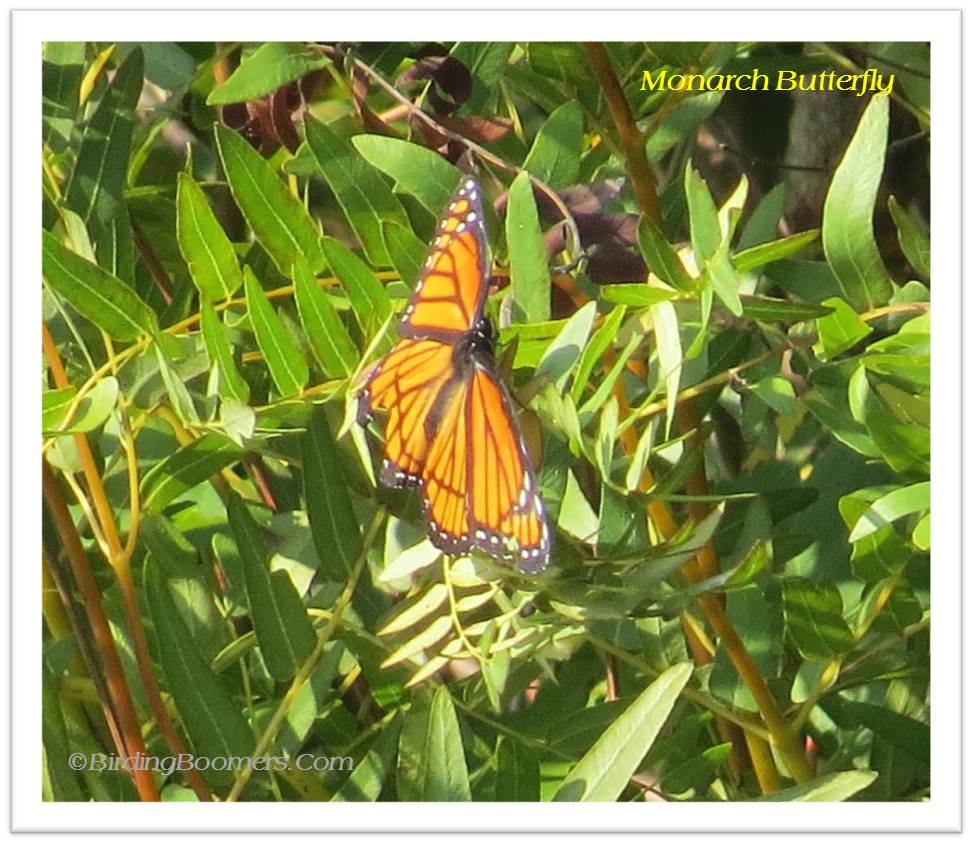 I spotted a Monarch Butterfly (Danaus plexippus). We have noticed that there do not seem to be many Monarchs around this year. Some of the folks from our local bird club have also remarked on this. So I was encouraged to see a Monarch here but discouraged that there was only one.
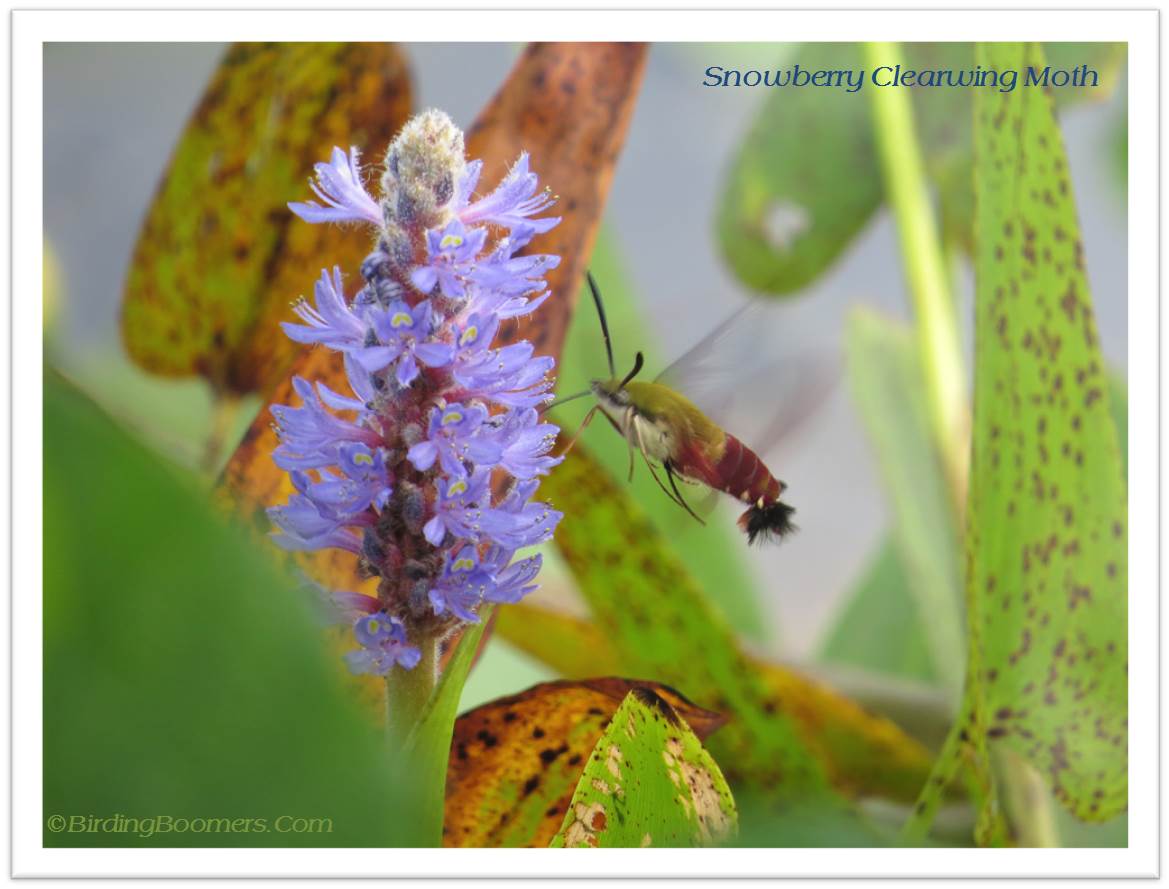 There were other butterflies and, to my delight, we caught sight of a hummingbird moth. If you cannot see a hummingbird, then the next best thing in that size range is a hummingbird moth. Turned out to be a Snowberry Clearwing Moth (Hemaris diffinis).
 We found a picnic table and took another break – I am big on breaks – and watched a small Largemouth Bass (Micropterus salmoides) in the shallows near the shore. He was lying under a water plant and seemed to be watching the smaller minnows near the bank. We waited to see if he would pounce on one and catch his mid-morning snack but he never did so no show for us today.
There is only hot sunshine now. The gentle breeze has disappeared. We head back into the woods on a smaller trail leading down and between the wetland ponds looking for a little coolness. We still were not having any luck with the birds. Then, as we come to a smaller bridge between two ponds, we stop for a moment and suddenly there were birds everywhere. A small flock of Carolina Chickadees (Poecile carolinensis) were flitting back and forth between the trees. Then there are Tufted Titmice (Baeolophus bicolor). The birds are moving from tree to tree and I cannot get the binoculars and the camera operational at the same time. Can they ever stand still for just one minute? Nope.
Then we spot a pair of birds that are different. We call out what we see – gray upper, rounded head, white wing bars, pale underparts – a little yellowish, white throat & breast. What is this bird? I know it but just cannot put a name to it. I know that I know it. This is making me crazy. But they fly away and we move on.
It’s very hot now and getting late so we head back to the car. We look for the vireo that has been reported near the Pokeberry (Phytolacca americana) bushes by the parking area. Nothing. We load up and head out. We know that we will come back to this place in the future and this particular spot in the woods where the birds seem to be congregating. As we pull out of the preserve parking lot, I hear again the lonely distant call of the Pewee….peee-oooo-weee, peee-oooo-weee…just wish I had caught a glimpse…..and then it finally hits me. My mystery grey bird – of course, the Pewees that I had been looking for all morning but then didn’t recognize when I saw them. Rats! They had been right there in front of me….okay, the tree had been out in front of me…the birds were way up high in the tree.
 As we drive down Governor Bridge Road, we remember that we had spotted good birds along the perimeter of the back parking lot for the Baysox stadium. The gate is open so we swing in. We see a small flock of mostly brown birds – maybe female grackles or cowbirds or starlings. They ducked low into the high grasses on the edge of the lot. Then as we rounded the corner on the back side of the lot, we spot a bit of blue…. a strange looking bird catches my eye…partially blue but mostly a mottled brown-blue with a light chest. I am a confused but take a couple photos in hopes that I will figure it out back home. Then he flies and joins a flock of about 10 of them heading into the garden of a house just across the road. And I realize these were fledgling Eastern Bluebirds (Sialia sialis) – just getting their blue feathers. They will be lovely in no time but, right now, they are a splotchy bit of a mess making identifying them ever so difficult.
Back home, it is just about lunch-time so we take a break for a sandwich. We watch a little TV while we eat and a History Channel show on the Protestant Reformation gets my attention. So I started watching it and, forgetting my chores and all the things I meant to do today, fell asleep. Always good to take a little nap after a long morning birding though, isn’t it? I wake up about 3:00 PM and the Protestant Reformation is moving into the 19th century so I continue watching until it ends sometime in the 1960’s. Wow, who knew it lasted so long? Somehow they had connected the dots from Martin Luther to Martin Luther King, Jr. Wow again!
The local time at my house was just past 4:00 PM. Now, I figure I really ought to get to those chores. After all, my original plan had been to do a couple hours birding (which turned into about 5 hours altogether) and then come home and catch up on things. But I procrastinate a little and pick up a magazine and figure I’ll spend a few minutes reading about the birds I didn’t see this morning. Before I know it, it is 5:00 PM and it is time to get a little exercise in so I spend 30 minutes on my stationary bike.
And then I am exhausted and it’s time to get dinner started. Well, I obviously cannot get to those chores now.
So, let me see – let’s recap:
- Went birding;
- Saw at least 5 birds I could positively identify – about 5 more I could not;
- Saw a Monarch Butterfly and some bugs and a fish;
- Took 25 or so blurry photos of something that might be a bird in a tree;
- Deleted most of them;
- Got lunch;
- Caught up on the Protestant Reformation;
- Did some exercise; and,
- Helped get supper.
An amazingly productive day altogether! Then again….Guess not. Good thing I will be able to start all over again tomorrow. But maybe I’d better not go birding for a couple days – might be good to get some of those chores done before my next outing.
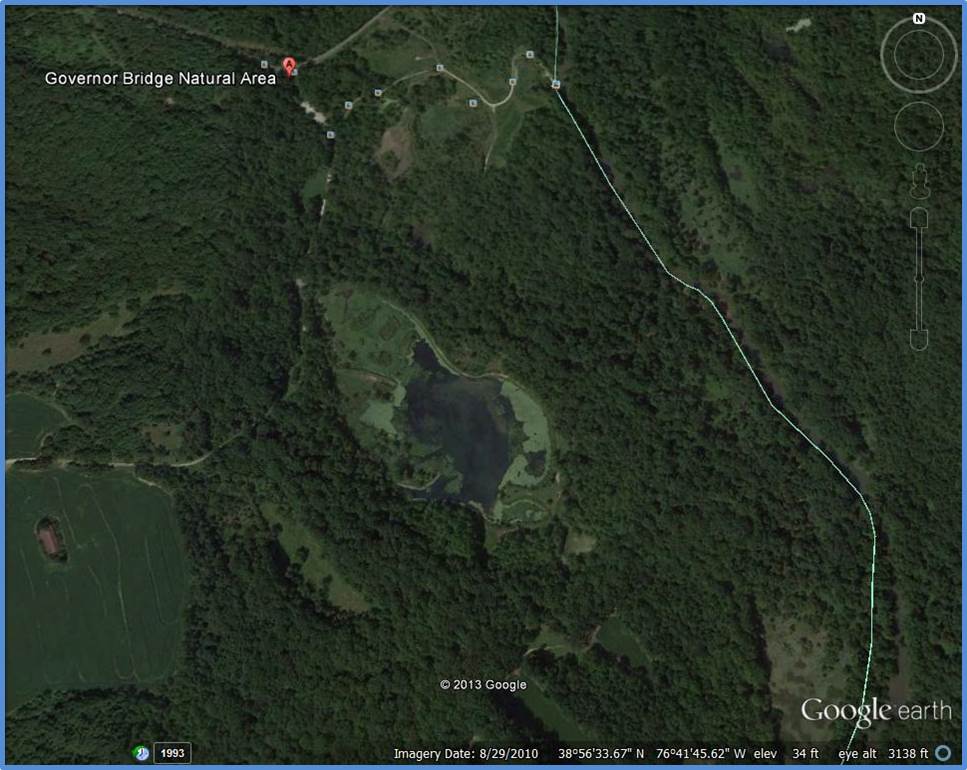 For more information about Governor Bridge Natural Area:
http://www.pgparks.com/Things_To_Do/Nature/Governor_Bridge_Natural_Area___Canoe_Launch.htm

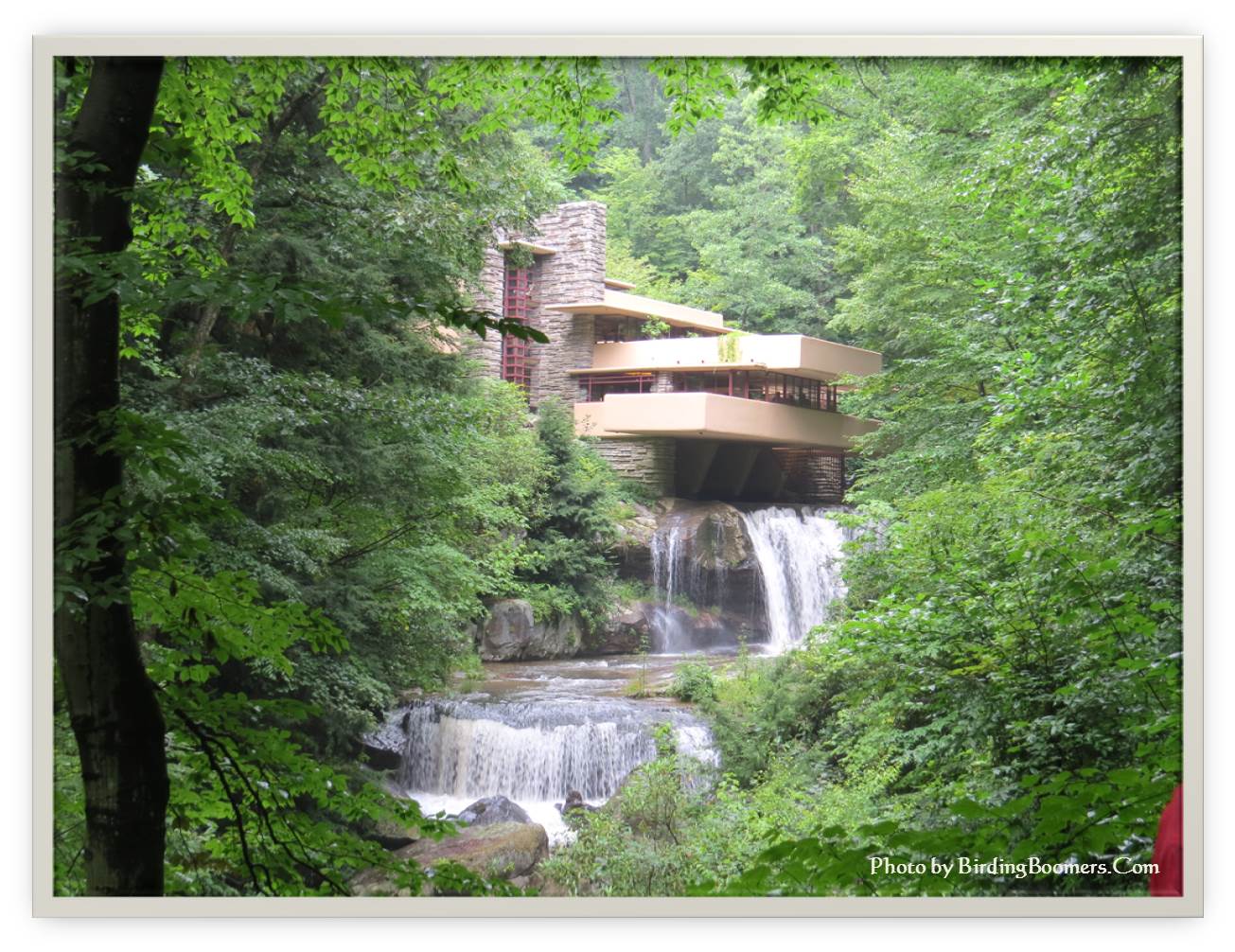
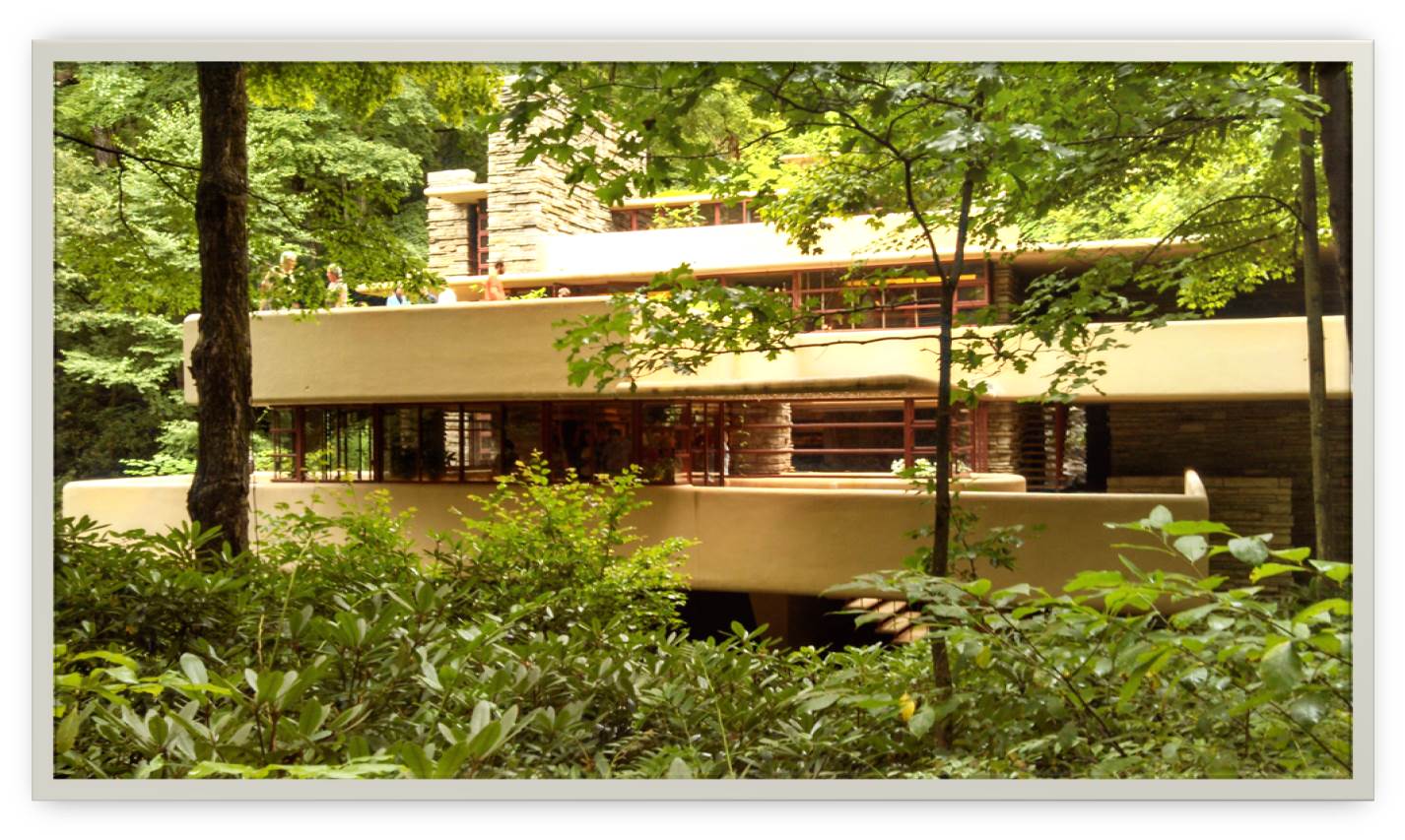


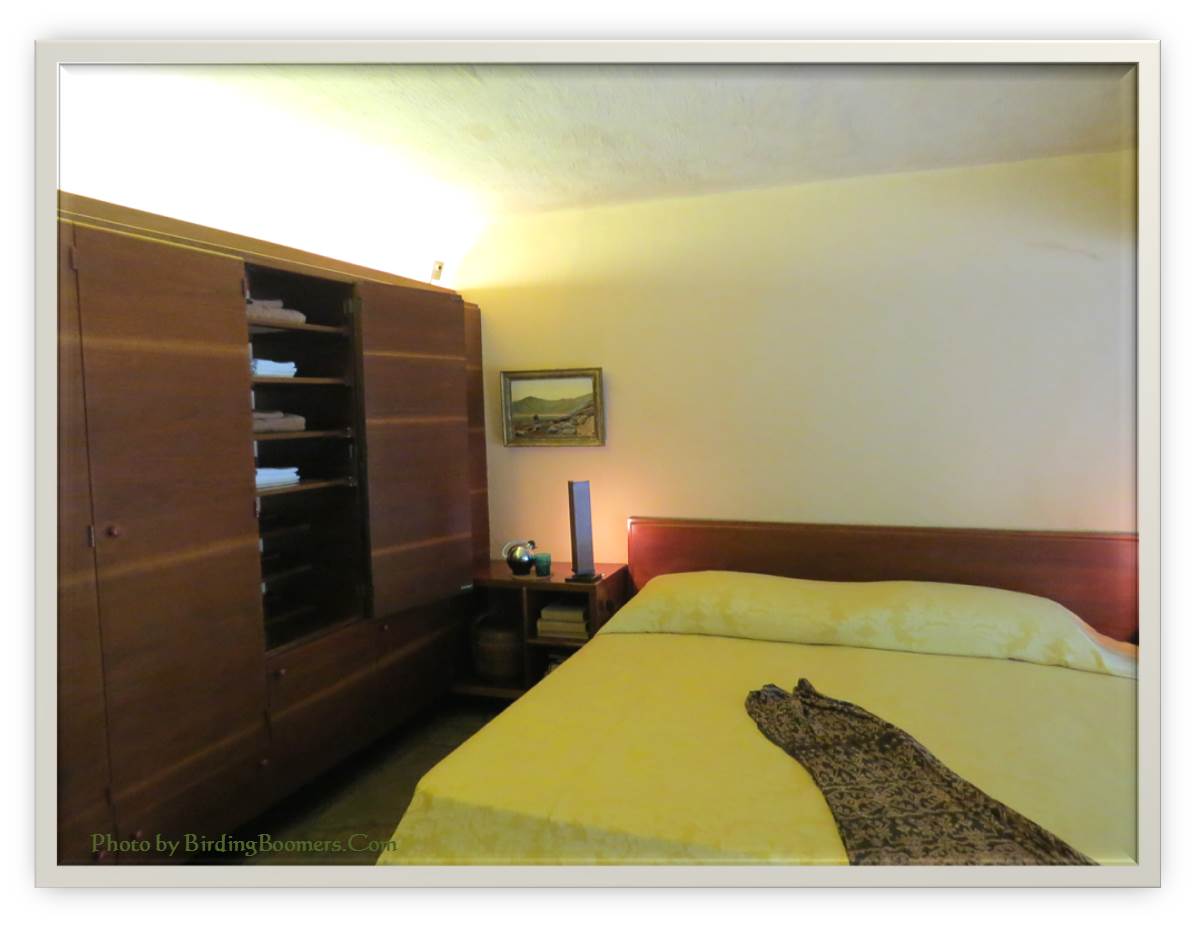


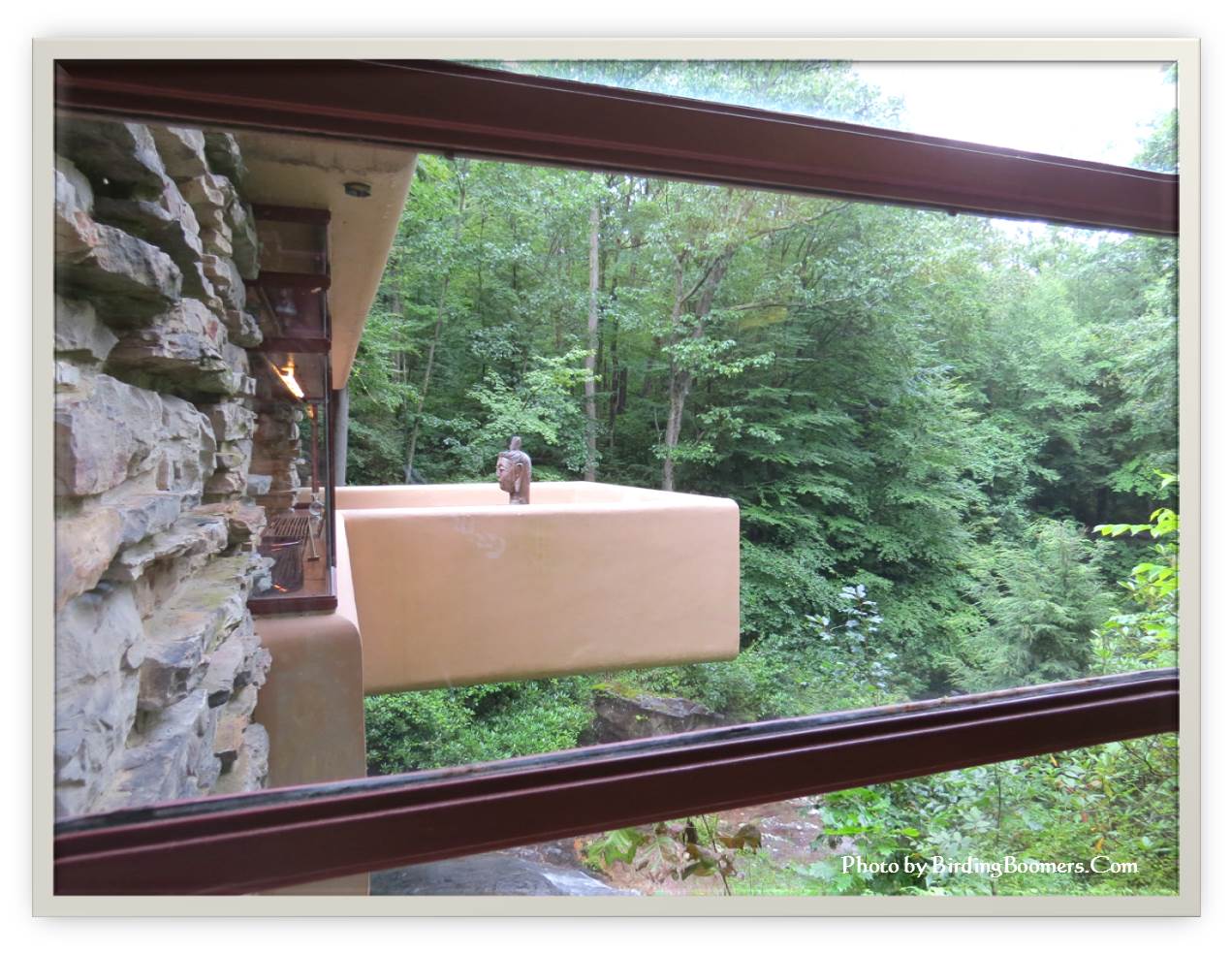
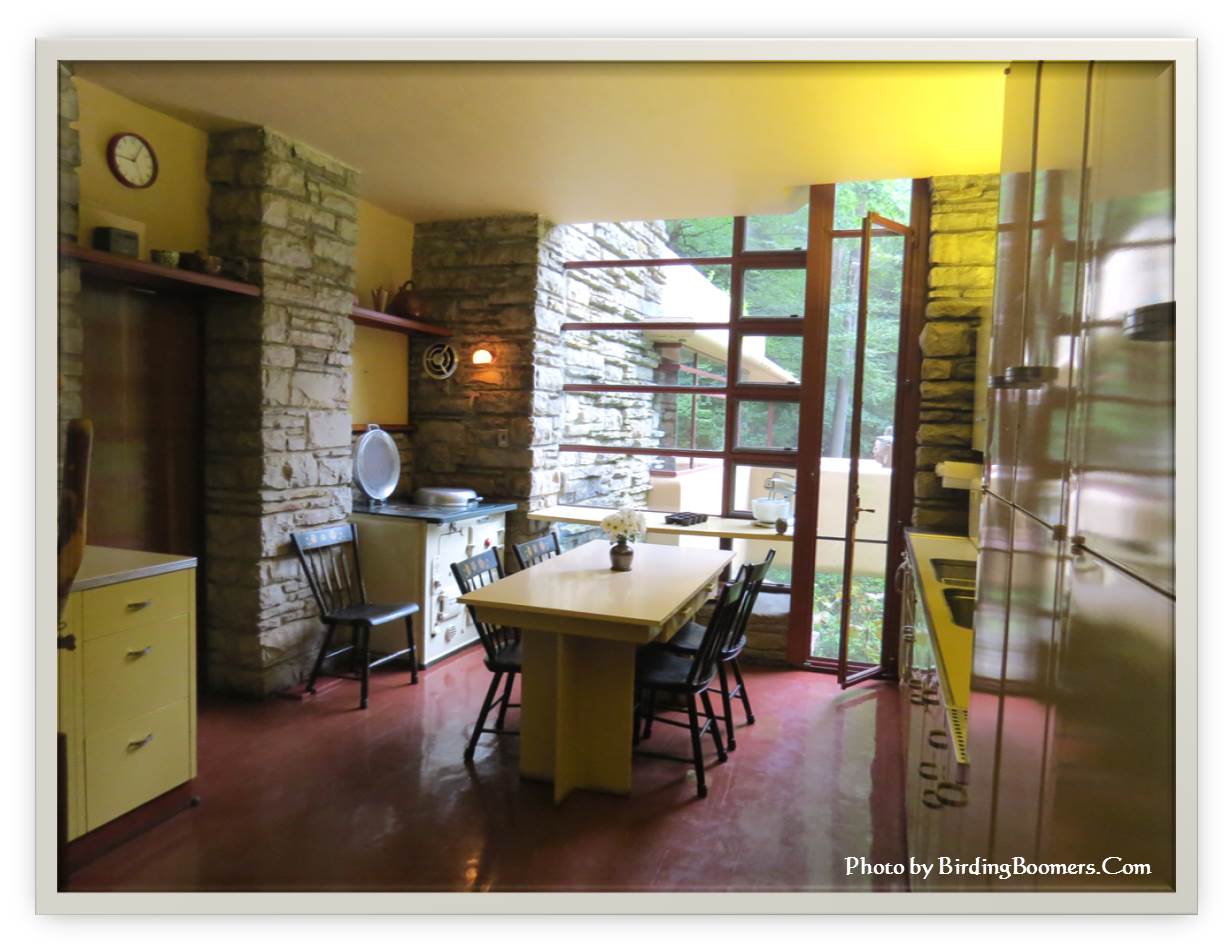
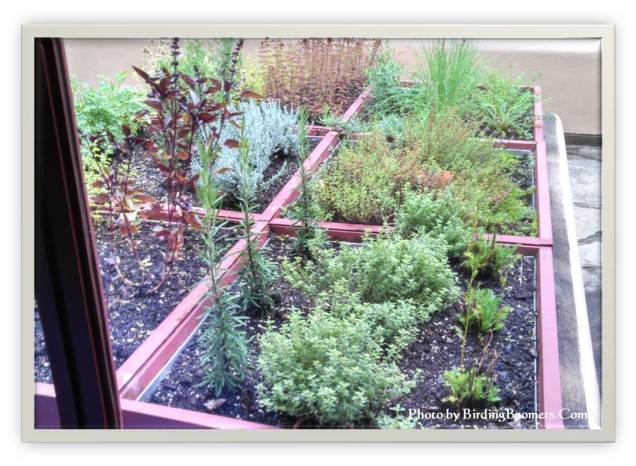
 The gardener in me particularly loved the herb garden on the top deck….not to mention the fig trees in pots on the middle deck or the geraniums growing in the window boxes inside the house. And each bedroom has its own private bath – can you believe that for a house built in 1935? Remarkable!
 But my vain imaginings got me to thinking. If I were
  Birding Boomers