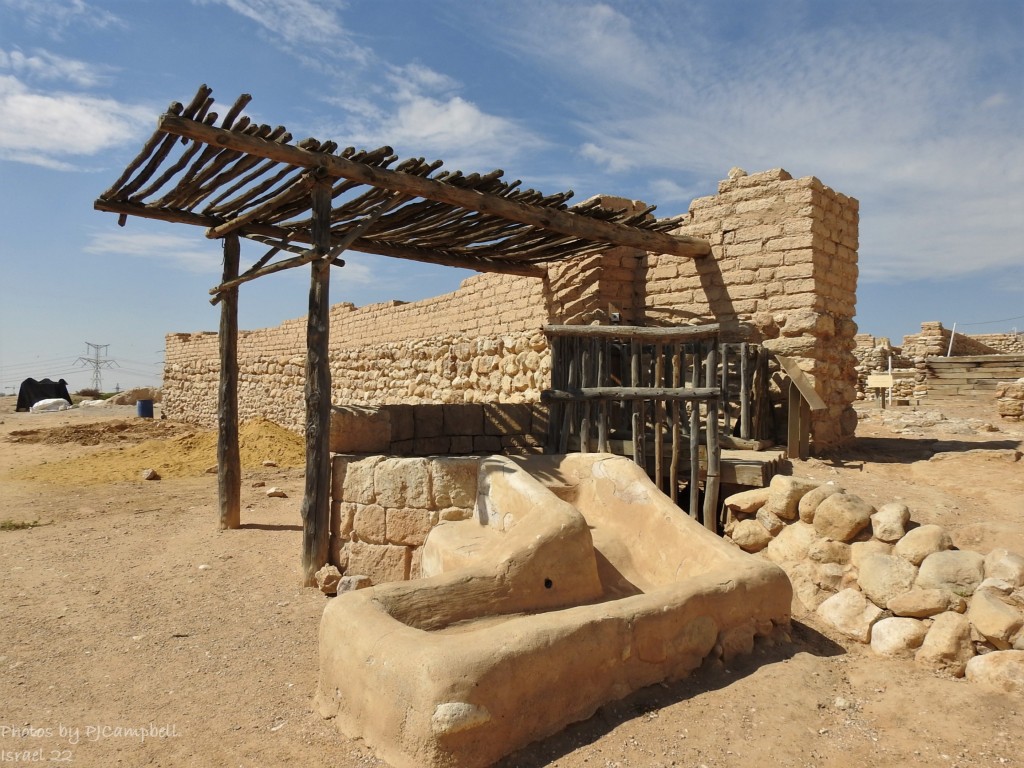
Well of the Oath – Beersheba

Series: Israel 2022

Isaac’s Well at Be’er Sheva

In the desert, you need water to survive. To thrive, you’ll need lots of water. There are springs if you can find them (look for anything green of course) or you can dig a well. You could also dig a large cistern.

Water – necessary for living. Living water. Spring water and well water came from deep in the earth and was deemed by the ancients to be living water. Living water was a gift from God. It was also important for the Jewish purification rituals. Daily cleansing in living water was essential to Hebrew life.

Rainwater collected in cisterns was good for most things and the Hebrews dug massive cisterns in the desert communities. During rainy seasons, the water flow in wadis (valleys) was directed into these cisterns and this water allowed ancient cities to be built and to exist for hundreds of years…. cities like Be’er Sheva or, as we in the west call it most of the time, Beersheba.

But Be’er Sheva in the Bible is mainly about the wells although the ancient ruins show the town to have had an elaborate water system including a huge cistern which is estimated to have about a 132,000-gallon capacity7.  From a Biblical standpoint, the ancient city is primarily about Abraham, Isaac, Jacob, and to a lesser degree, David. And then, there was Josiah destroying the pagan altars but that was much later.

This is a reconstruction of a pagan 4-horned altar found in the ruins. It was actually found in pieces which had been used for other structures at the site. It is believed that the altar was destroyed during the reforms of King Josiah2 (2 Kings 23:8)

To my knowledge, per scripture, Jesus never came to this place. He did have a most interesting conversation with a Samaritan woman at a well about spiritual living water that he would give to her, and she would never thirst again. But that happened about 111 miles/180km north of here near Sychar in ancient Samaria (Okay, it’s an estimate – Sychar doesn’t exist anymore that I found so just guessing at the site somewhere near Mount Gerizim). (John 4:10-26)
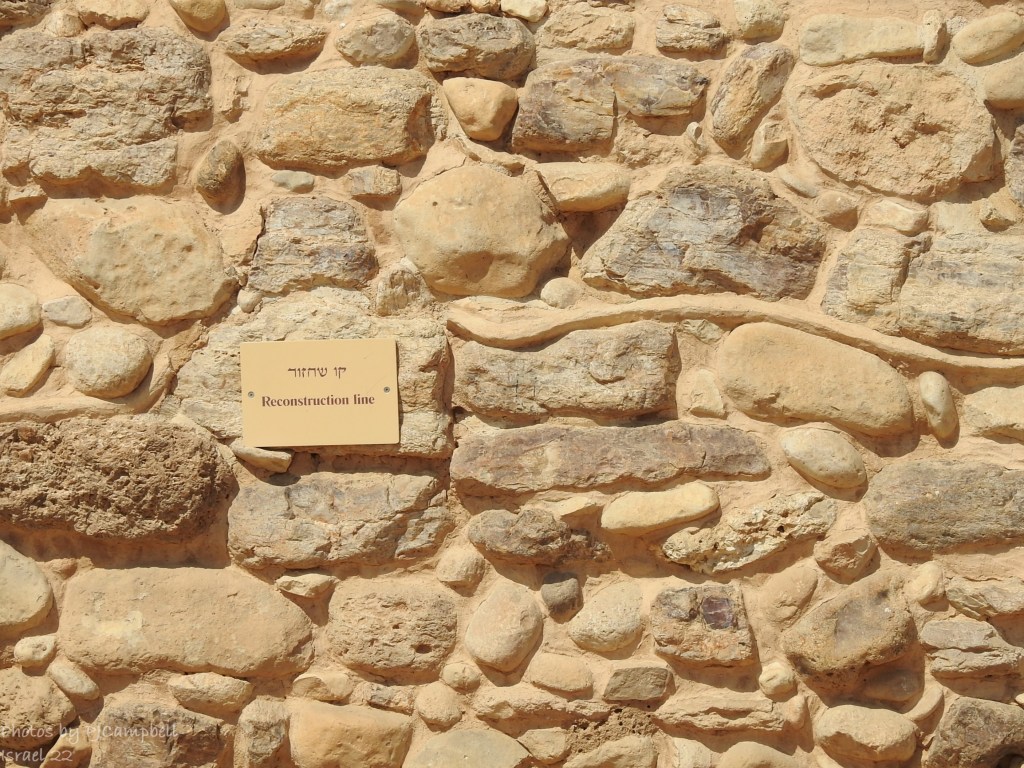
Be’er Sheva is mentioned 33 times2 in the Bible primarily in the Old Testament. The ancient city was the largest city in the Negev Desert and the southernmost city of Judah.1 The “promised land” was said to stretch east of the Jordan River from Dan to Beersheba.


Google Map annotated to show Dan at the upper part of Israel and Beersheba down at the bottom.

It was an important city on the main road from the south into Judah and Israel. The Ridge Route7 begins here and connected all the cities in David’s kingdom. The Beersheva Valley was also a good way to travel from the Dead Sea west to the Mediterranean or north into Jerusalem. (You may note that there are different spellings for Be’er Sheva or Beersheba depending on the actual site. That is not a mistake – different place names are spelled differently in reference materials.)
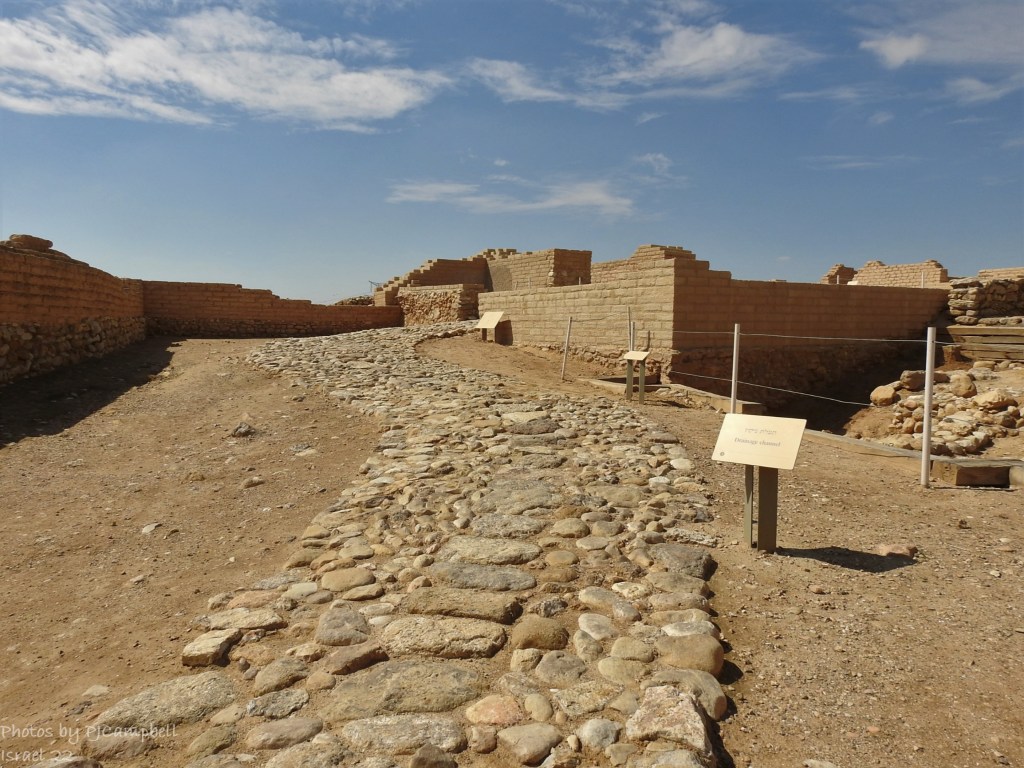
The ancient roadway up to the city gates.
National Park sign showing a rendering of the city gates.

For all these reasons, it became an administrative center for Judah and a city that first Saul and then later, David, as king, fortified2 as protection for Israel from the south and the west…from the Philistines (remember David’s bout with Goliath just to the northeast) and from the Egyptians and just about anyone else who chose the southern route to the Mediterranean Sea and the trade routes to eastern Asia.

Looking down from the observation tower at the ruins of the city gates. There would have been two parts to the gate requiring travelers to pass through one and then the other. Traders would have been detained to inspect their goods and to extract a fee (in goods) for trading within the city.7

Archaeologists who have studied the site say it was first inhabited around 4000 BC and remained so until the 16th century AD. 4 The thriving modern city of Beersheba lies only about 3 miles to the west of the ancient tel (ruins/mound) which sits on a hillside overlooking Wadi Beer-Sheba2 (what else would it be named?) The Bedouin city of Tel Sheva lies to the east. Tel Be’er Sheva today is a national park. And the National Park is where we came to see the ruins and learn a bit about Be’er Sheva.

Biblically, it all started with a well…. or two…or three. In Genesis 21:22-24, we read that, after the event involving Isaac and his impending sacrifice by Abraham on Mount Moriah (Genesis 22:19) which didn’t happen because God provided the sacrifice instead, Abraham came to Be’er Sheva and settled down and, well, he dug a well.

So, Abraham came, and he had sheep and goats and needed water for the needs of his family and his servants and his animals. The area was known for groundwater that could be more easily accessed (than other parts of the desert) by digging wells in and around the streambeds in the wadis.5 Hence, there were numerous wells in the area…all very well named (pun intended).

I’m always intrigued that the ancients – not just the Hebrews in the Bible – named their wells. It shows how very important water was in ancient times and remains so even today. In this country, we name creeks and rivers and springs and lakes, but I do not know of anyone who names their wells…perhaps because there are so many. But I’ve been thinking seriously about giving our well a name – it has served us well (pun intended again) over the past 20 years or so and probably warrants a good name.
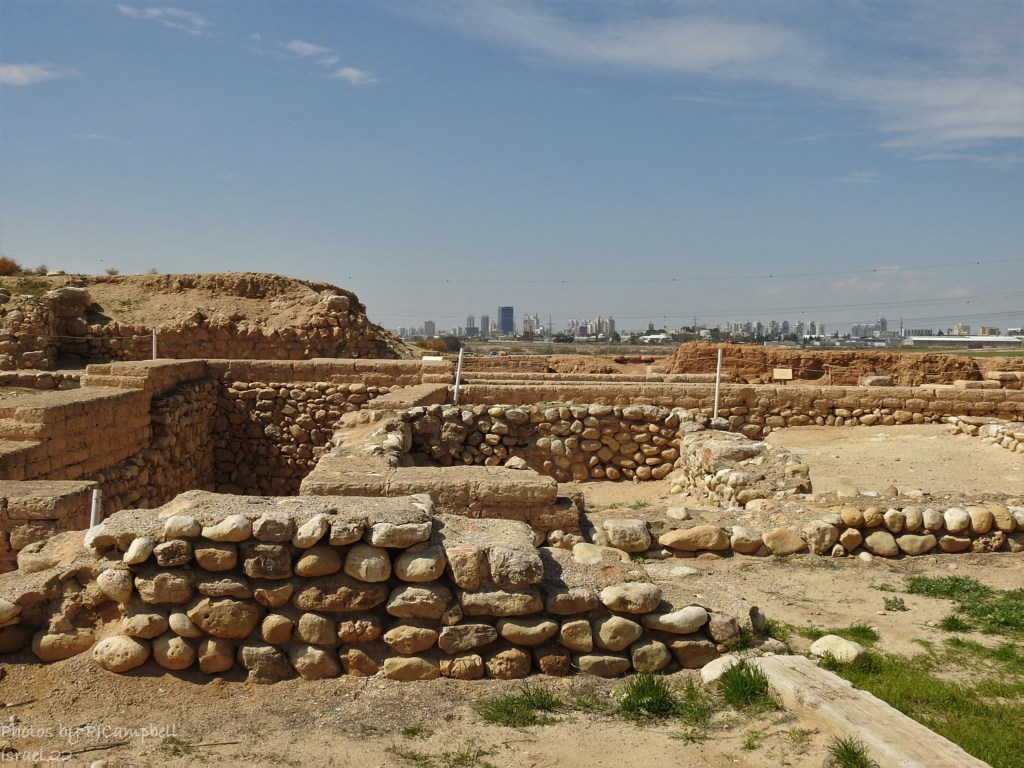
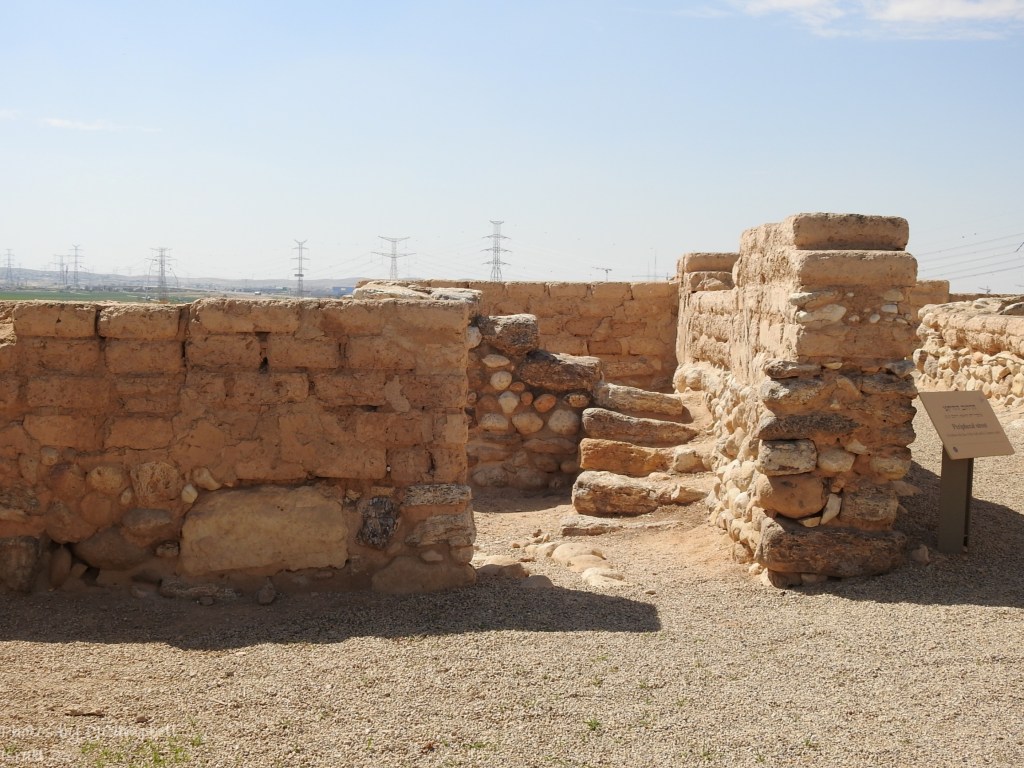
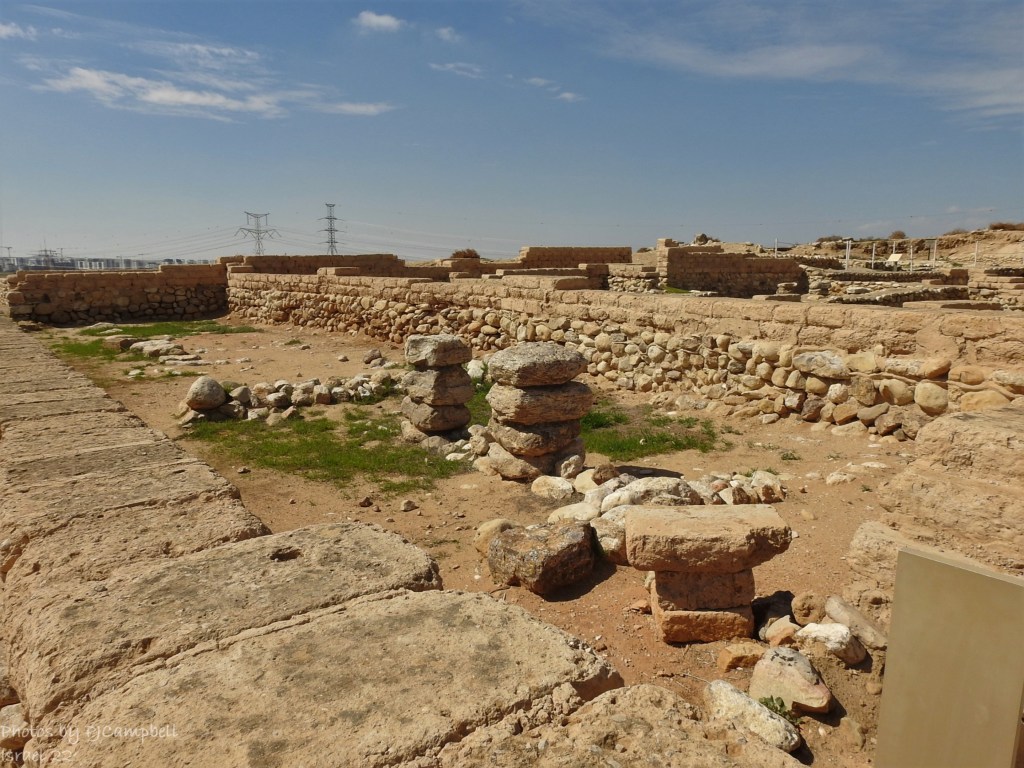
Ruins – possibly of dwellings. Note the skyline of the modern city
(about 3 miles away) in the distance.

Back to Abraham, who showed up and dug a well (or had wells dug by his servants) and the local ruler, Abimelech wasn’t so happy about this. Abimelech’s commander had filled in the well and was starting something with Abraham’s people. Long story short, Abraham and Abimelech met and made a covenant that Abraham, who had God on his side and obviously in a better situation than Abimelech, would not bring harm to Abimelech or his descendants.  To commemorate, Abraham planted a tamarisk tree nearby. This well was named Be’er Sheva with Be’er meaning “well” and Sheva meaning “oath” for the covenant or oath that was made by Abraham. Because Abraham gave Abimelech seven (7) lambs as a sort of proof that he had, in fact, dug the well in question and wasn’t taking someone else’s well, it is also called the “Well of the Seven”. (Genesis 21)

Now, there is a well named Abraham’s Well3 that is within the Archaeology Museum nearby. Tradition says that this may be the well that Abraham dug. In 1897, a local sheikh built a house over/around it. There is a photograph of this well on Wikipedia.3 We did not stop at this site so did not see Abraham’s Well.

More ruins, possibly dwellings.

Now, moving along to Isaac and Genesis 26:16-33. Isaac also has a run-in with Abimelech about those wells. Note: Abimelech is what all Philistine kings/rulers were called at the time1…. so, it is really not clear who the king was. It was like saying “the king” without giving his actual name. That helps explain how, years later, after Abraham had died, Abimelech’s men filled in all of Abraham’s wells and Isaac had to go through the same covenant process with Abimelech. That confused me for quite a bit until I read the part about all kings being called Abimelech… I was beginning to wonder how old Abimelech would be when Isaac came and started reopening those wells that his father, Abraham, had dug. 

Isaac’s story is a bit longer. First local people came and said the first well was theirs. Isaac named that well Esek which means “argument”. He dug another and the same thing happened. He named the second one Sitnah which means “hostility”.  Third time is the charm and the third well was dug and no one complained so he named it Rehobeth which means “open space”.  Then Isaac heads up to Be’er Sheva; Abimelech (the Philistine king) comes along and a new oath is sworn. The servants dig yet another well which Isaac names Shibah which means “oath” and the town there was now named Beersheba. Whew!!

And, per the National Park sign at the site, that well, is said to be the well that we actually did see. (And, of course, we took the obligatory selfies there to show everyone that we were there.)

Looking down into Isaac’s Well at Be’er Sheva. It is said to be 225′ deep. It is grated for safety.

My memories are of a hot, dry place on the hillside where the ruins of the city are located. Some people on the tour went down into the cistern – giant hole with lots of steps going down – but we did not. I might have been crazy enough to want to go down into the well but, it was grated up. (Okay, I wouldn’t really go down in a deep well considering it is one of the deepest in the area at 225’ deep7.)

Along the hillside, there were beautiful flowers growing and there were trees in the wadi although I do not know if they were tamarisk trees.

Just down the hill from the ruins, there was a stream where a local shepherd (Bedouin) herded sheep. Some things never change. There is still water there, there are still wells, and there are still people with thirsty sheep surviving in the Negev. May it always be so.

Bedouin Shephard

Other Scripture References of Importance Related to Beersheba:

  1. Genesis 21:14-19 – When Abraham sent Hagar away with Ismael, she wandered in the wilderness of Beersheba. When they ran out of water, God intervened, opened Hagar’s eyes and she saw a well of water.
  2. Genesis 46:1-7 – When Jacob/Israel was going down to Egypt during the famine, he got to Beersheba and hesitated. God spoke to him and told him not to be afraid to go to Egypt to Joseph, his son. God promised to bring Jacob back again and that Joseph’s own hand would close Jacob’s eyes.
  3. 1 Samuel 8:1-2 – Samuel’s sons, Joel & Abijah served at Beersheba. They didn’t follow the ways of their father for they were corrupt. The people came to Samuel and asked him to appoint a king.
  4. 1 Kings 19:1-8 – Elijah & Jezebel. When Elijah killed all the false priests/prophets, Jezebel swore to kill him. Elijah fled to Beersheba. He left his servant there and journeys into the wilderness and sat under a broom tree. An angel ministered to him. He then traveled to Horeb where he stayed 40 days and 40 nights. God spoke to him there.
  5. 2 Kings 23:8 – King Josiah brought all the priests from the towns of Judah and desecrated all the high places for pagan worship from Geba to Beersheba. He broke down the gateway at the entrance of the Gate of Joshua…to the left of the city gate.
  6. Nehemiah 11:27-30 – When the Israelis (the remnants) returned from captivity in Babylon, the people settled in their ancestral homes from Beersheba to the Valley of Hinnom.
I have no idea what this sign is all about. It looks intriguing and very official. I wonder if it was asking visitors to watch out for snakes.

Sources for Other Information:

  1. Beersheba – Wikipedia
  2. Tel Be’er Sheva – Wikipedia
  3. Abraham’s Well Visitor Center
  4. Archaeology of Israel – Wikipedia – Tel Be’er Sheva
  5. Wayback Machine (archive.org) – Be’er Sheva Natl Park Brochure (PDF)
  6. 2022 Holy Land Tour, Journey to the Land of the Bible; Dallas Theological Seminary; 2022; Beersheba p31
  7. www.bakerbooks.com , USA, Beersheba pp 119-121
  8. New Testament places associated with Jesus – Wikipedia

One Little Boy Named David

Series: Israel 2022 – Valley of Elah

He’s singing to us.

We are standing at the edge a field of what looks to me like winter wheat. The bus had pulled off the highway and we’d all walked down the edge of the road and into the field. I was hoping that the farmer who owned the field did not come driving by and stop to run us out of his field lest we trample the crop. He didn’t and we didn’t – we stayed on the very edge and did no damage.2

And Dr. Yarbrough4 is singing to us – not what I’d expected at all. Since when do doctors sing to you? (I think I’ve been going on the wrong tours. I kind of like this singing thing.)

“Only a boy named David
Only a little brook
Only a boy named David
But five little stones he took.
Only a boy named David
Only a little sling
Only a boy named David
But he could pray and sing

And one little stone went in the sling
And the sling went round and round
And one little stone went in the sling
And the sling went round and round
And round and round
And round and round
And round and round and round
And one little stone went up in the air
And the giant came tumbling down.”
1

No sooner than he started singing that song than I was taken back maybe sixty years. I know that song! I cannot remember where I learned it (Sunday School?) but, in my head, I was singing right along with him. I imagined that everyone in this group was probably singing along too. Even if they did not know the song exactly, doesn’t everyone everywhere know the story of David & Goliath from the Bible? The song pretty much says it all.

We were in the Valley of Elah, named for the terebinth trees that grow there. And, like the Sea of Galilee, it doesn’t seem to have changed much over the past several thousand years….at least from where we were standing. It’s a long shallow relatively flat valley that lies between the low hills of Judah. In ancient times, this valley was significant in that the main road from the coastal cities and those in the interior of Judah – Bethlehem, Jerusalem, and Hebron – ran right through the valley.

The Philistines controlled most of the valley leaving the Israelites with only a small portion at the northeast corner. Should the Philistines push through and conquer that small corner, then all of the interior of Judah would be open to them. King Saul and his men were all that stood between the Philistines and Judah.

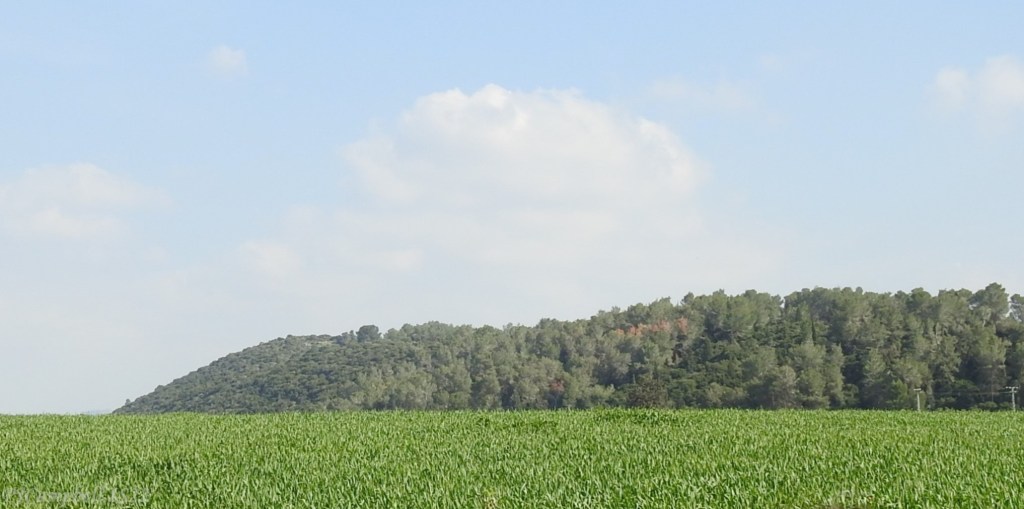
Looking over to the side of the valley where the Philistines were encamped.

They met in this valley. On one hillside, the Philistines, and on the other, the Israelites.

This was created using Google Maps (Note 6) with my annotations to give you an overview of the battle.

For us, the Valley of Elah was a short stop on the way to Jerusalem.  We were driving up the highway heading towards Jerusalem and the bus pulls over. We all got off and walked down the side of the highway through a lovely area with quite a few pretty flowers – almost a garden by the side of the road.

Poppies growing in the Valley of Elah

At that point, I wasn’t quite sure where we were or why we had stopped there. But I figured it was something special…and I was right. We were led away from the roadway to a spot just at the edge of the field. And, as a gentle breeze rustled through the winter wheat, we listened to the story of the battle of the two fierce champions who engaged in a battle to the death.

Dr. Yarbrough took us through 1 Samuel 17 and the battle between the Israelites under King Saul and the Philistines with their champion, Goliath. Goliath, a giant from Gath who was well-versed in fighting and combat would take on a small untrained shepherd boy armed only with his trust in God, a leather sling, and five small stones he had taken from the nearby brook.

Somewhere down there is the Brook Elah. It is dry much of the year now.

Goliath was, indeed, a giant of a man. Standing somewhere between 6’9” (206cm) and 9’9” (297cm) depending on your source (Masoretic or Dead Sea Scrolls/Josephus/Septuagint), he wore armor of bronze with a bronze helmet weighing more than 5000 shekels (125.6 lbs./57kg). He had a javelin of bronze slung across his shoulders and carried a spear whose shaft was as large as a weaver’s beam (ok, big) and a point weighing in at 600 shekels (15.1 lbs./6.8 kg).3 No matter how you look at it, he was a BIG man, and a 15-pound spear point could do some serious damage. It was no wonder everyone was so frightened.

David? Not so much. He is described as a young shepherd boy, ruddy and handsome…but a boy, nonetheless… with not a lick of fear, it seems. He volunteered when no one else would. When he tried on King Saul’s armor, it was way too heavy for him such that he said he couldn’t walk in it and refused to wear it. So, he left the tools of a warrior behind and took only the tools of a shepherd, his staff, his pouch with the five stones he gathered from the stream, his sling….and, his trust in the Lord.

For 40 days, Goliath had challenged the Israelites to send their champion to fight him. Until David, there were no volunteers. David wanted to know, Just who is this uncircumcised Philistine, that he should defy the armies of the living God?3

Goliath was not amused when David came out to fight. Am I a dog,” he said to David, that you come at me with sticks?” “Come here, he called to David, and I will give your flesh to the birds of the air and the beasts of the field!3 Big words from a big man.

David’s response: You come against me with sword and spear and javelin, but I come against you in the name of the LORD of Hosts, the God of the armies of Israel, whom you have defied. This day the LORD will deliver you into my hand. This day I will strike you down, cut off your head, and give the carcasses of the Philistines to the birds of the air and the creatures of the earth. Then the whole world will know that there is a God in Israel.  And all those assembled here will know that it is not by sword or spear that the LORD saves; for the battle is the LORD’s, and He will give all of you into our hands.3

Of course, you know the rest. David put the stone in the sling, slung it round and round (just like in the song), and the stone hit Goliath on the forehead and sunk in. Goliath came tumbling down…. or, as Dr. Yarbrough would sing, “went splat”.  The Philistines ran away, and the Israelites won the battle.

For Saul, it was the beginning of the end. For David, it was just the beginning.

For us, it was another opportunity to see a Biblical story through new eyes…now having seen the hills and the battlefield and the little brook where the stones came from, we will always remember the place and how it felt to be there and how peaceful it is in the valley today.

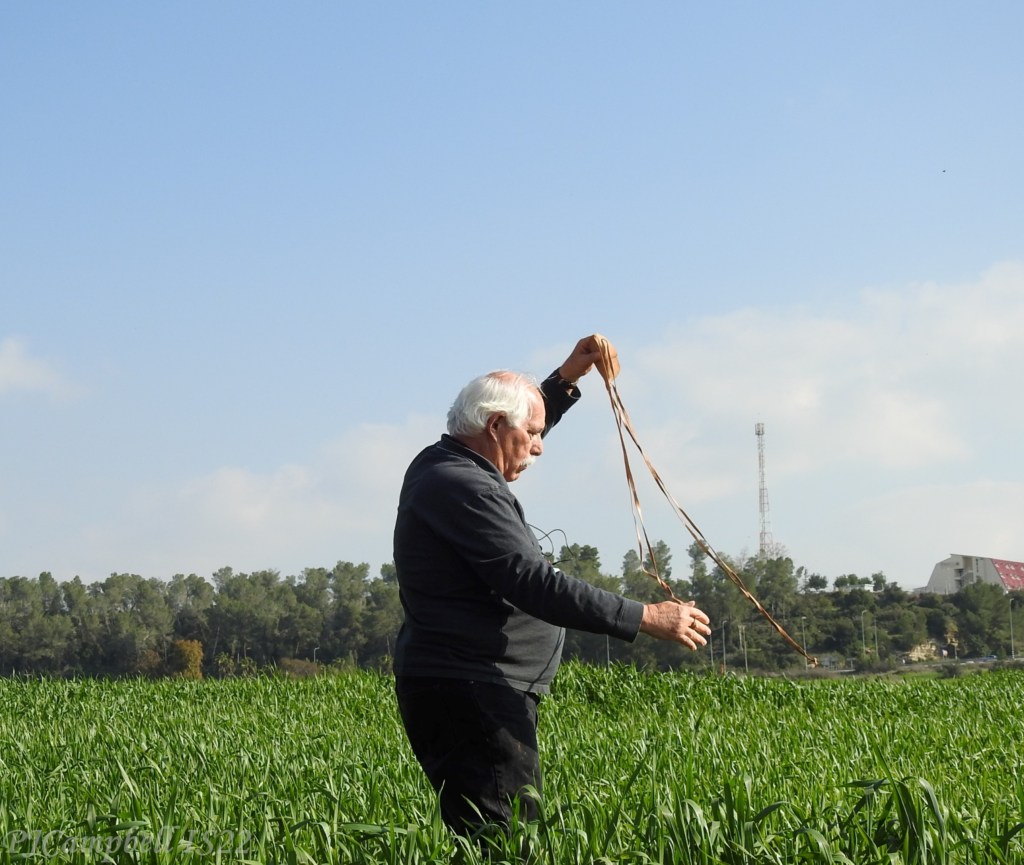
One of our guides from Sar-El Tours gives us a demonstration on how to use a sling.

The combat between David and Goliath way back in 1010 BC has come to mean any contest where the odds are greatly skewed against one opponent, the obvious underdog… in this case, Israel and its champion, David.  But I am reminded and, once again, quote Dr. Bremer5 who told us, where God is concerned,

“Numbers don’t count, and the odds don’t matter.

When you go into battle, as Paul said in Ephesians 6:14, you should gird up your loins and trust in the Almighty God of the universe.

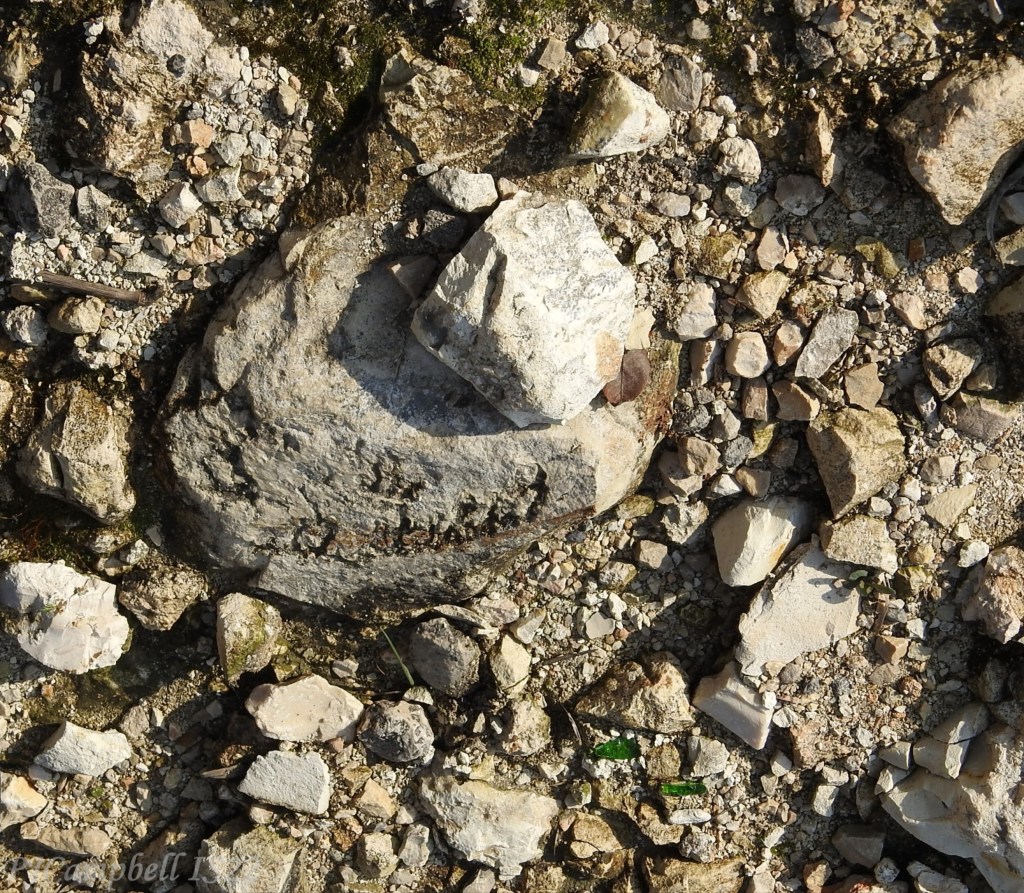
As we left the valley, I collected a stone….a tiny memory of the valley where David & Goliath fought.

Scriptural Sources:

  1. 1 Samuel 17

Notes & Sources for Additional Information:

  1. https://www.songlyrics.com/gaither-vocal-band/only-a-boy-named-david-lyrics/ These are the lyrics that came closer to those I remember from my childhood and the song that Dr. Yarbrough sang that day in the Valley of Elah. I imagine there are many versions of the children’s song or, perhaps, our Sunday School teachers took a few liberties in teaching us back before the internet started documenting everything.  Or maybe, I just remembered incorrectly. In my memory, it is a “babbling brook” and the “play and sing” was not included. Also, in Dr. Yarbrough’s version, the giant “went splat” rather than “came tumbling down” which I like much better and I’m sure as kids, it was much more fun for the giant to go splat.
  2. Wikipedia (#14 below), since July 2019, the Israel Nature & Parks Authority has stepped up to ensure that treats from development and possible shale oil extraction would be alleviated and the valley preserved.
  3. 1 Samuel 17, BibleHub.Com
  4. Dr. Mark Yarbrough – Dallas Theological Seminary
  5. Dr. Stephen J. Bramer – Dallas Theological Seminary.
  6. Valley of Elah from Google Maps
  7. Valley of Elah – Wikipedia

Want More?

ICYMI (In case you missed it) – Previous blogs in the Israel 2022 series:

Israel 2022: Pinch Yourself – April 4, 2022

Israel 2022: Caesarea Maritima – April 11, 2022

Israel 2022: Contested on Mount Carmel – April 20, 2022

Israel 2022: In This Valley – April 30, 2022

Israel 2022: Sea of Galilee – May 9, 2022

Israel 2022: A Very Old Boat – May 31, 2022

Israel 2022: A Blessing & A Curse – Capernaum – June 20, 2022