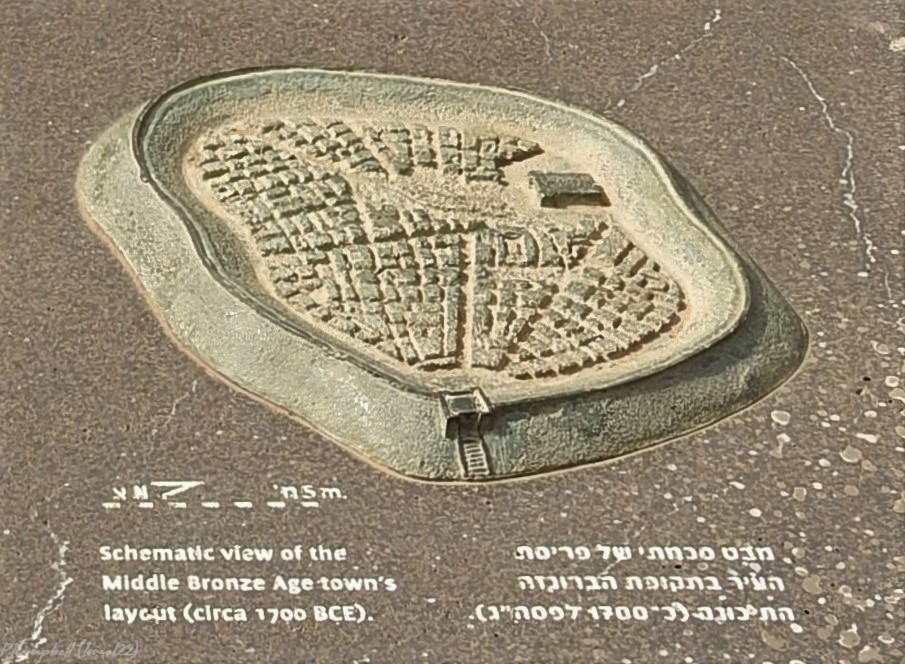
O Little Town – A Little History (Part 1)

Series: Israel 2022

O Little Town of Bethlehem6.

This song has been rolling through my mind regularly since the start of the Christmas season. That and a good dozen other Christmas carols that speak (sing?) to the birth of Christ. So, it’s Christmas and I figure I just about have to write about visiting Bethlehem and seeing The Church of the Nativity, the place where it is said that Jesus was born.

But what comes to mind when I sing these carols is not the Bethlehem we visited, but something out of a Currier & Ives inspired event depicting a quaint and very small foreign village with lots of snow, twinkling stars, and an old wooden open-fronted shed with Mary, Joseph, 3 (exactly 3) wise men, maybe 4 shepherds, an angel hovering overhead underneath a big star, and a variety of farm animals. Everyone (and every animal) is standing around reverently adoring the wee baby Jesus wrapped up and asleep in a feeding trough (aka manger) with bits of hay sticking out the sides. Just so you know how important the baby is, there is sometimes a halo encircling his head or a bright light beam shining down directly on him from that giant star outside. A good and proper portrayal of the birth scene for Christians everywhere.

But the new world images of the Holy Land are maybe just a little skewed towards our culture and not that of the middle east.  Nativity scenes that I see at Christmas time certainly do not bring to mind the Bethlehem that we visited in the Judean Mountains just south of Jerusalem (maybe 5 miles). The Bethlehem that gets chilly in winter (if indeed Jesus was born in the winter season) but not really snowy although I’ve read that it can snow and does sometimes. It certainly didn’t snow when we were there in February.  In fact, it was rather hot, and Bethlehem isn’t a little village, it’s a good-sized city; and there was neither hide nor hair of a stable anywhere that I could see.

So, what is true about Bethlehem? Today it is located in the West Bank in the Palestinian Governorate of the State of Palestine. It is Israel but not really.  If you visit, you have to enter through checkpoints, and you have to show a valid passport just like any other border crossing anywhere in the world. (Fortunately, being on a bus as part of a tour, we were allowed to pass through without any serious issues or delays.) Today, Bethlehem’s economy is primarily tourist driven and right at the center of the city is The Church of the Nativity, a site now deemed sacred for Christians throughout the world which attracts thousands of Christian tourists every year.

How can you go wrong with Gospel Travel?

Like many middle eastern cities, Bethlehem is a city within a city. There are the ancient portions and then there are the 21st century modern parts. The “old city” in Bethlehem includes about 8 quarters (sections) with a “mosaic style” layout with Manger Square being at the core.  To the Arabs, the city was Beyt Lahm or “house of meat”; to the Hebrews, it was Bet Lehem or “house of bread”; to the ancient Greeks, it was Bethleem. But even older still is the Canaanite name, Beit Lahmi, which refers to the House of Lahmi, a Canaanite god of fertility worshipped by the Canaanites.5

The city is indeed ancient with some archaeological dates going back to the 14th century BC/E where it was mentioned in the Amarna Letters as a Canaanite city.5&10 But, our visit was primarily focused on Manger Square and the Church of the Nativity and events related to the birth of the Christ (Messiah) somewhere around 1BC give or take a couple years.

Bethlehem…. the place where Jesus was born…. the place that was prophesied in the Old Testament (Christian Bible) in the Book of Micah (5:2):

“But you, Bethlehem Ephrathah, 

Though you are little

among the thousands of Judah, 

Yet out of you shall come forth to Me

The One to be Ruler in Israel,

Whose goings forth are from of old,

From everlasting.”8

This little town – little among thousands. While no one really knows where Jesus was born and laid in a manger by Mary, his mother, there is a long tradition that associates the event with caves in the city at the site of The Church of the Nativity.

But, let me back up a minute. Bethlehem is also known as the “City of David” …. for good reason. David, the second and some would say greatest King of Israel, was from Bethlehem. David, the son of Jesse of the tribe of Judah who was anointed by Samuel to be king when he was but a young shepherd boy (1 Samuel 16:13).  David, the ancestor of Joseph, who was betrothed to Mary, the mother of Jesus. David, who was promised by God (2 Samuel 7:16) that the Messiah would be born of his lineage.

David’s line. You know the basic nativity story, right? If not, it is all laid out in the New Testament in the Christian Bible in Luke Chapter 2.  The Roman emperor, Caesar Augustus, called for a census, and everyone in Palestine had to travel back to the home of their ancestors. Since Joseph was of the “line of David”, he had to go to Bethlehem to be counted. And, so he did, taking a very pregnant Mary, his betrothed, with him.  (I’m leaving out quite a bit of the whole story so a little review by reading Luke Chapter 2 and Matthew Chapter 1 might be helpful to you.)
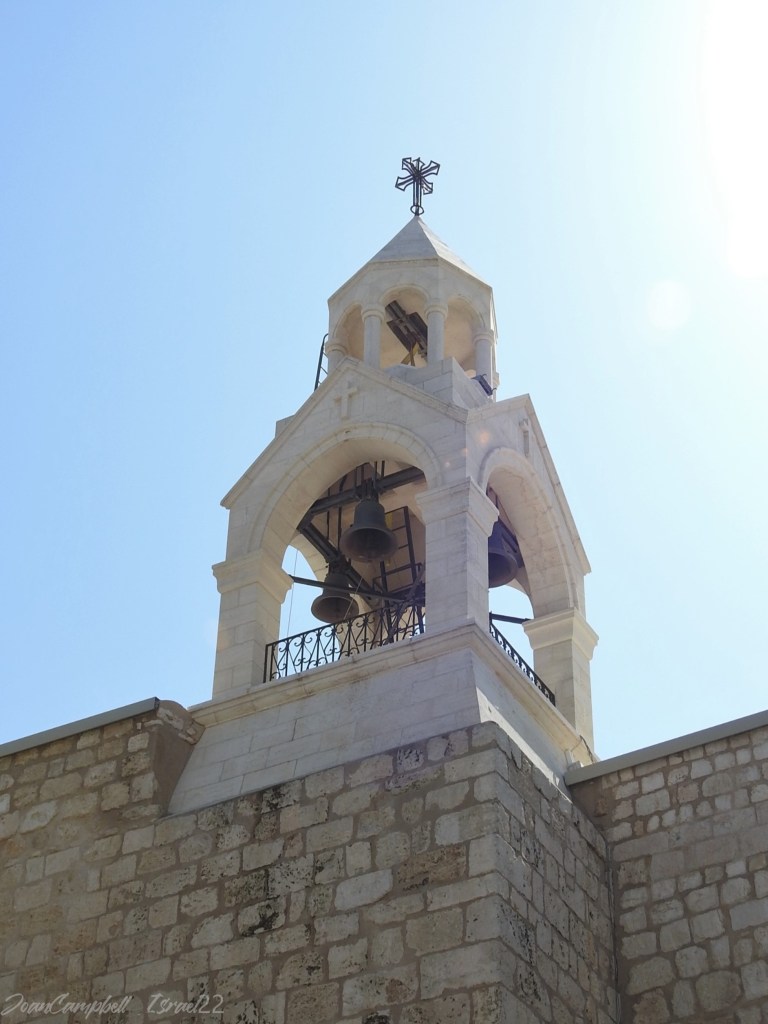
Bell Tower at the Church of the Nativity overlooking Manger Square

Now, back to the Church of the Nativity and those caves. As noted above, Bethlehem is in the hills of Judea and those hills include many limestone caves and the people built their houses over the caves. I suppose it is possible that, in even more ancient times, they originally lived in those caves and building their homes over them was a natural evolution. We know that young David took refuge in caves when he was hiding from King Saul (the first king of Judah, and that, in more modern times, the Dead Sea Scrolls were found stored in caves near the Dead Sea. Suffice to say, there are lots of caves in Israel and they were used for various purposes by the people living there. Even today, you can see houses built over caves in Israel. According to our Israeli tour guide, today the caves are used primarily for storage but have been used in the past for graves and, yes, as stables for sheltering their farm animals.
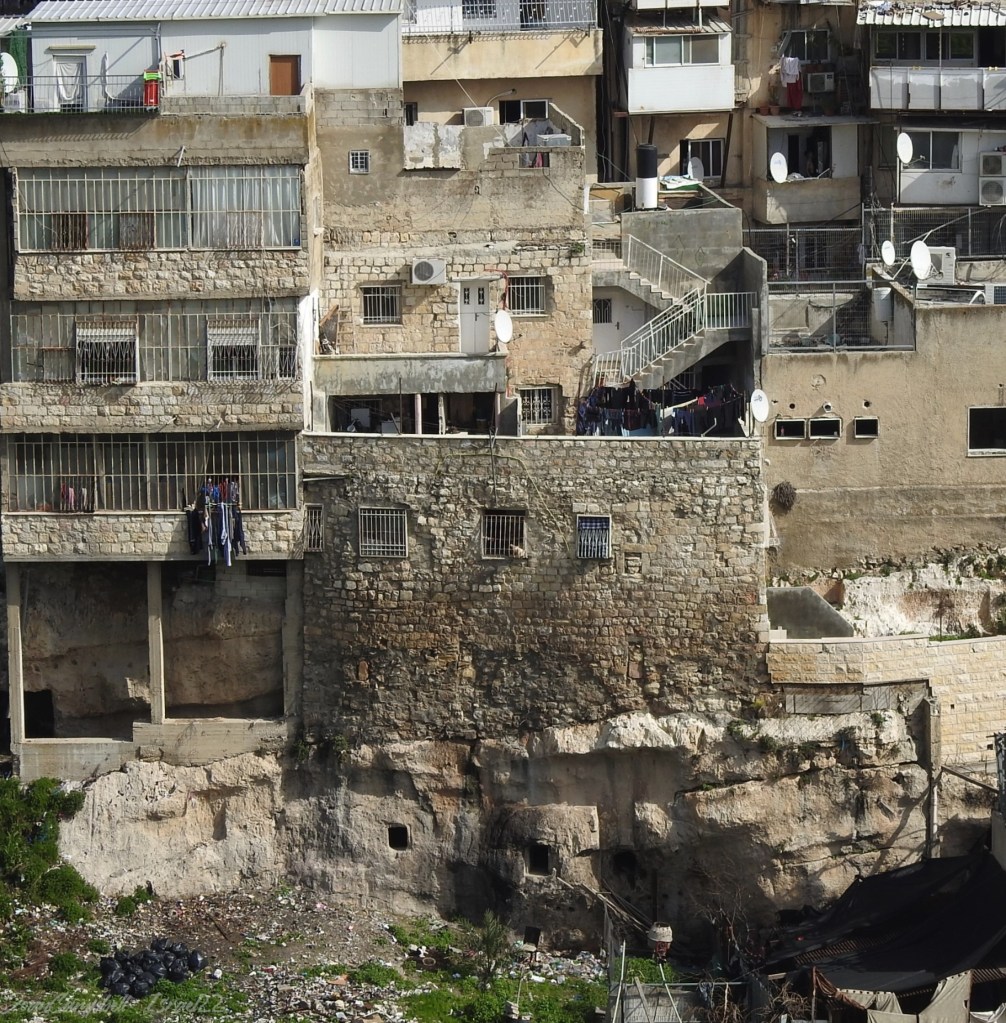
Old Houses built over caves in Jerusalem near Kidron Valley

The Church of the Nativity was built over a series of caves where tradition says that Jesus was born because there were no more rooms available in the house. Yes, the King James Version Bible says “inn”, but the koine Greek (New Testament language) word refers to a house or abode. The translation issue is not something I’m going to delve into with this blog. Suffice to say, some sort of building was built over the caves which, it seems, were being used as a stable with a manger available. Again, there is no recorded history – no neighborhood maps from 1BC, no birth certificate showing the date, time, & place of the birth of Jesus – only oral tradition that provided the basis for the location of the church.

Now a little info on the building of the church – very short version: Early Christians had identified these particular caves (or grottoes) as the site of Christ’s birth as early as the 2d century AD/CE. Yes, that’s over 100 years after the birth but it’s not known how long the early Christians had been going to the site. The Roman emperor Hadrian had gotten a little concerned about Christians gathering here. He didn’t like it since he wanted everyone to worship Roman gods so, in 135 AD/CE took over the site and had a pagan sanctuary to Adonis built over the caves.1&5 Interestingly enough (and ironically), Hadrian’s decision actually preserved the site which would later come to the attention of Helena (mother of Emperor Constantine) in 330 AD/CE or thereabouts when she came to the Holy Land seeking out sites associated with Jesus.  She found (?) and identified this site as the birthplace and the first Christian Basilica was built at the site over the caves in 339 AD/CE.1&2
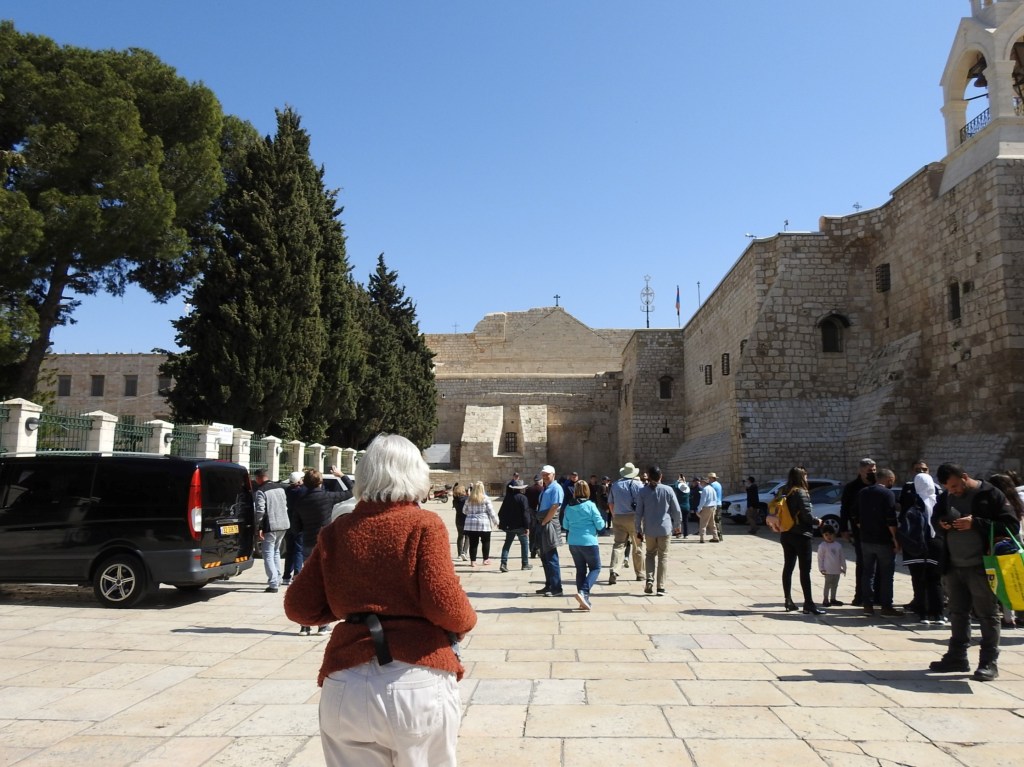
Manger Square at the Church of the Nativity

Fast forward. The original church was one of those octagonal ones (remember the one built over Peter’s house in Capernaum – read about our visit there here). Octagonal shapes were customary for use in basilicas at the time. The original basilica was destroyed by fire in the Samaritan revolts in 529 AD/CE2 and replaced in 539 AD/CE by order of Emperor Justinian with a more modern (for that time) church in the cruciform transept style – shape of a basic Greek cross, 4 apses, 44 Corinthian columns, 5 aisles – basically the footprint the church has today.2  I could go on and on with this history – that church (like the city and the country) has been through a lot since Jesus was born…held by the Romans, conquered by Persians, conquered by the Crusaders twice, back to Muslims, and then the Ottomans, then much, much later, after World War I, the British, and so on and so on. The history of Bethlehem is pretty much also the history of the Church of the Nativity itself. Sometimes the Church of the Nativity was under the management of the Roman/Catholic church, sometimes the Greek Orthodox, sometimes used by the Muslims, sometimes nobody really taking care of things – back & forth it went for the past two thousand years.

Today, as noted above, Bethlehem is a part of Palestine in the West Bank. The Church of the Nativity is managed in joint by a series of documents and understandings called the “Status Quo”.2 Major ownership is divided between the Greek Orthodox, the Armenian Apostolic, and the Roman Catholics (St. Catherine’s next door is connected to the Church of the Nativity and also built over the system of caves); minor rights are also given to the Coptic Orthodox (Egypt) and the Syriac Orthodox (the Church at Antioch) denominations. The city of Bethlehem was once predominantly Christian but today is primarily Muslim or secular with a very small minority being Christian. (In 1947, the population was 85% Christian; in 2016, 16%.5)

Bethlehem

So what did I see there? Tune in Tomorrow for Part 2 – Our Visit

Sources for Information:

  1. The Holy Land for Christian Travelers, John A. Beck, 2017, Baker Books, Baker Publishing Group, Grand Rapids, MI, www.bakerbooks.com , USA, Bethlehem and Shepherds’ Fields, pages 87-91
  2. Church of the Nativity – Wikipedia
  3. Mosque of Omar (Bethlehem) – Wikipedia 
  4. O Little Town of Bethlehem – Wikipedia
  5. Bethlehem – Wikipedia
  6. O Little Town of Bethlehem > Lyrics | Phillips Brooks (timelesstruths.org)
  7. Rachel’s Tomb – Wikipedia
  8. Micah 5 (biblehub.com)
  9. Philippians 4:4
  10. Biblical Israel: Bethlehem – CBN Israel
  11. Currier and Ives – Wikipedia
  12. Church of Saint Catherine, Bethlehem – Wikipedia
Abraham’s Gate and Tel Dan

Series: Israel 2022

Date Visited: February 24, 2022

Drinking at the springs of living water,
Happy now am I, my soul they satisfy;
Drinking at the springs of living water,
O wonderful and bountiful supply.
8

Dan.

Once an ancient Canaanite city named Laish (lioness) which was old even when Abraham went there looking for his nephew, Lot.  Old when Joshua referred to it as Leshem (jewel).  Old when it was captured and burned by the tribe of Dan then rebuilt and given a new name more than two thousand years ago.

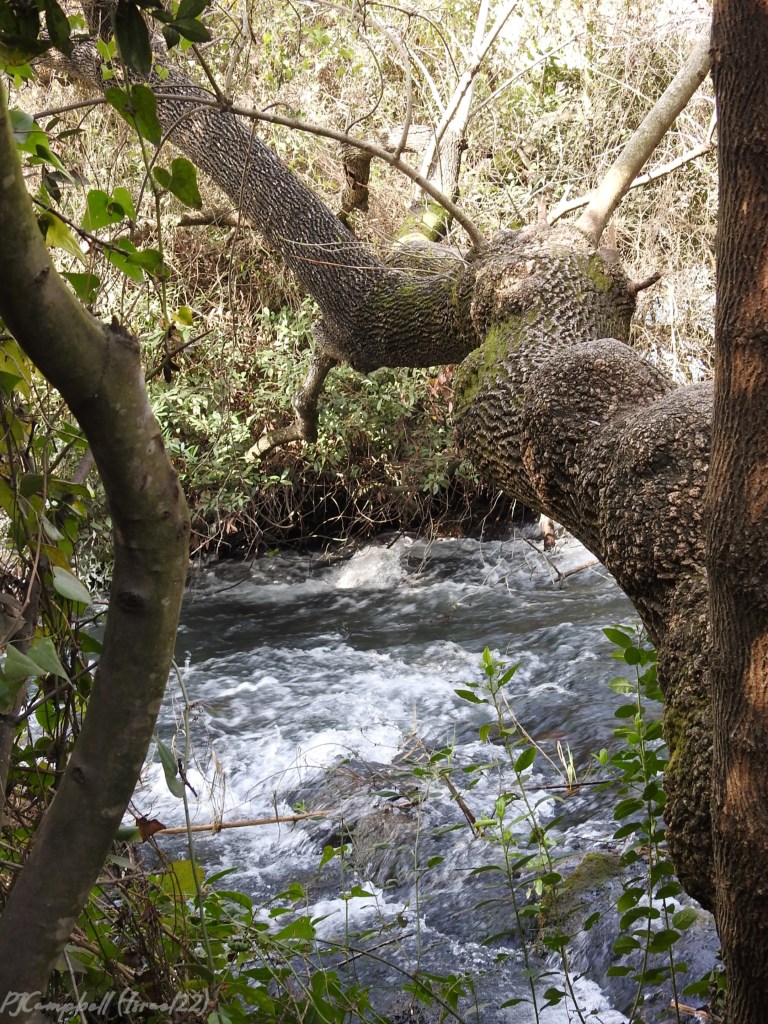
But Dan the city is not nearly so old as the springs bearing the same name. The Springs of Dan that are fed by winter snowmelt and gush forth from the mountains of Hermon…the springs of crystal-clear living water that have been flowing since time began and, some would pray, will continue to flow forever more.

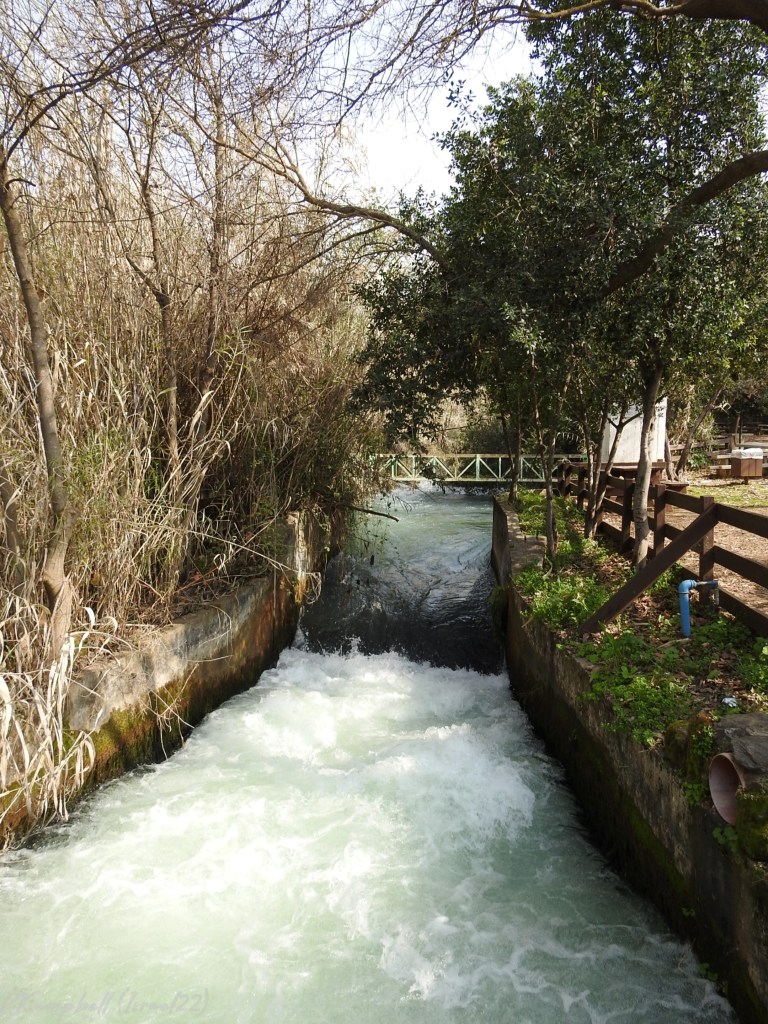
These springs are the primary source of the Jordan River (along with the Banias Springs at Caesarea Philippi which you can read about here) – first forming the Dan River then joining with two other rivers to form the upper Jordan. The icy cold waters flow out from the Golan Heights at about 2000 gallons per second5 (240-252 million cubic meters per year12) and flows some twelve miles13 to reach the Jordan which flows into the Sea of Galilee. Ultimately, the waters of the Jordan River will end its long 156 mile13 journey at the Dead Sea, the lowest point on earth.

Flow from the Springs at Dan

In ancient times, the river flowed into the wetlands that once was Lake Hulah (or Hula or Huleh). The “lake” was drained in the 1950’s14, the fields plowed, and the area became…. well, an agricultural center (Hulah Valley) in northern Israel. But there were always people living there with farming, fishing, and hunting going on. There’s a reason the cows of Bashan as described in Amos 4:1 were so fat and happy. (Of course, Amos was calling the women “fat cows” but that is another story altogether.) This land is not desert like much of southern Israel; the abundant water and rich soil made this land very appealing to ancient peoples and to the Canaanites who settled there and built the city of Laish.

The first permanent settlement in the Valley, Enan/Mallaha, dates from 9000-10,000 years.14 Laish (later Dan) was first occupied from about 4500 BC7 (Before Christ or BCE/Before the Common Era). Archaeological excavations show that it was then abandoned for about a thousand years7. It was then occupied until its capture and destruction by the Assyrians. The site of the city was discovered again by archaeologists and identified as ancient Dan in the mid-1800’s AD (Anno Domini) or CE (the Common Era).

Biblically, we first hear of Laish when Abram (later to be called Abraham) goes there in search of his nephew, Lot. In Genesis 14, Abram’s nephew, Lot and his family, got caught up in a territorial war between four kings fighting five kings in the area around the Dead Sea Valley. The “four” kings ended up attacking and plundering Sodom & Gomorrah (yes, the two cities destroyed by fire later on) and heading north.  Lot and his family got caught up in the scuffle and were captured. Abram, who was living nearby, put together an army of 318 trained men from his family and allies and went in pursuit of the ruffians who had taken Lot and his family.  Abram and his army pursued the kings as far as Dan, all the way to Hobah, north of Damascus. Lot, his family, his possessions, and some others were rescued. 

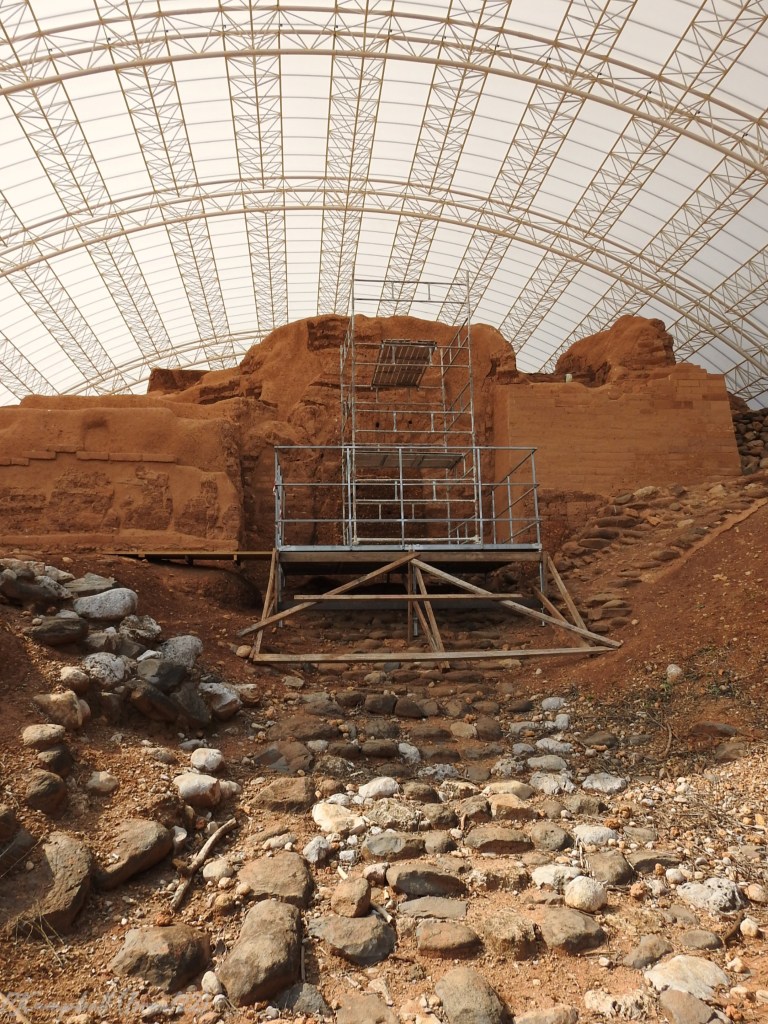
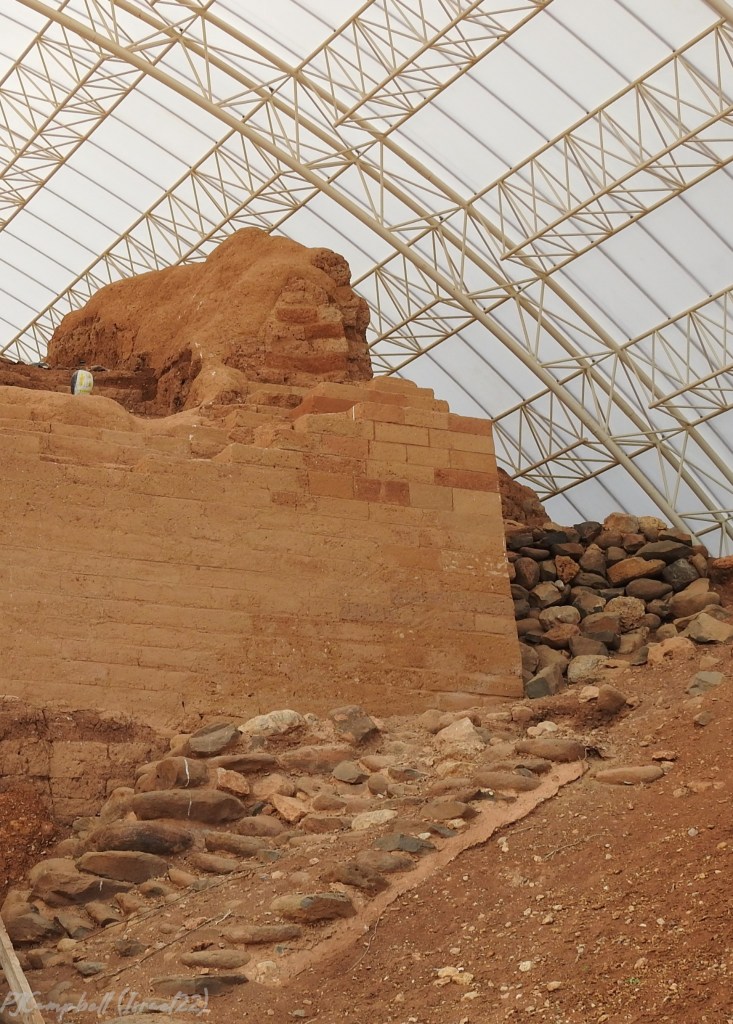
At the ancient site of Dan, we saw an ancient archway/gate to the Canaanite city that dates from the Middle Bronze Age (@2000-1550 BC)1. The old gate/city entrance is traditionally called “Abraham’s Gate” as it is thought that this would be the gate that Abraham would have entered at Dan.7 

Abraham’s Gate at Tel Dan. You cannot see the arch clearly
due to the scaffolding.

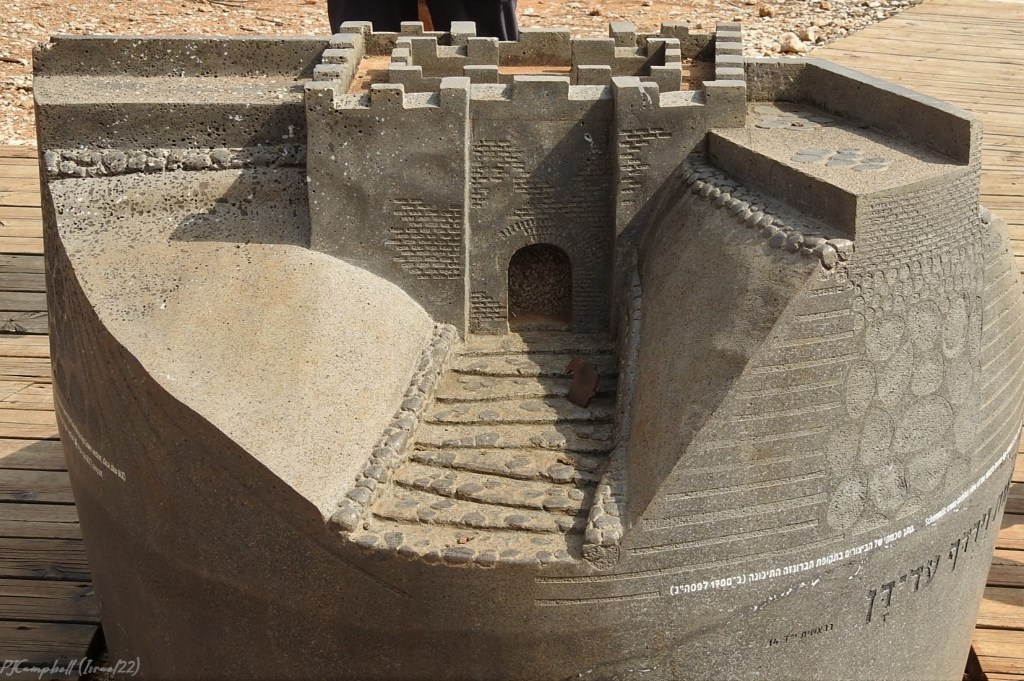
The gate/entrance includes a mudbrick arch on top of megalithic basalt blocks which formed the gateway between two towers that have been preserved at almost 20’ tall.4 This Canaanite city gateway has been dated to about 1750 BC. It is the only existing structure “of its kind”4 in the near East and thought to be the oldest free-standing archway built in the world.5  

After the city was attacked, burned, and then rebuilt by the tribe of Dan (more later), a new and more secure entrance/gate to the city was built to the south and the ancient gateway that Abraham would have known was eventually filled in with dirt.5  

Today, the old gateway is covered with a pavilion to protect it from the elements, but we were told by our tour guide that the mud bricks are so badly and quickly eroding now that the Israeli Antiquities authorities are considering re-covering the structure by filling it again with dirt.  Dust to dust, as it were.

Before I continue with the story, I must note that the city would not have been called “Dan” when Abraham came to rescue Lot. This confused me as I was reading about the city. It is known historically to have been called Laish. That archway and gate was thought to have been built some 700 years before the tribe of Dan arrived and captured the city. At that point, there was no tribe of Dan as Isaac had not been born to Abraham & Sarah and Jacob had not yet been born to Isaac & Rebekah and, of course, Jacob had not yet sired those twelve sons who would become the twelve tribes of Israel, one of which was Dan. Abraham’s Gate is thought to have been built just about the time Jacob was going over to Egypt during the famine to meet back up with Joseph.5

Our tour guide, Olga, pauses for a moment to check the scriptures.

But I read through about ten different Bible translations and every single one of them referred to the city as “Dan” and not Laish. I will chalk that up to Biblical translators calling the city by the name it was at the time of the translator(s) and not at the time of Abraham. I also checked the Hebrew Bible on Biblehub.com and it does not mention Dan at all, just Hobah. I leave it with that.

So, how did the Canaanite city (and springs) become “Dan” anyway.  Back to scripture and it’s a long story that begins with the twelve tribes being allocated territory when the Israelites under Joshua’s leadership arrived and captured the “promised land”.  But that story is way too long and complicated (and confusing!) for a blog…so I’ll hit a few points and jump way ahead to the re-naming of the city. When I say I’m making a long, long story short, believe me, I’m reducing it to down to almost nothing.

Deuteronomy 34:1-4 tells of Moses climbing Mount Nebo and God showing him the promised land – all of it from Gilead to Dan and so on. This was in conjunction with God telling Moses that he [Moses] wouldn’t be going over into the promised land.

Joshua 19:40-48 tells of the land allotments made when the Twelve Tribes took possession of the promised land. The Tribe of Dan was allocated territory in the south across from Joppa. Verse 47 notes that, later, the Danites lost this territory, and they went up and fought against “Leshem” which means “Jewel” and captured it.  Leshem is thought to be Laish.7

Now we move to Judges 18. Some time had passed since the Israelites came to the land and divided it up. There is no king yet in Israel. The Danites (as previously referenced above in Joshua) are now without territory and looking around for some good land to occupy. So, they sent out scouts. The scouts came back with a good report saying the land “is a place where nothing on earth is lacking”. Basically, let’s go take what we want. And so, six hundred Danites went to Laish “to a tranquil and unsuspecting people” (V27) and captured and burned the city.

Israelite Gateway – Ancient Dan. To enter you had to pass through a “bottleneck” by passing through this first gate, then turning left, then right, and passing through a second gate.

They rebuilt the city and named it Dan. At some point, the city was fortified with a double gated entrance in the Israelite fashion – go into one gate, turn left or right, then proceed to the second gate…. sets up a bottleneck that is easier to defend than one wide open gateway.  No more mud bricks – they now use interlocking stones. This was circa 1200 – 721 BC.1

Sun dried bricks were no longer in use when Dan was fortified with thick walls made of interlocking stones.

Now, there is a slight nuance to this story.  When the Danite scouts went up to Laish, they stopped and spent the night at the house of a man named Micah (not the Biblical prophet). There they noticed a Levite/priest serving the house. The scouts reported back to the tribe about the priest and idols at Micah’s house. So, when the Danites came back on their conquest of the city, they stopped at Micah’s, took the idols, the priest’s ephod and teraphim, and convinced the priest to go with them.11 The Danites set up the idols and the priest for worship in their new city of Dan.

Which brings me to the last part of the story found in 1 Kings 12.  Many years have passed. King David has come and gone. After King Soloman (his son) died, the kingdom was divided – Israel to the north and Judah to the south. Jeroboam became the king of Israel, but Judah remained loyal to the house of David under Rehoboam (one of Soloman’s descendants). Jeroboam worried that the northern tribes will turn back to Rehoboam and Judah because the people continue to travel to Jerusalem in the south to the temple (the one Soloman had built) to worship as required by Jewish law. So, Jeroboam had two golden calves made and placed one golden calf at Bethel and the other at, you guessed it, the cultic altar at Dan.

The “High Place” or altar where the Golden Calf was placed by Jeroboam. The stairs lead up to the altar platform. This altar was already in use for pagan worship before the Danites arrived with the idol and priest that had been taken from the house of Micah (not the prophet).

Part one of Jeroboam’s plan was that the people of Israel would worship at Bethel and Dan rather than go all the way down to Jerusalem and then they wouldn’t be tempted to reunite the two kingdoms under the house of David and Rehoboam. Jeroboam appointed his own priests for the “high places” from every class of people and not just from the Levites tribe.7 Since Jewish law allowed that only those from the tribe of Levi (i.e., Levites) could perform duties as priests, appointment of priests from other tribes would have been considered to be an egregious violation of the law. Part two of the Jeroboam’s plan explains the golden calves (which would also have been totally forbidden under the Jewish law) since he wanted to form an alliance with the Canaanites in the area by using idols that they would recognize and accept.5&9

View of the altar platform looking back from the hilltop. Note that archaeological excavations are ongoing.

But with all this idol worship and golden calves, do not think things went well for Jeroboam. They did not. He suffered a series of mishaps while trying to make sacrifices at the altar at Bethel further to the south (see 1 Kings 13). 1 Kings 13:34 finally reports “And this was the sin of the house of Jeroboam that led to its extermination and destruction from the face of the earth.”

The city of Dan continued until 733 BC(E) when it was destroyed by the Assyrians under Tiglath-Pileser III.7 By the time of Jesus, it was already in ruins. It was lost to history altogether until the mid-1800’s when the ruins were positively identified as the Canaanite city of Laish and Biblical city of Dan. One final note of interest. During more recent archaeological excavations, a stone stela was found which included the inscription BYTDWD (House of David) and MLK YSR’L (King of Israel).  This is the oldest written record (9th century BC) that mentions David and validates that he was a real person and the King of Israel some one hundred years after his death.7&2

This area (Golan Heights) was highly disputed during the Six Days War in 1967. The old military bunkers remain at the top of Tel Dan.
Looking across into Lebanon from the Golan Heights.

Today the ruins of the ancient city and the springs are part of the Tel Dan Nature Preserve which was created in 1974. We started our tour with a long, beautiful walk beside the springs, then up the hill to the remains of the ancient “high place” and cultic altar, then around to Abraham’s Gate, and ending down by the ruins of the old Israelite gateway.

I end my story where we began our tour – with the crystal-clear springs. So much history but all that remains today are just ruins and the water – the beautiful free-flowing living waters, – back where everything started.

“How sweet the living water from the hills of God,
It makes me glad and happy all the way;
Now glory, grace and blessing mark the path I’ve trod,
I’m shouting Hallelujah every day.”
8

Sources for Information:

  1. Site-Seeing: Exploring Beautiful Tel Dan – Biblical Archaeology Society; Jonathan Klawans; October 19, 2022
  2. The Tel Dan Inscription: The First Historical Evidence of King David from the Bible – Biblical Archaeology Society; BAS Staff; June 14, 2022
  3. The Renewed Excavations at Tel Dan – Biblical Archaeology Society; Dan Ilan, Yifat Thareani, & Jonathon Greer; July 29, 2016
  4. The Remarkable Discoveries at Tel Dan · The BAS Library; Biblical Archaeology Review 7:5; September/October 1981; John C.H. Laughlin
  5. Did the Northern Kingdom of Israel Practice Customary Ancient Israelite Religion? – Biblical Archaeology Society; BAS Staff; May 17, 2016; Jonathan Greer
  6. 2022 Holy Land Tour, Journey to the Land of the Bible; Dallas Theological Seminary; 2022; Tel Dan; p18
  7. Dan (ancient city) – Wikipedia
  8. Springs of living water | Hymnary.org; John Willard Peterson; 1950; renewed 1978 by Singspiration
  9. The Holy Land for Christian Travelers, John A. Beck, 2017, www.bakerbooks.com , USA, Dan, pages 189-193
  10. Dan (son of Jacob) – Wikipedia
  11. Micah’s Idol – Wikipedia
  12. Jordan River – Wikipedia
  13. Dan River (Middle East) – Wikipedia
  14. Hula Valley – Wikipedia