A Story of Revival at High Shoals

Series: Old Country Churches

High Shoals Baptist Church
Dawson County, GA

When you head out to someplace with no particular route in mind – just a bit of a plan to head up through the mountains and see if there is any chance you can catch some color with the leaves turning in the fall – you never know what you are going to find. We are always on the lookout for something new, and we usually do find something – something good.

That’s generally how we find old churches – just wandering around looking. And that’s how we found High Shoals Baptist Church a good ways up the mountain above Amicalola Falls in Dawson County, Georgia. We’d taken a detour off the main road to check out the State Park at the falls since I absolutely love waterfalls and have taken many a detour to see them. I’ve had many adventures looking for waterfalls and maybe just a few “un-adventures” too.

We’d stopped at the main part of the park, looked around, and then headed on up to check out the overlook of the falls. Very nice.
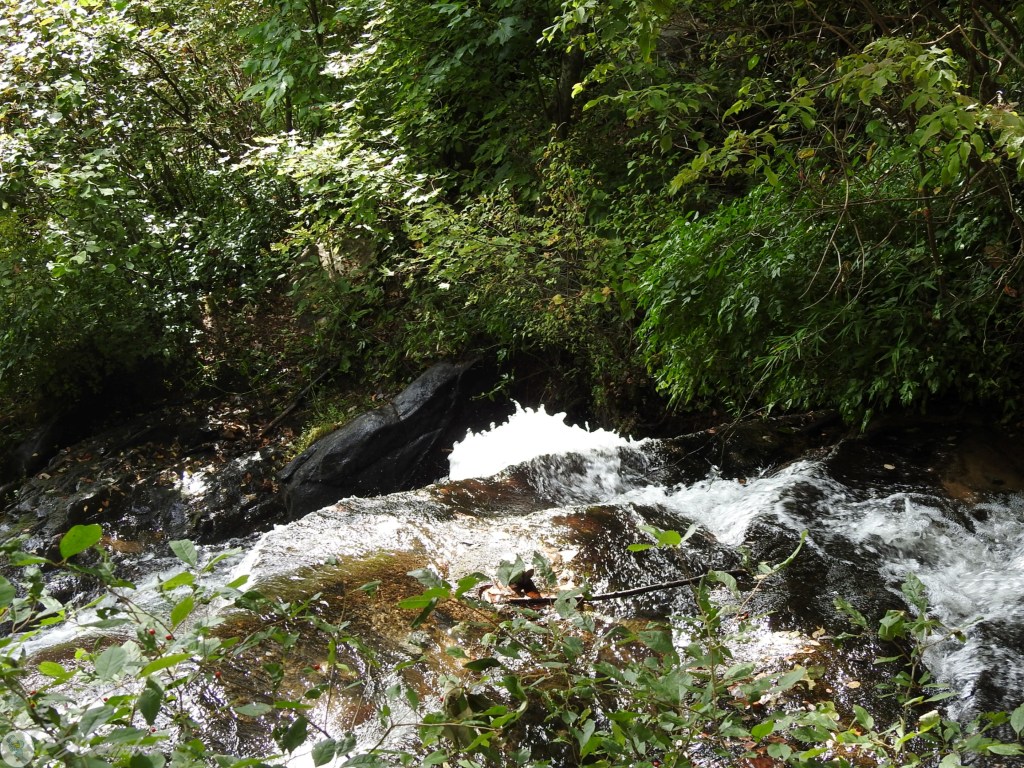
Amicalola Falls at the Very Top

Then, we just headed on up the road a piece. We lost pavement after a bit and were thinking about maybe turning back down the mountain and back towards civilization.

That’s when we saw the sign for the church. So, that was it…decision made. Now we absolutely had to keep going up the hill to find that church.
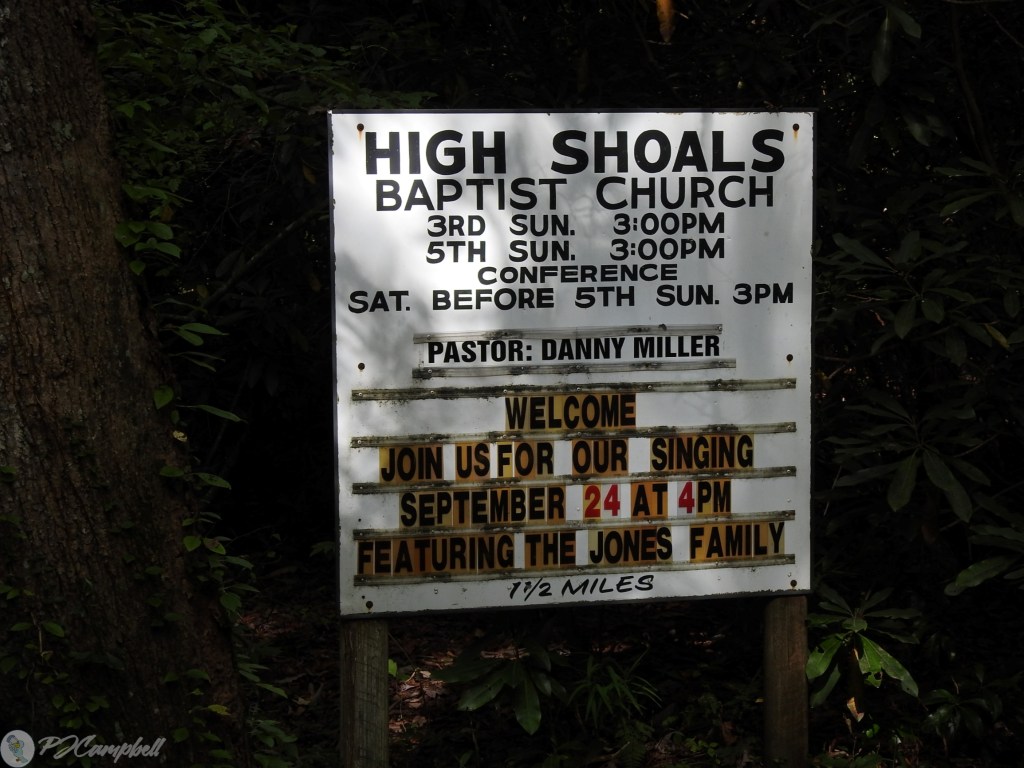
We Saw the Sign and Just Had to Go

Silly me, thinking it would be just up the road from the sign. Never is. Turned out to be another mile and a half of bad pot-holed, washboard rough, used-to-be-graveled but ain’t no more, north Georgia dirt road.

We finally found the church in the middle of nowhere or, maybe from God’s perspective, in the place exactly where it is supposed to be. At first glance, it didn’t appear to be very old at all…. but it turns out that the building was new; the “church” is much older.
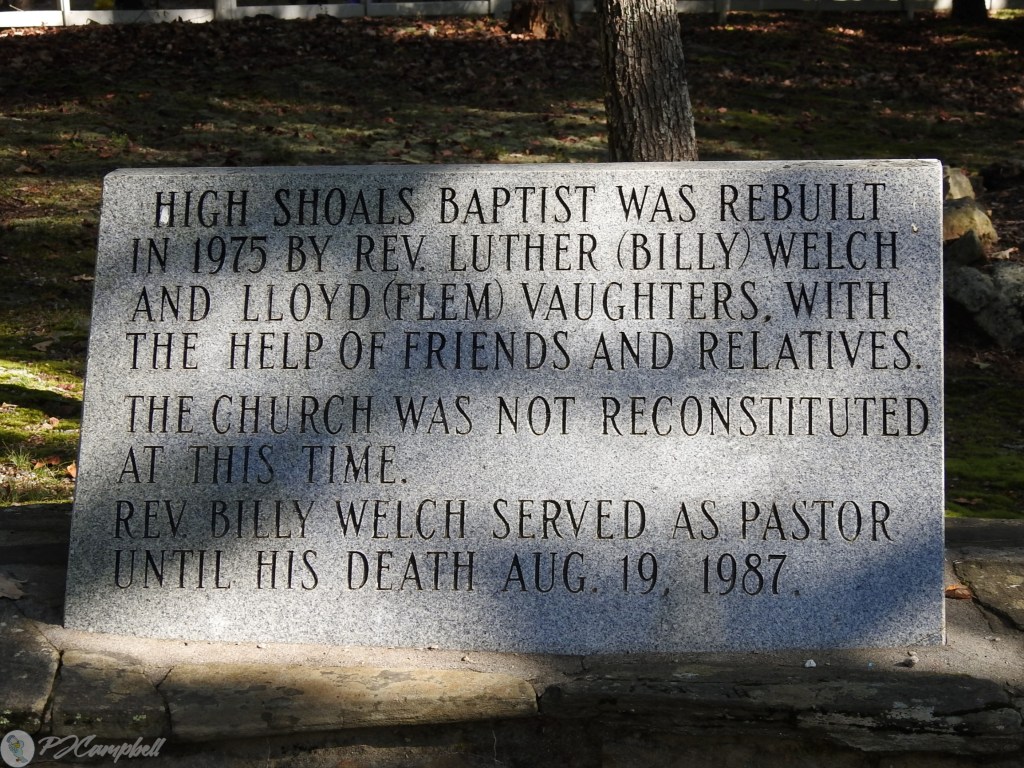
The church or congregation was established there in June 1879 by Samuel Roper and two deacons, Jonathon F.M. West and Samuel Harben.1

This area of Appalachia had been settled from about 1823 although I am sure the Cherokee were in the area long before that. Things went well at High Shoals and the settlers thrived until the 1930’s when the Government decided to create Chattahoochee National Forest. With the Government buying up (and maybe just taking) the land thereabouts, the congregation dwindled down… to few parishioners were left to support the church. The final service was held at High Shoals Baptist in 1934.1

Things went quiet at the old church for many years… no gospel singing, no scripture reading, no eloquent sermons, no altar calls… until the 1970’s when descendants of the original congregation began having “homecoming” services. The Reverend Billy Welch and Flem Vaughters got things going again and a new church building was erected in 1975. (The original building was a log cabin with dirt floors. There are no remains of this building today although the old cemetery remains from the early years.)1
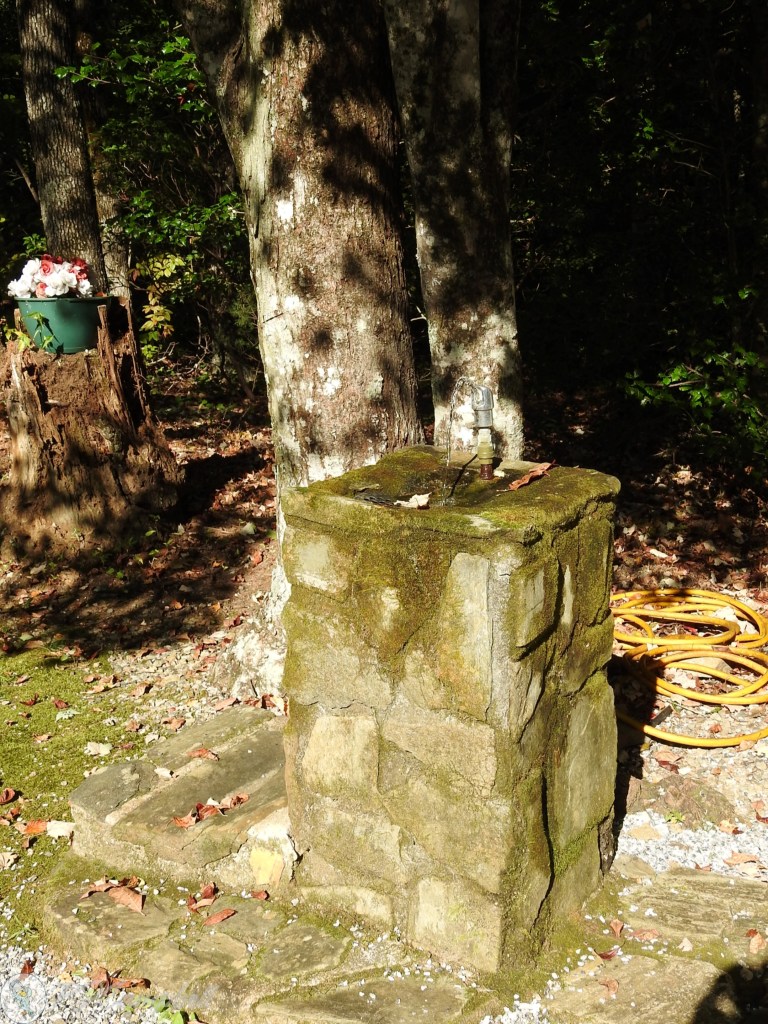
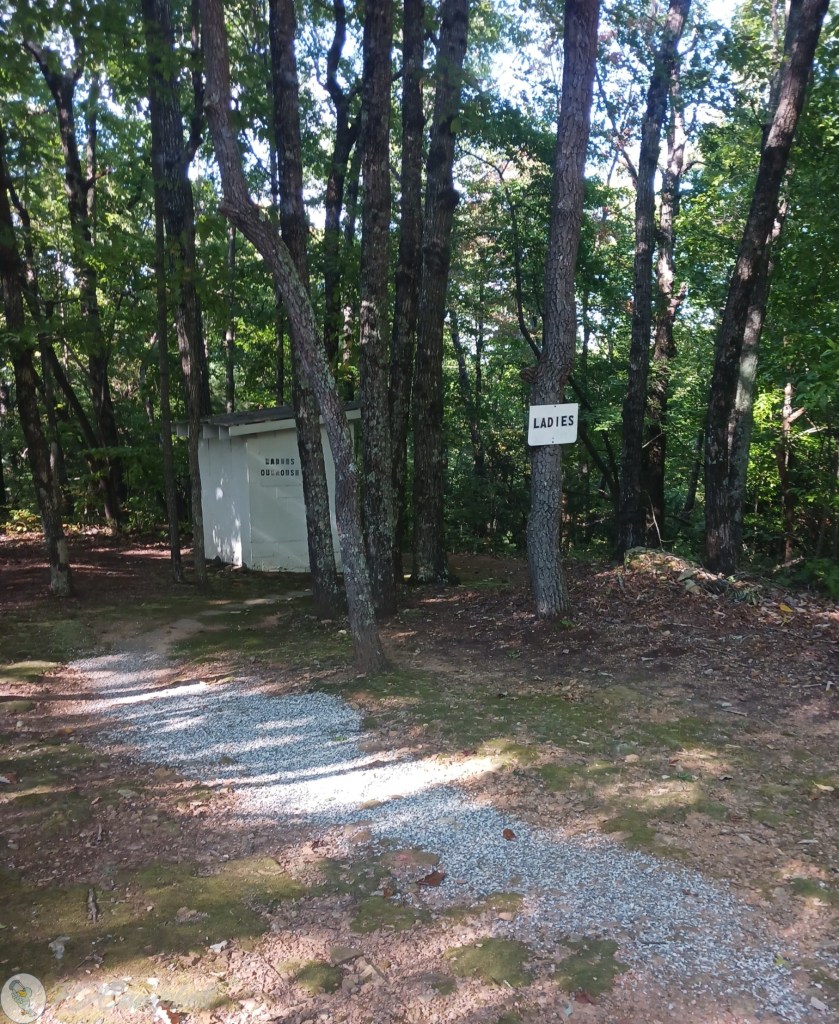
The current church building has no electricity or running water. Propane gas lanterns are used for evening services and heaters in the winter. Water from a nearby spring is pumped in for the outhouses.2

The people came back. As of 2015, it was reported that there are about sixty members with services held on the 3rd and the 5th Sundays each month.2

Things are not so quiet at the church nowadays. The local paper, Dawson Community News, reported on a bit of an unusual occurrence at a revival service held in 2015.2 Seems a great big ole rattlesnake was there to greet the worshippers when they arrived:

“A [big] rattlesnake with 14 rattlers was right beside the front door,” said Harold Evans. “It about scared our visiting pastor to death. But he did give us all a fine sermon that night afterwards.”2

I can only imagine that particular sermon.

Pastor Evans further reported:

“We’ve seen bears, copperheads, rattlers. We’re not that concerned about them up there. We know they’re there.”2   

In the country, I suppose you have to be prepared for just about everything.

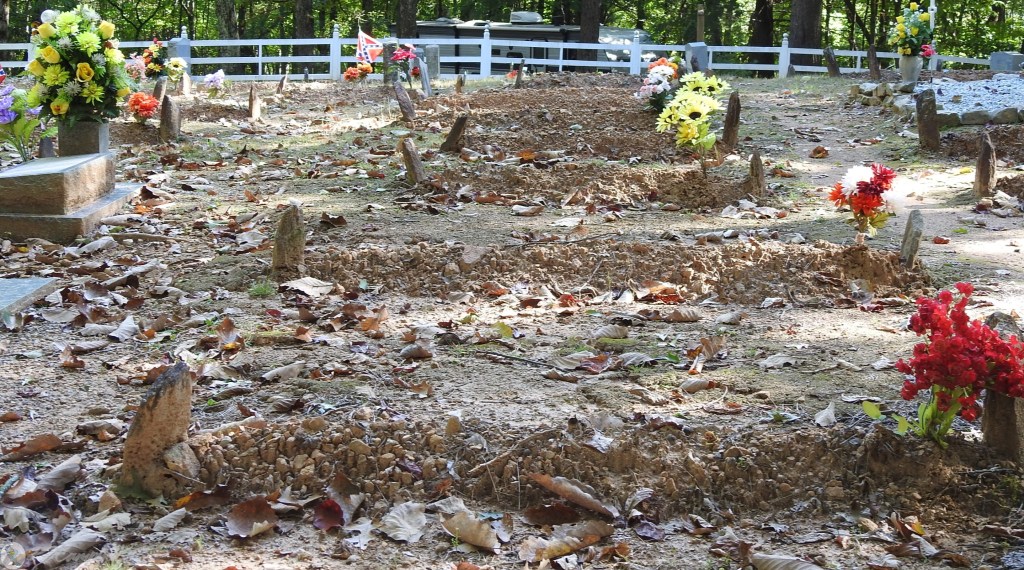
We wandered around the church and into the cemetery. (We didn’t see any snakes, thankfully!) The Georgia Genealogy Cemetery site reports there are approximately 32 unmarked graves and 11 marked graves.3   
Much to our delight, the church doors were unlocked, and we were able to look around inside. There were hymnals in the pews, cushions on the seats, and plenty of those “hand-powered cardboard fans” I remember so well from my childhood days in church.

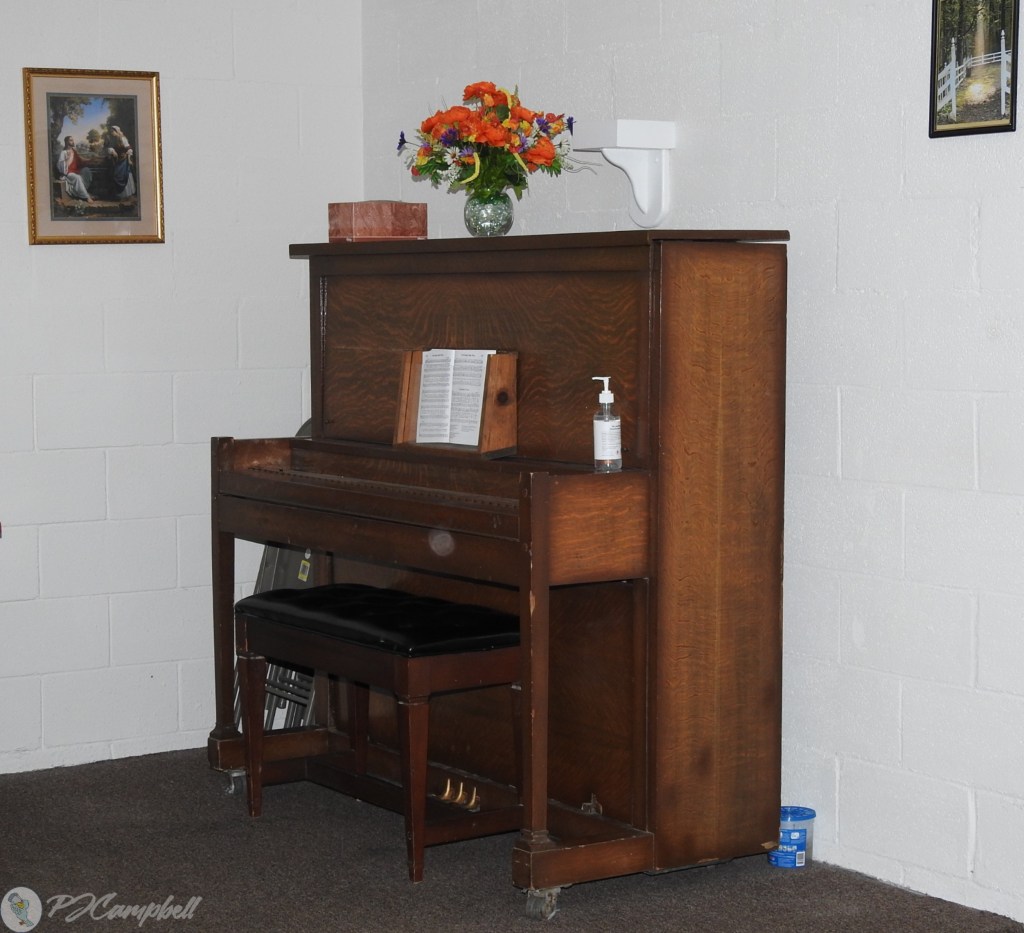
On the upright piano in the corner the hymnal was opened to page number 479, “Amazing Grace4

and nearby an old Bible was opened to the 23rd Psalm…..
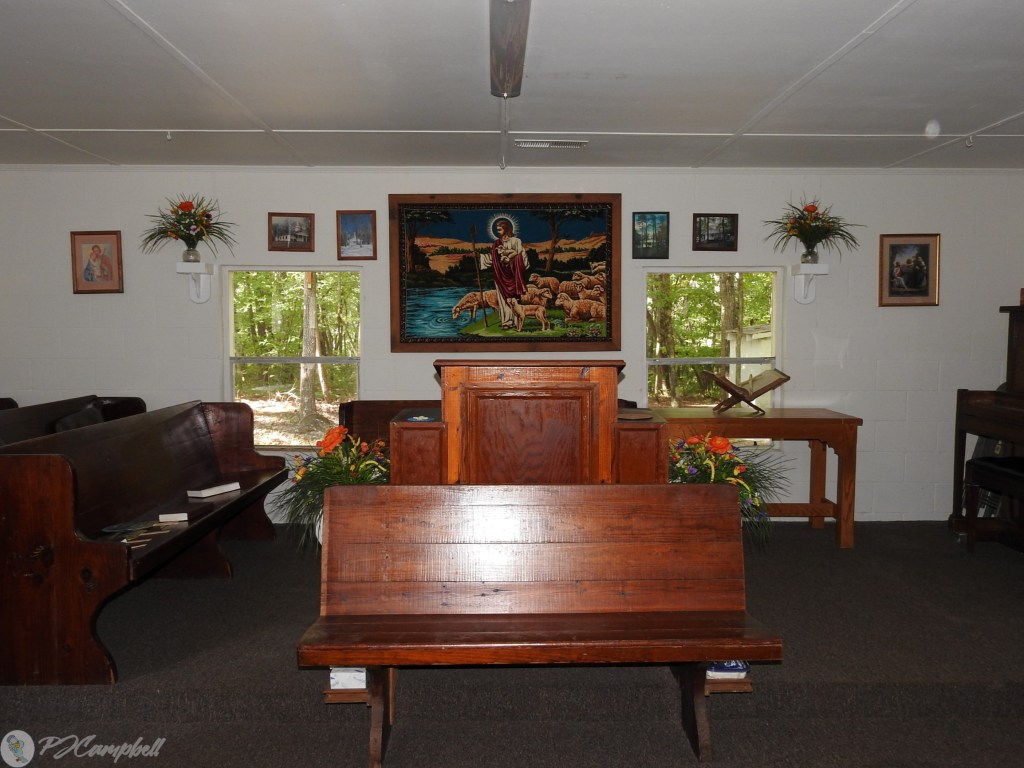
all waiting and ready for the pastor to step right in and begin the next sermon.

A Psalm of David.

1The LORD is my shepherd;

I shall not want.

2He makes me lie down in green pastures;

He leads me beside quiet waters.

3He restores my soul;

He guides me in the paths of righteousness

for the sake of His name.

4Even though I walk through

the valley of the shadow of death,

I will fear no evil,

for You are with me;

Your rod and Your staff, they comfort me.

5You prepare a table before me

in the presence of my enemies.

You anoint my head with oil;

my cup overflows.

6Surely goodness and mercy will follow me

all the days of my life,

and I will dwell

in the house of the LORD

forever.

It was all very beautiful, and we stopped together for a moment to pray before we continued on our way…a prayer of thankfulness and a hope that this church would continue to serve in God’s love and grace for many years to come.

Sources for Information:

  1. Primitive homeplace: High Shoals Baptist carries on long traditions – Gainesville Times; September 24, 2011
  2. Revival at mountain church has uninvited guest – Forsyth News, Dawson Community News; Michele Hester; August 21, 2015; Updated August 22, 2015
  3. High Shoals Church Cemetery, Dawson County Georgia – Georgia Genealogy
  4. Amazing Grace > Lyrics | John Newton (timelesstruths.org)
Blessings in a Garden

Series: Israel 2022 – Mount of Beatitudes

I come to the garden alone

While the dew is still on the roses

And the voice I hear

Falling on my ear,

The Son of God discloses….6

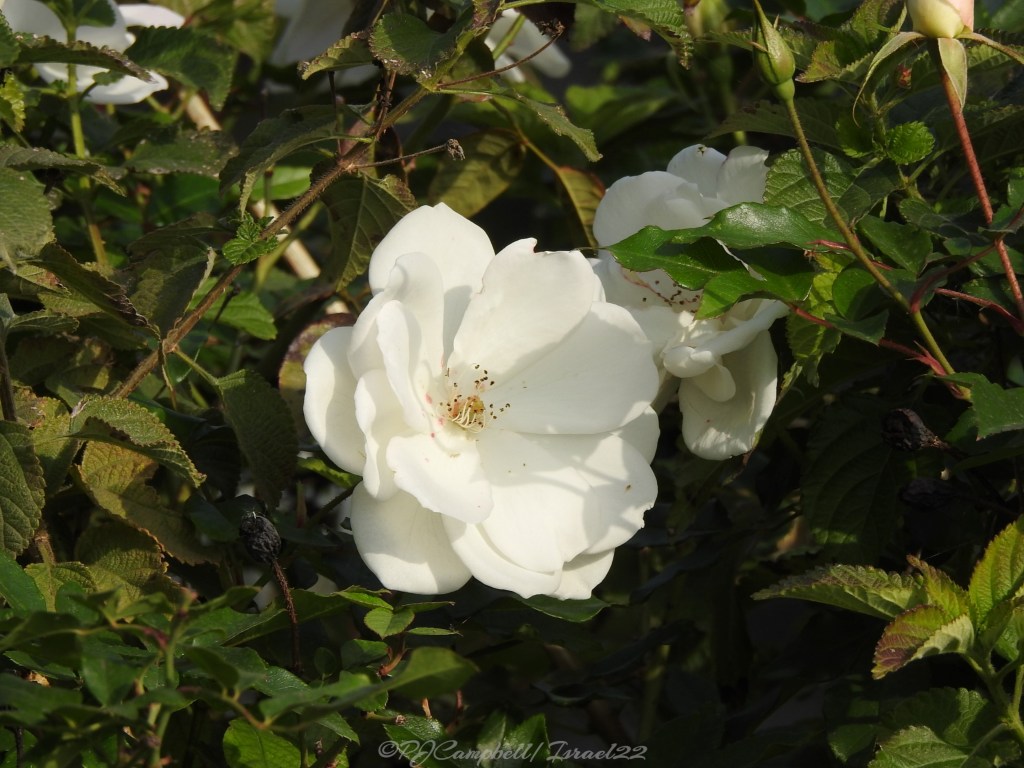
We have entered a beautiful garden on a hillside on the Korazim Plateau overlooking the Sea of Galilee. There are roses blooming along the walkway, birds flitting among the trees chirping and singing, bees and other pollinators buzzing among the blossoms adding a quiet hum to the peacefulness of the site. Even though it is February, the middle of winter, and there is snow on Mount Hermon to the north, here it feels like spring.

This “mount” we’ve come to is Mount Eremos and Har Ha Osher in Hebrew.1  I suppose it could hardly be called a mountain at all. This “mount” has a negative altitude. It is 200 meters above the Sea of Galilee but still 25 meters below sea level.  Mount Eremos is one of the lowest summits in the world.

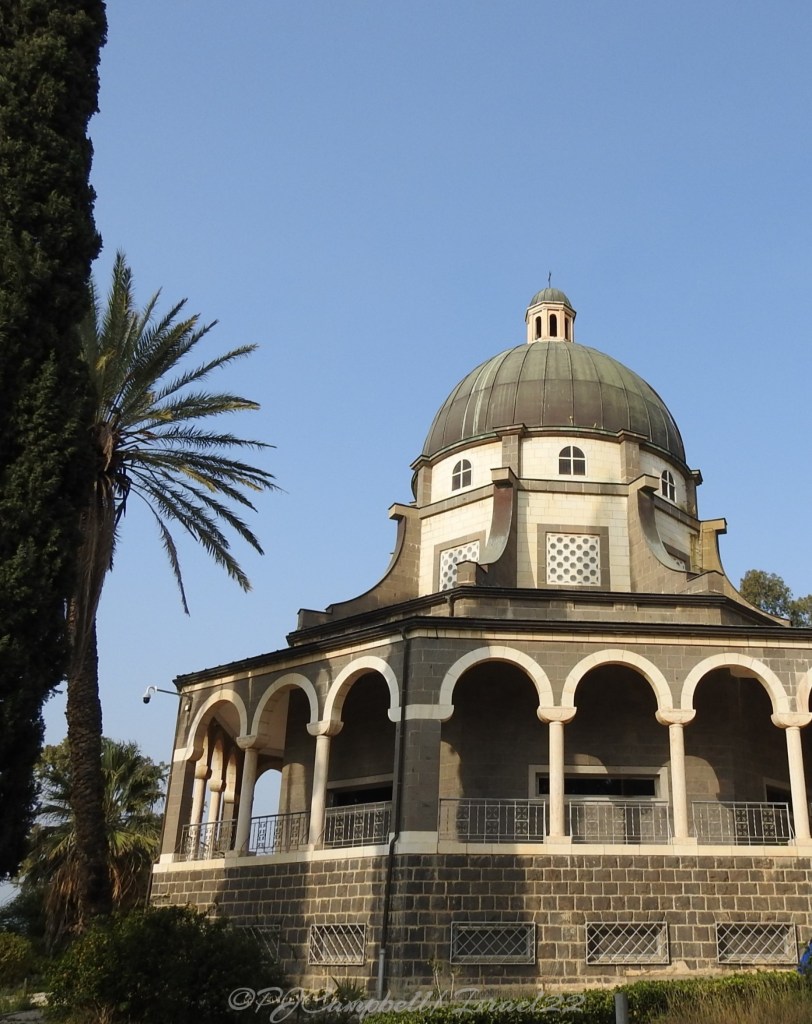
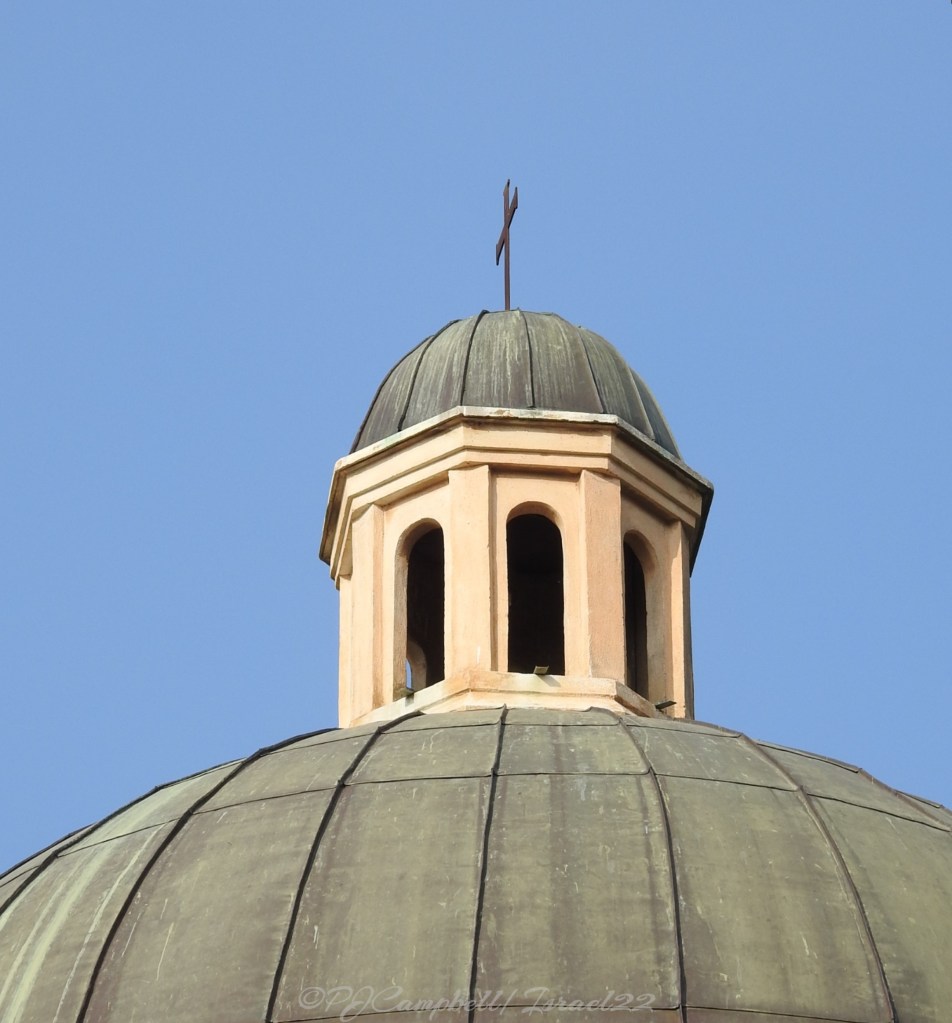
The Franciscan chapel that dominates the garden was built in 1937-38 over the ruins of a Byzantine chapel at the site that was used from the 4th through the 7th century.  It was the practice of the early Christian church to build chapels at sites in Israel associated with Jesus and His ministry. Only a few traces of the ancient monastery and cistern remain at the site.1

The Franciscan Chapel on the Mount of Beatitudes

The “new” chapel was designed by an Italian named Antonio Barluzzi commissioned by the Italian Mission Society…. with funding from Benito Mussolini…. yes, that Mussolini.2

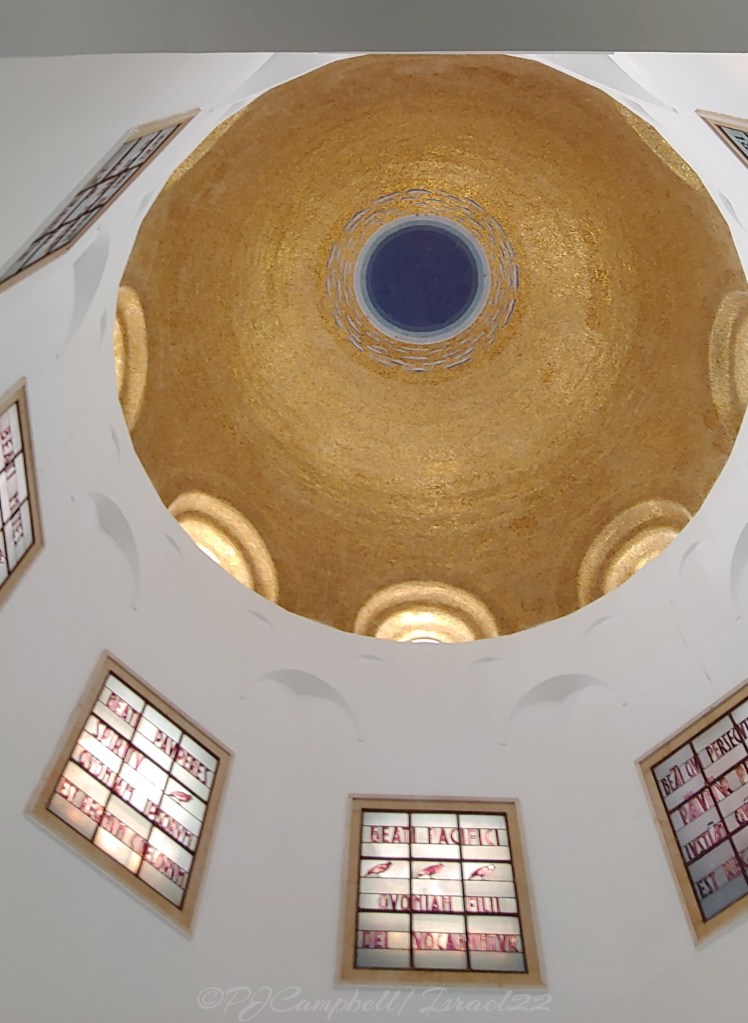
It is a lovely chapel built with 8 sides in a Neo-Byzantine style. It has marble veneer casing the lower interior walls and includes gold mosaic in the dome over the altar.

The golden dome inside the chapel.

The floor inside is circular around a central altar and includes mosaics for 7 virtues. Each stained-glass window is dedicated to and shows a single Beatitude written in Latin.2

For this is the Mount of the Beatitudes. While there is a 20th century chapel and garden with views all the way down to the Sea of Galilee, there is very little to identify this hillside as the one where Jesus sat and spoke to his disciples and a multitude of followers some two thousand years ago…nothing at all from the first century to commemorate what is today called “the Sermon on the Mount”.  

The floor mosaics around the altar show 7 virtues
and this one which says, “We adore you, Christ”.

The Sermon on the Mount is detailed in the Gospels, Matthew 5, 6, & 7 and Luke 6. It is the longest single discourse by Jesus memorialized in the Christian Bible. It is probably the most famous and most quoted of all the sermons recorded in the Bible or anywhere else for that matter. These three chapters in Matthew and corresponding chapters in Luke also include the “Lord’s Prayer” which absolutely has to be known by every Christian in the world today. (Okay, maybe the 23rd Psalm would be in the running for most famous and memorized passage, but I think it holds a distant second at best to the Lord’s Prayer.)8

Gateway overlooking the hillside of Mount Eremos

It may also be one of the most mis-quoted and maybe misunderstood passages in scripture. While reading and researching the Beatitudes (in both Matthew and in Luke where some call it the Sermon on the Plain4), I was amazed at how many different interpretations and applications I found. After two thousand years, theologians are still trying to understand what Jesus was saying that day on the hillside where He sat and taught those who followed Him.

At first read, it seems so simple…as is the way with most deeply complicated things. The Beatitudes include 9 blessings that focus on justice, faith, fortitude, hope, temperance, humility, compassion, meekness, charity, peace, and love… of course, love. Did Jesus not always preach love?

Mural inside the chapel showing Jesus teaching His followers.

I have read several translations but the pure poetry of the “blessed” verses in the King James Version (KJV) is what I grew up with and what I tend to remember.

3“Blessed are the poor in spirit,

for theirs is the kingdom of heaven.

4Blessed are those who mourn,

for they will be comforted.

5Blessed are the meek,

for they will inherit the earth.

6Blessed are those who hunger

and thirst for righteousness,

for they will be filled.

7Blessed are the merciful,

for they will be shown mercy.

8Blessed are the pure in heart,

for they will see God.

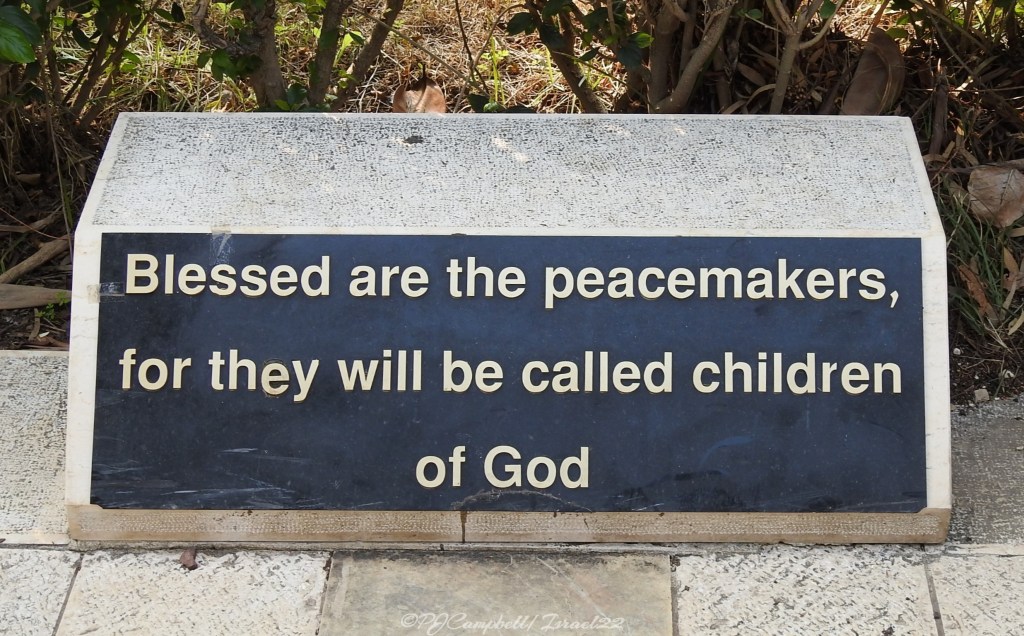
9Blessed are the peacemakers,

for they will be called sons of God.

10Blessed are those who are persecuted

because of righteousness,

for theirs is the kingdom of heaven.

11Blessed are you when people insult you,

 persecute you, and falsely say all kinds of evil

against you because of Me.

12Rejoice and be glad,

 because great is your reward in heaven;

for in the same way

they persecuted the prophets before you.

Matthew 5

The koine Greek word “makarios” used for Blessed can also mean “happy” or “fulfilled”.7 Some see the Beatitudes as a guide for living for Christians under the New Covenant.  Would that I could follow these tenets and be perfectly happy and fulfilled – perfectly righteous – all on my own! But, alas, I cannot. No one can. That was the point for the Jews in the first century and it is still relevant for all Christians today. You cannot do it on your own – the standard is too high — you need help – you need a Savior.

I walked there, in the garden on the hillside where Jesus (our Savior) might actually have come and sat down to teach this lesson. Scattered throughout the garden amongst the flowers were large plaques showing the Beatitudes in different languages of the world. 

There are other engraved stones about that have a single Beatitude inviting contemplation of just one “blessing” at a time.

It is a place for meditation, a place to consider those “blessed” words. A place to pray and to talk to God and to listen for that still small voice as God responds.

“And He walks with me, and He talks with me,

And He tells me I am His own,

And the joy we share as we tarry there,

None other, has ever, known!” 5&6

Dr. Bremer from Dallas Theological Seminary (DTS) teaches at the Mount of the Beatitudes.

Scriptural Sources:

  1. Matthew 5:3-12
  2. Luke 6:20-23

Sources and References:

  1. Mount of Beatitudes – Wikipedia
  2. Church of the Beatitudes – Wikipedia
  3. New Testament places associated with Jesus – Wikipedia
  4. Ministry of Jesus – Wikipedia
  5. In The Garden – Lyrics, Hymn Meaning and Story (godtube.com)
  6. In the Garden, C Austin Miles, 1912 (Public Domain)
  7. Strong’s Concordance 3107, Interlinear Bible, Greek – “makarios”, Helps Word Studies 3107
  8. Sermon on the Mount – Wikipedia
  9. The Holy Land for Christian Travelers, John A. Beck, 2017, Baker Books, Baker Publishing Group, Grand Rapids, MI, www.bakerbooks.com , USA, Mount of the Beatitudes, p218 (This book can be purchased on Amazon.com)

ICYMI (In case you missed it) – Previous blogs in the Israel 2022 series:

Israel 2022: Pinch Yourself – April 4, 2022

Israel 2022: Caesarea Maritima – April 11, 2022

Israel 2022: Contested on Mount Carmel – April 20, 2022

Israel 2022: In This Valley – April 30, 2022

Israel 2022: Sea of Galilee – May 9, 2022

Israel 2022: A Very Old Boat – May 31, 2022

Israel 2022: A Blessing & A Curse – Capernaum – June 20, 2022

Israel 2022: One Little Boy Named David – July 5, 2022

Israel 2022: The Gates of Hell – July 23, 2022