The Stacks

They came in 1741 to find a place of their own, a home for their families, and a place where they could live in peace and worship God in freedom and reverence. Nicolaus Zinzendorf and David Nitschmann led a small group of Moravians to a fertile valley at the confluence of the Monocacy and Lehigh Rivers in eastern Pennsylvania. The story goes that Nicolaus (a bishop of the Moravian church) noted how the beautiful night sky reminded him of the birthplace of Jesus and so the newly founded mission site was christened “Bethlehem” on Christmas Eve in 1741.2 Not surprisingly, it was here in this small village that local history records that the first decorated Christmas tree in the United States was displayed.1 (Bethlehem is just one of several Pennsylvania towns inspired by Biblical sites such as Emmaus, Jordon Creek, and Nazareth.)2
The Moravians ministered to the Lenape Native Americans2 in the area and established a growing religious community in the area that continues today. But the peacefulness they sought in that valley would not linger too many years before the Industrial Revolution and its entrepreneurs found that the town was ideal for new things and progress on a different front. Nearby Allentown just northwest of Bethlehem was founded in 1762 and iron ore was discovered there in the 1840s3. Iron ore – pig iron – the main component in making steel…. steel which was needed by a young country on the move in order to build the bridges and buildings and ships and weapons that would be needed to prosper.

The Lehigh River at 109 miles long is a tributary of the Delaware River and ultimately the Delaware Bay – perfect for shipping goods down to Philadelphia and via the Atlantic to all parts of the world.

Both Allentown and Bethlehem became vibrant steel-producing cities. (Now, doesn’t that get you to humming Billy Joel’s “Allentown4?)

Not to overwhelm you with too much history….but the first iron works facility was built – Saucona Iron Works – in Bethlehem on the Lehigh River in 1857. The name was later changed to Bethlehem Iron Works in 1861 and finally to Bethlehem Steel in 1899. Bethlehem Steel, which would quickly become one of the world’s largest steel producing and shipbuilding companies.
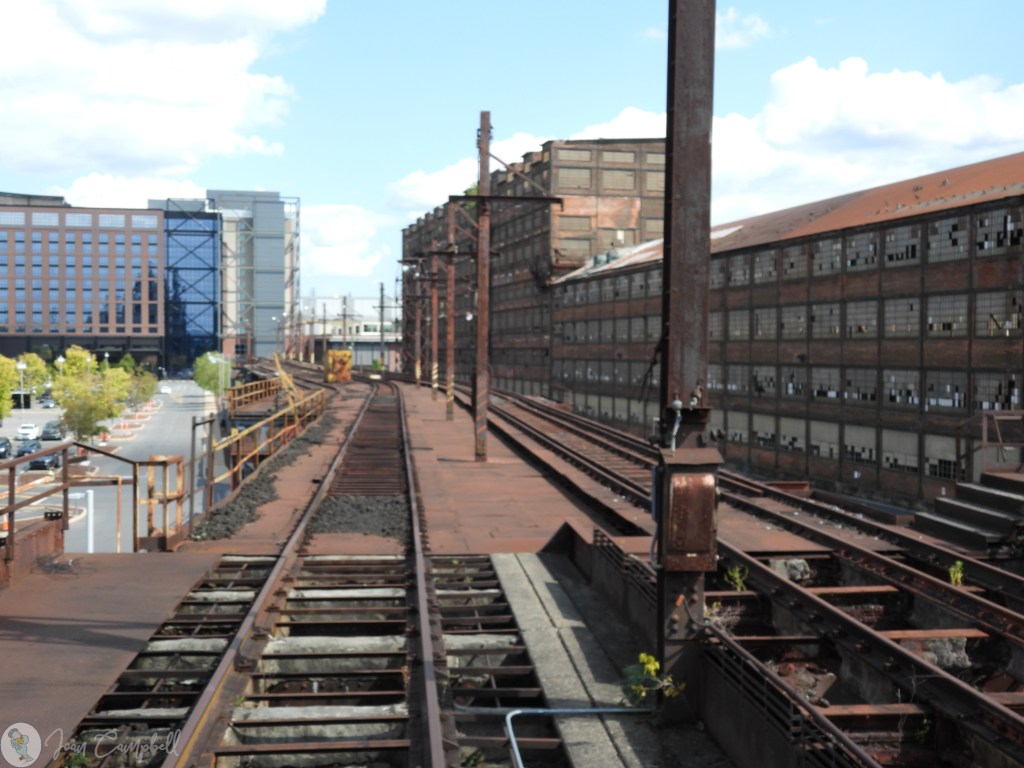
Machine Shop #2 – Just about 1/3 of a mile long.

Once incorporated, Bethlehem’s first elected mayor was Archibald Johnston, not surprisingly, a Bethlehem Steel executive2.
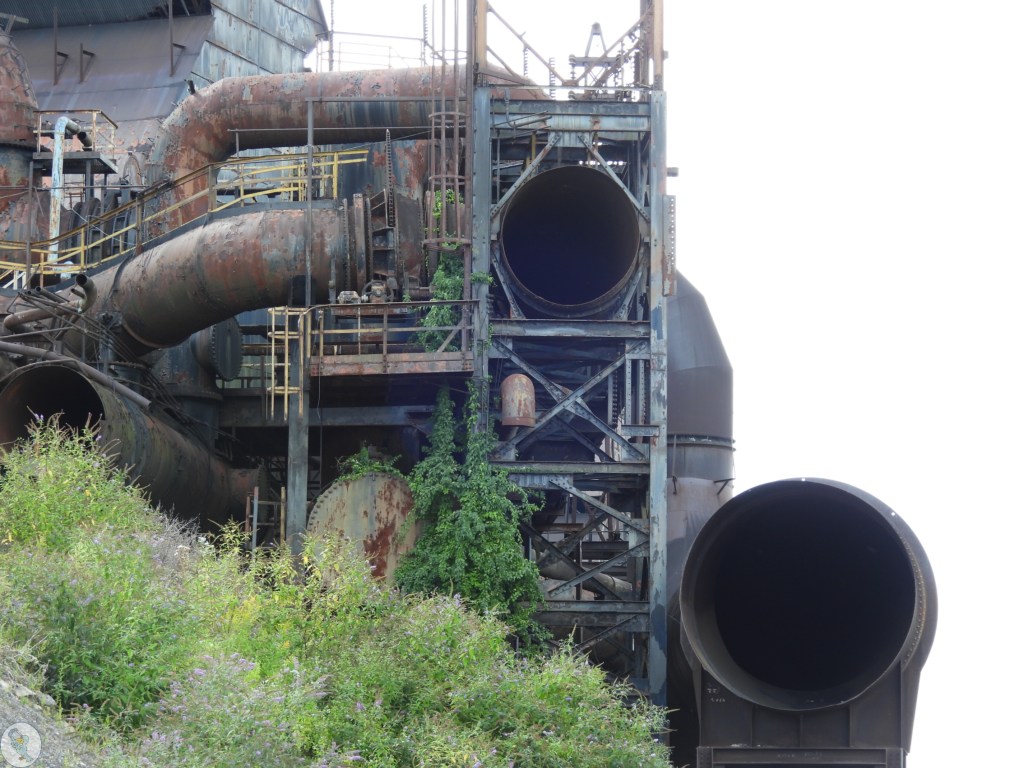
During its time, Bethlehem Steel would prosper –  “Among major buildings, Bethlehem produced steel for 28 Liberty Street, the Empire State BuildingMadison Square GardenRockefeller Center, and the Waldorf Astoria hotel in New York City and Merchandise Mart in Chicago. Among major bridges, Bethlehem’s steel was used in constructing the George Washington Bridge and Verrazzano-Narrows Bridge in New York City, the Golden Gate Bridge in San Francisco, and the Peace Bridge between Buffalo and Fort Erie, Ontario.”2  
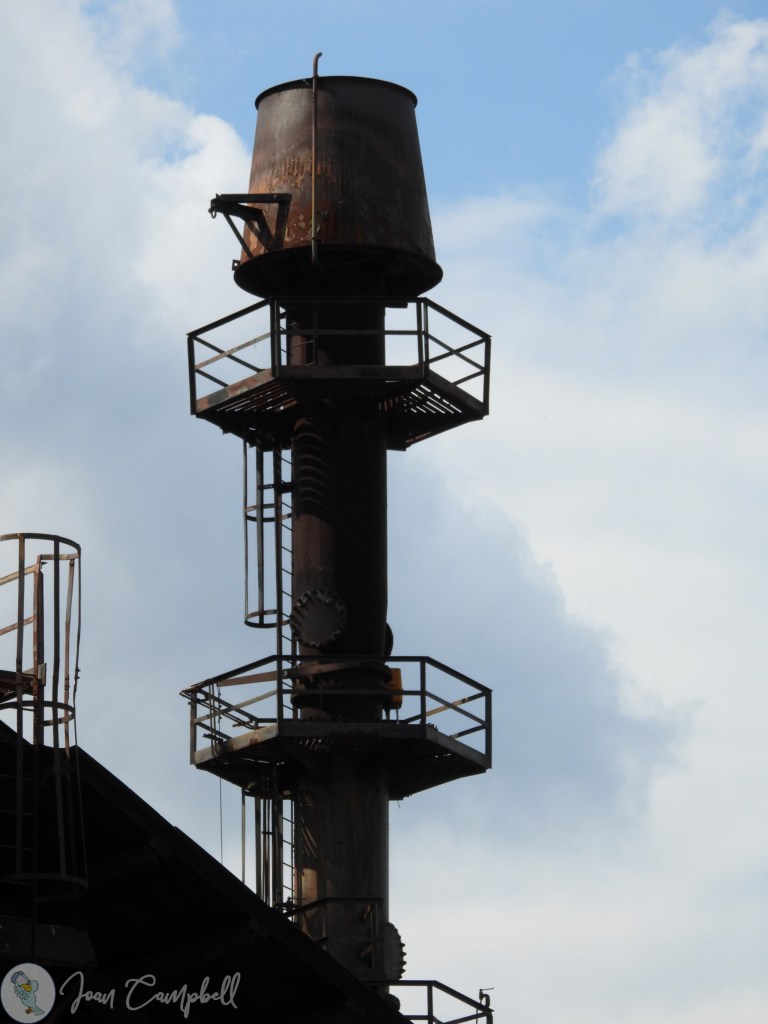
My personal favorite on the list of accomplishments was provision of the iron that was used to build the 45.5’ steel axle for the world’s first Ferris wheel (264’ tall) created for the 1893 Chicago World’s Fair.2
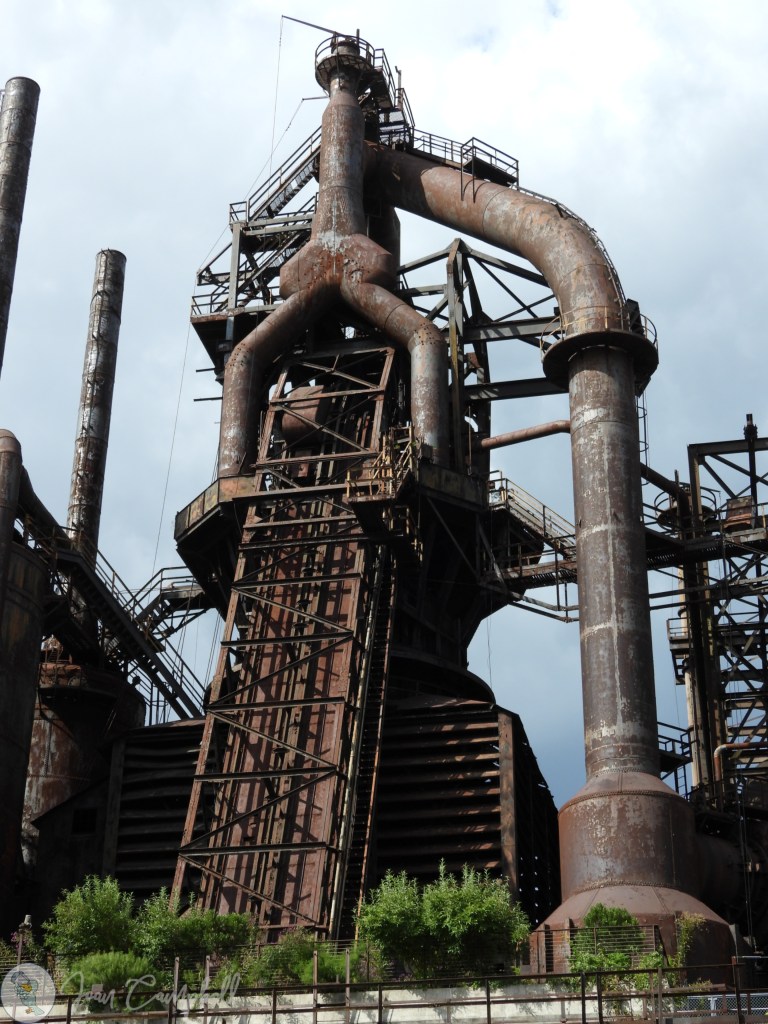
While the Moravian community up on the hill would continue, it was Bethlehem Steel with its manufacturing plants at Sparrows Point, Maryland, Johnstown, Pennsylvania, Lackawanna, New York, and Burns Harbor, Indiana, that would dominate the growth and economy of the little town for more than 140 years until its closure.

So, all good things must end, I suppose, and that would include Bethlehem Steel (later to be merged with US Steel). The great furnaces that roared continuously night and day for eighty-one years from the first firing in 1863 were silenced forever in 1982. Finally, in 2003, the once mighty Bethlehem Steel was done.
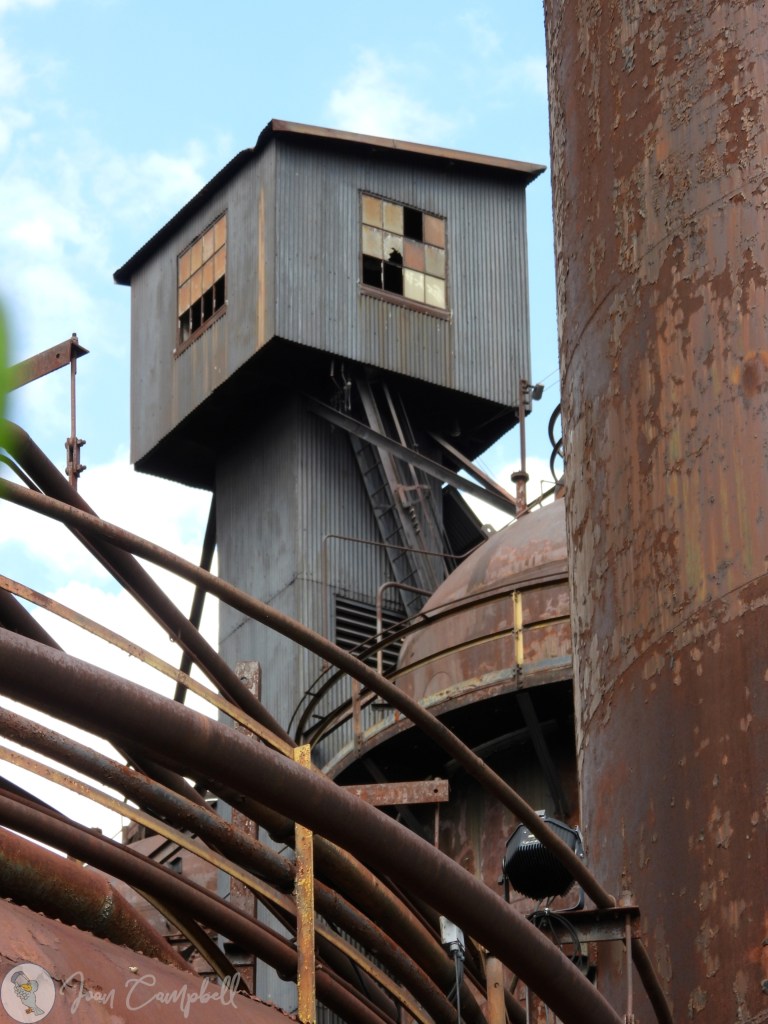
It seems that there were many reasons for the demise of this great company – bad investments, mismanagement of pension plans, increasing competition from overseas companies, rising labor costs, less labor available altogether…. the list is a long one.
Today, Bethlehem is quiet and again (for the most part). The town itself thrives and is home to two universities – Lehigh University and the Moravian University.

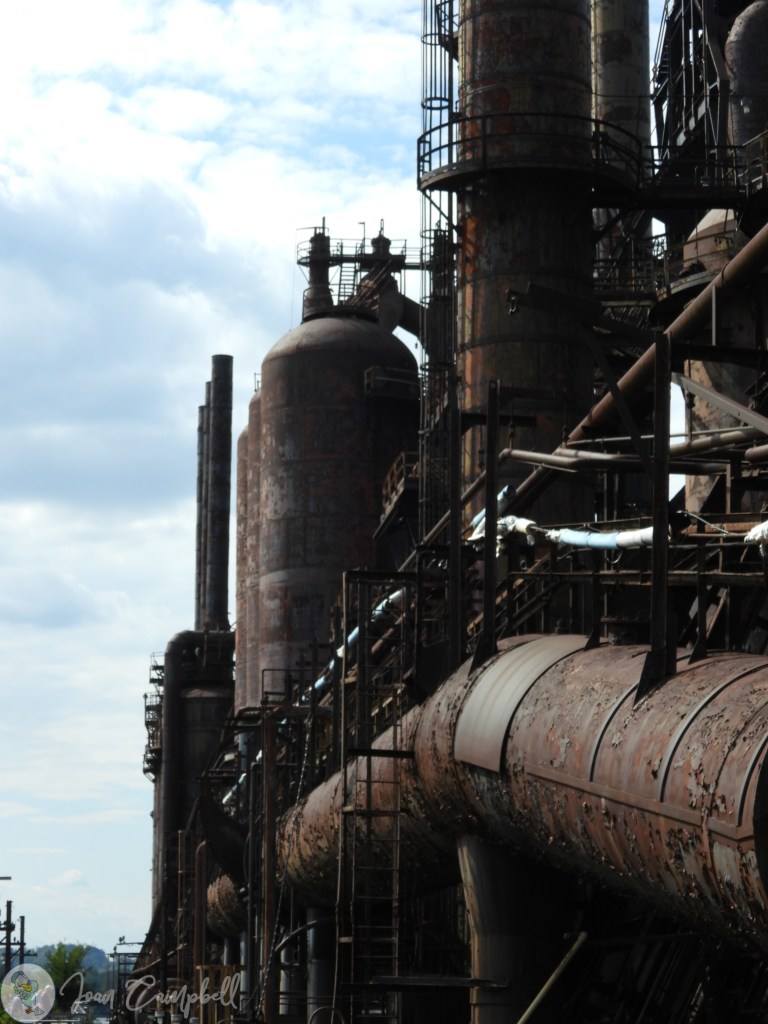
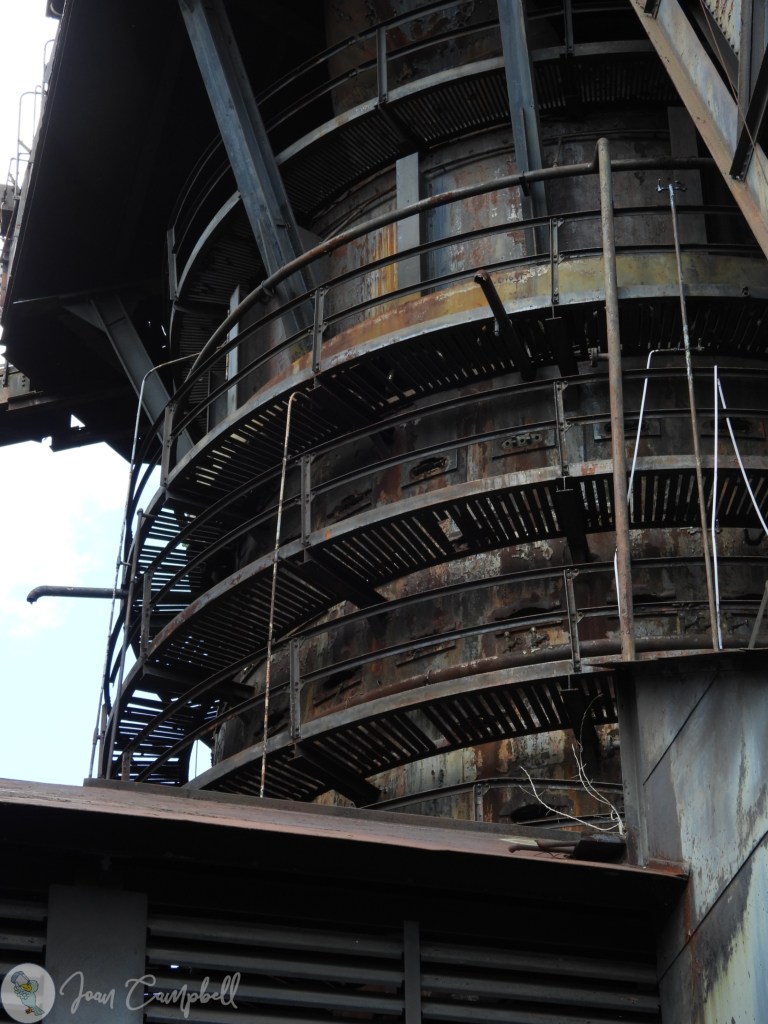
As for the steel industry, the town has preserved its history in “The Steel Stacks” that remain down by the river. The area has been transformed into a park and event venue that is dominated by the old steel furnaces and industrial buildings. Most of the buildings are slowly but surely rotting away. All have been fenced in for safety of visitors and are no longer accessible. The “Stacks” themselves are also fenced in, but a catwalk has been built alongside the old infrastructure where visitors can walk and view the rusting furnaces of the abandoned mill. We spent an afternoon exploring the park and strolling along the catwalk gazing in amazement at the size and sheer “presence” of the steel stacks that dominated this valley for so many years.
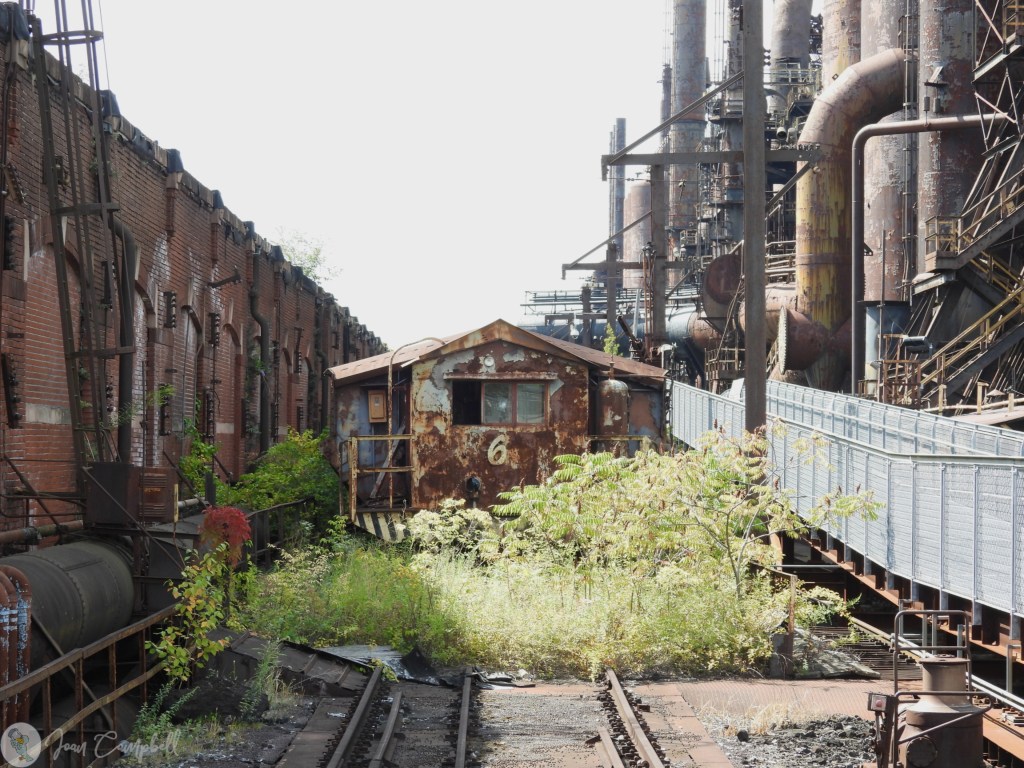
As Billy Joel sang of “Allentown3, you might also sing for Bethlehem, still vibrant but peaceful again after all these years.

Now you’re singing, right? So, take a moment – stop & listen: Billy Joel – Allentown (Official Video)

Bethlehem is in Pennsylvania just about 45 miles west of Philadelphia, 72 miles south of New York City, 197 miles northeast of Washington DC, and 149 miles northeast of Baltimore – easy to find and only a couple hours’ drive – just right for a daytrip. There is also a small museum at the site where you can learn lots more about Bethlehem Steel and enjoy a guided walking tour along the catwalk.

Sources for Information:
  1. Bethlehem, Pennsylvania – Wikipedia
  2. Bethlehem Steel – Wikipedia
  3. Allentown, Pennsylvania – Wikipedia
  4. Billy Joel – Allentown Lyrics | Genius Lyrics

Mama Prayed Here – The Ridge Church

I love old churches. They remind me of old hymns – Amazing Grace2, Be Still My Soul3, Victory in Jesus3 – all the old ones we carry around in our hearts and sing when we are in the most need of a good blessing. When I think of The Ridge Church, it’s The Church in the Wildwood1.

Although The Ridge Church is little, it is not “brown”, but I think of this song when I remember the church itself. Something about the lyrics and the melody just brings this church to my mind.

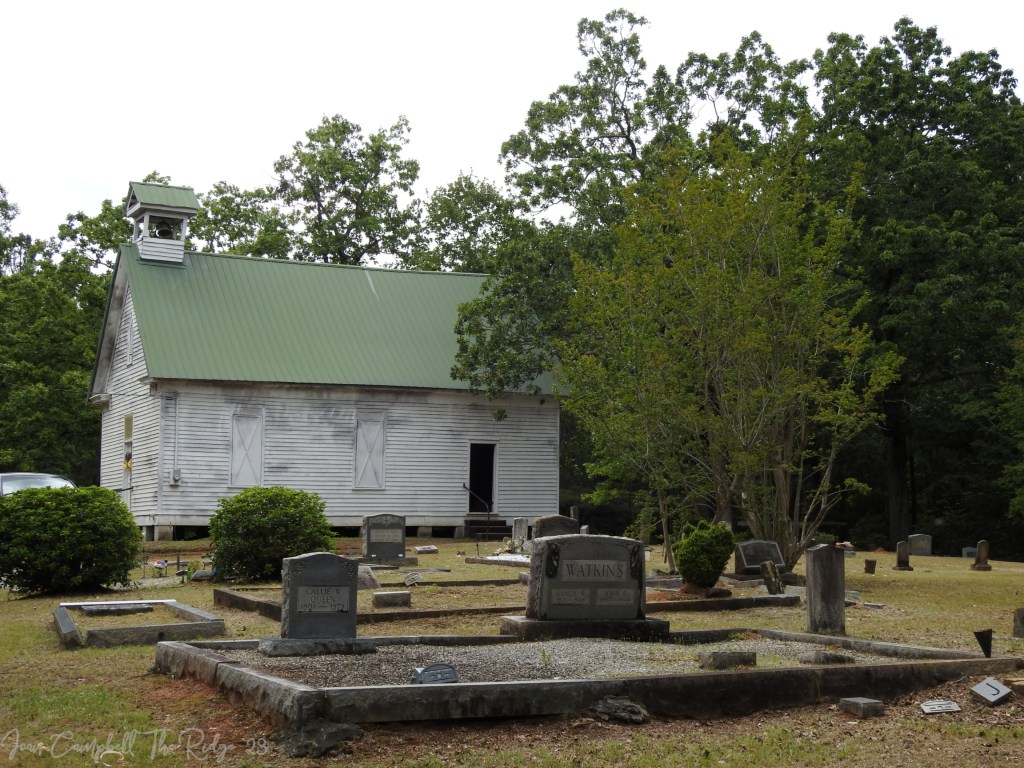
The Ridge – a little church in the “wildwoods” out there in the middle of nowhere in South Carolina. I should know more about this church – you’d think I would have more memories of it. Rarely have I been there – only a handful of times when I went to family reunions all as an adult. But it is nonetheless a part of me, and I think of it as Mama’s church.

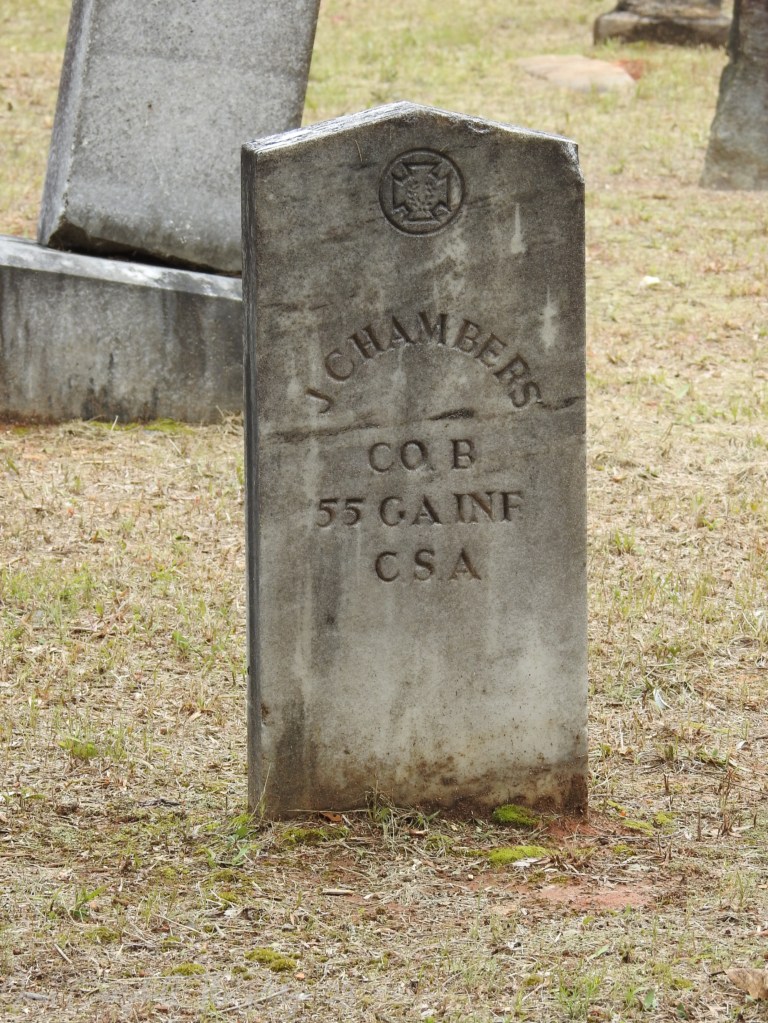
Now, having said all that, I do not know how much Mama went to church there when she was a child or if she went to church there at all. So, why write about the church and indicate it was the church where mama prayed? Well, because it’s in Lowndesville and that is where she was born and where she grew up; Lowndesville is where she came from; and The Ridge is where her ancestors probably would have worshipped, where many of them are now laid to rest. The cemetery by the church is filled with Mama’s ancestors. My grandparents are buried there along with a good number of aunts, uncles and cousins. The names on the tombstones attest to their lives in Lowndesville and Iva and Abbeville…..all remind me that they are my Mama’s people; and, yes, they are my people too resting in peace there giving me a sense of the familiar, of home…and of Mama.

When you search online you can find a good bit about Lowndesville and the surrounding area but very little about The Ridge Church itself. Like many small churches that are no longer active, very little of the church history seems to have been written down or memorialized. Lowndesville itself is a “small” town. When I say that, I mean it is way smaller than any one-horse town you’ve heard of. As far as I know, Mama’s daddy was a sharecropper at the turn of the century, at a time when things were going well for farmers in the south and cotton was still king…..right up until the Great Depression. Prior to the depression, the town seems to have been a relatively prosperous railroad town….prosperous enough that the Southern Railway could pay for a belfry with a brass bell for a little church out in the woods a few miles outside of town.

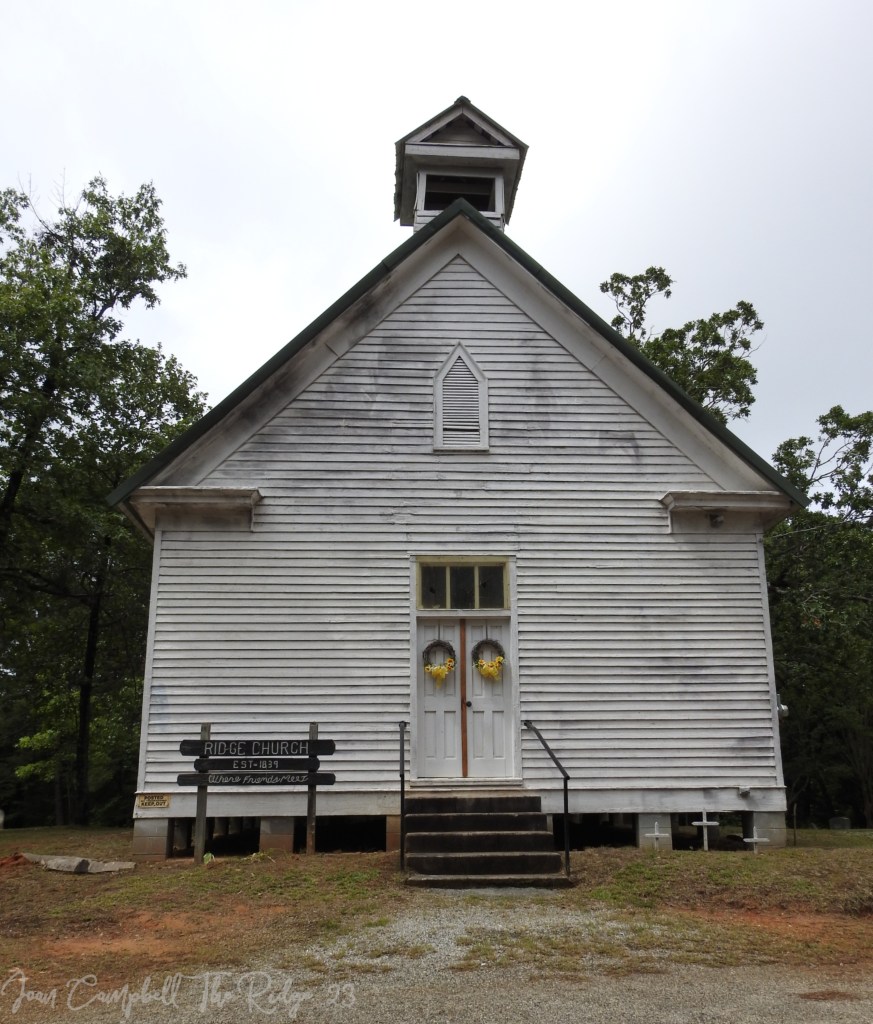
The congregation was established in 1839 and first met under a brush arbor. For those who’ve never heard of a brush arbor, it is an outdoor meeting place – open sided – made of wooden poles with tree limbs (brush) across the top, where people met to worship God and have church meetings…think tent revivals but much earlier and more rustic. In 1840, a log house was constructed with pews of hewn logs with wooden pegs5. It was known then as the Ridge Meeting House and in 1890 the present church was built. This would be the church that I have come to know and the one that Mama would have known.

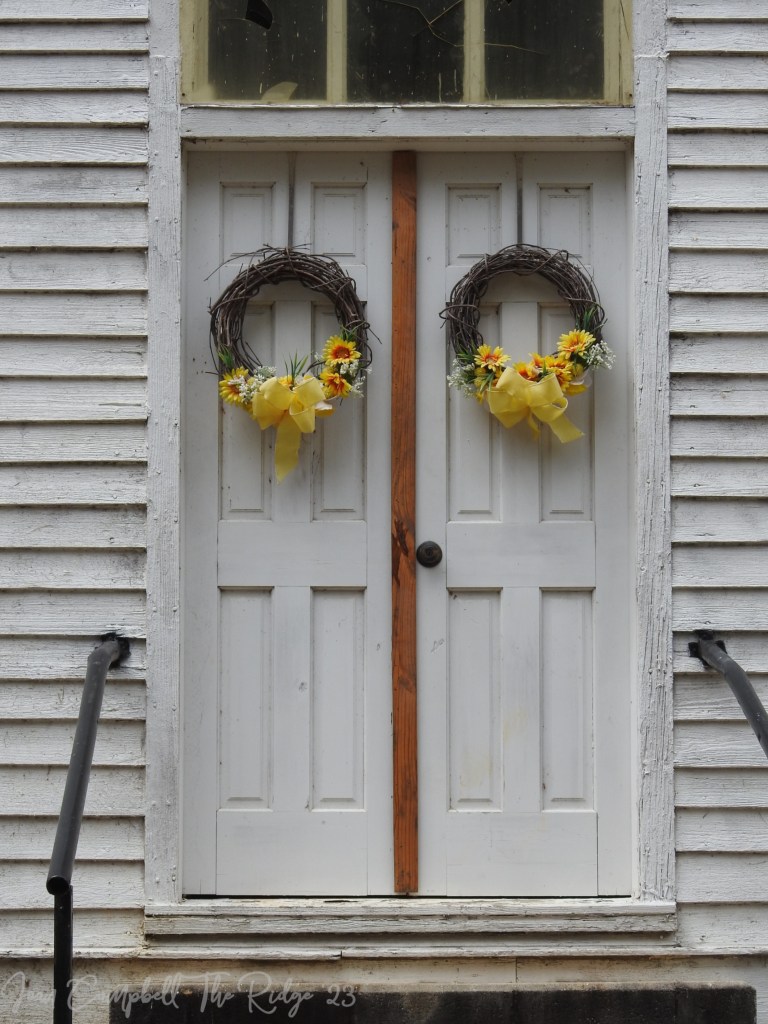
Sad to say, the church itself has become somewhat easier to find nowadays because it has been desecrated by vandals and some errant bloggers have made it a bit famous by telling the world online that the church is haunted so every year around Halloween, miscreants try to find it to desecrate it some more. Fortunately, The Ridge is now owned and managed by the Smyrna Methodist Church in town, and a locked gate on the roadway going up to the church has made it more difficult to get to the old church. Additionally, the doors are now kept locked and the windows have all been boarded up. The congregation at Smyrna provides for the ongoing upkeep of the church and the cemetery – sadly that includes painting over the smut left by vandals. Smyrna Methodist also holds special services at The Ridge several times a year including a candlelight service at Christmas.

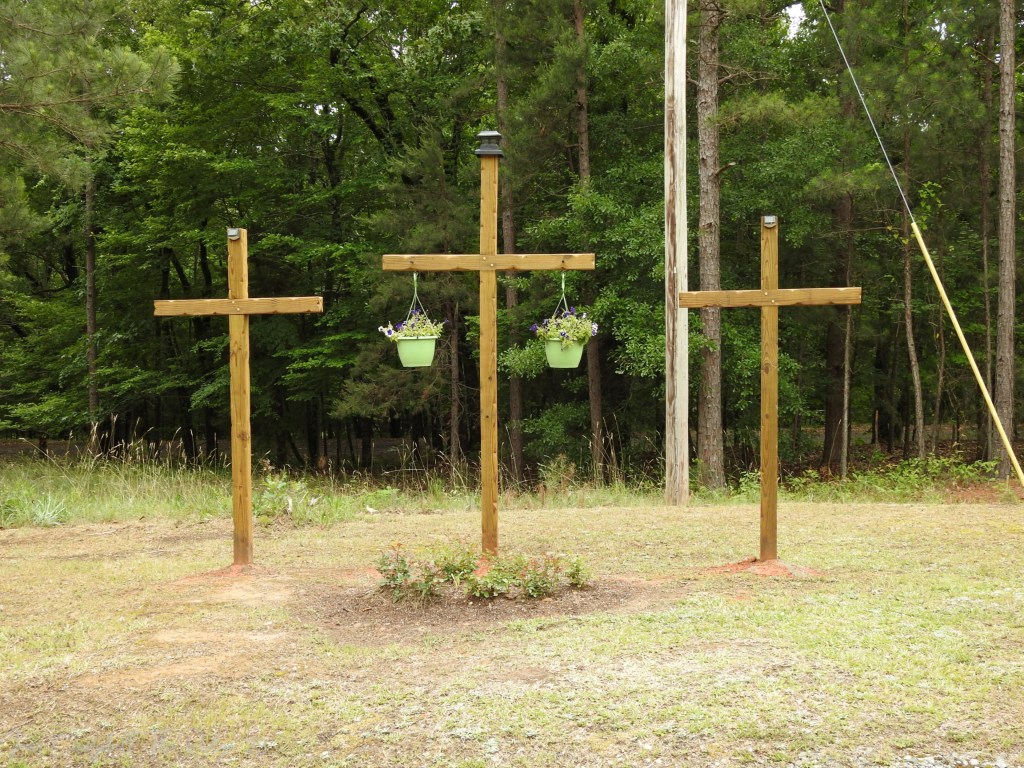
My personal memories of Lowndesville and The Ridge Church are much more recent. When we have attended family reunions in the past, we always go over to the Ridge Church after dinner on Sunday….and it is always a good visit. The church is quiet and peaceful and beautiful in its simplicity – just an old wooden church sitting in the trees back off a dirt road in the middle of nowhere.

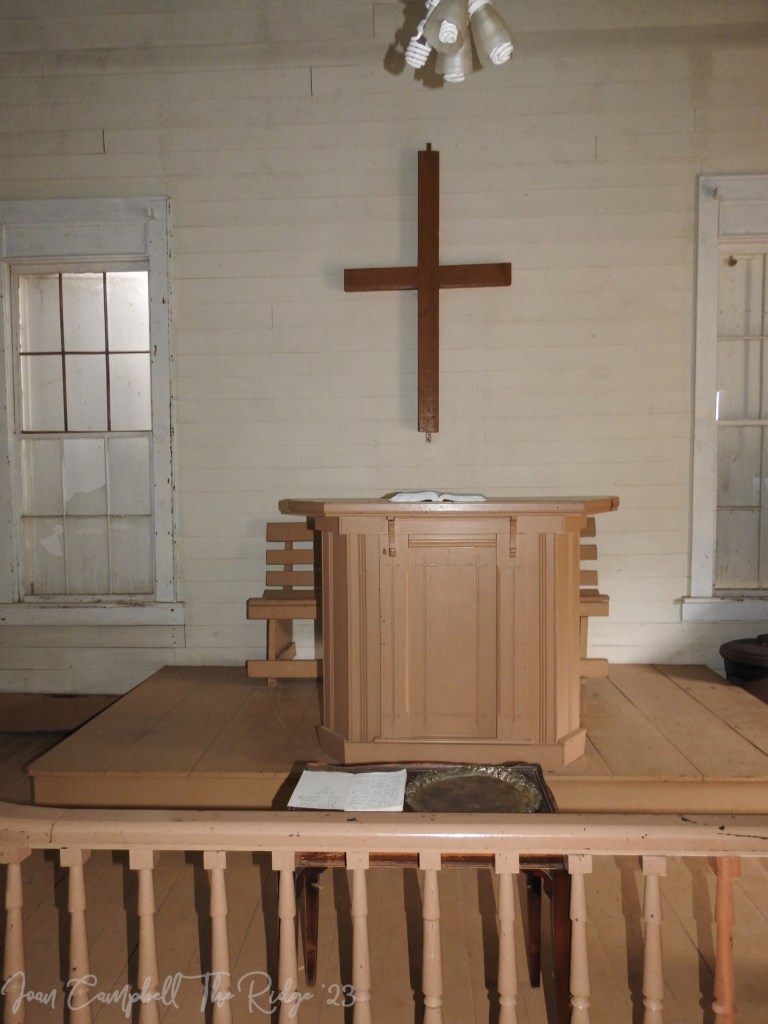
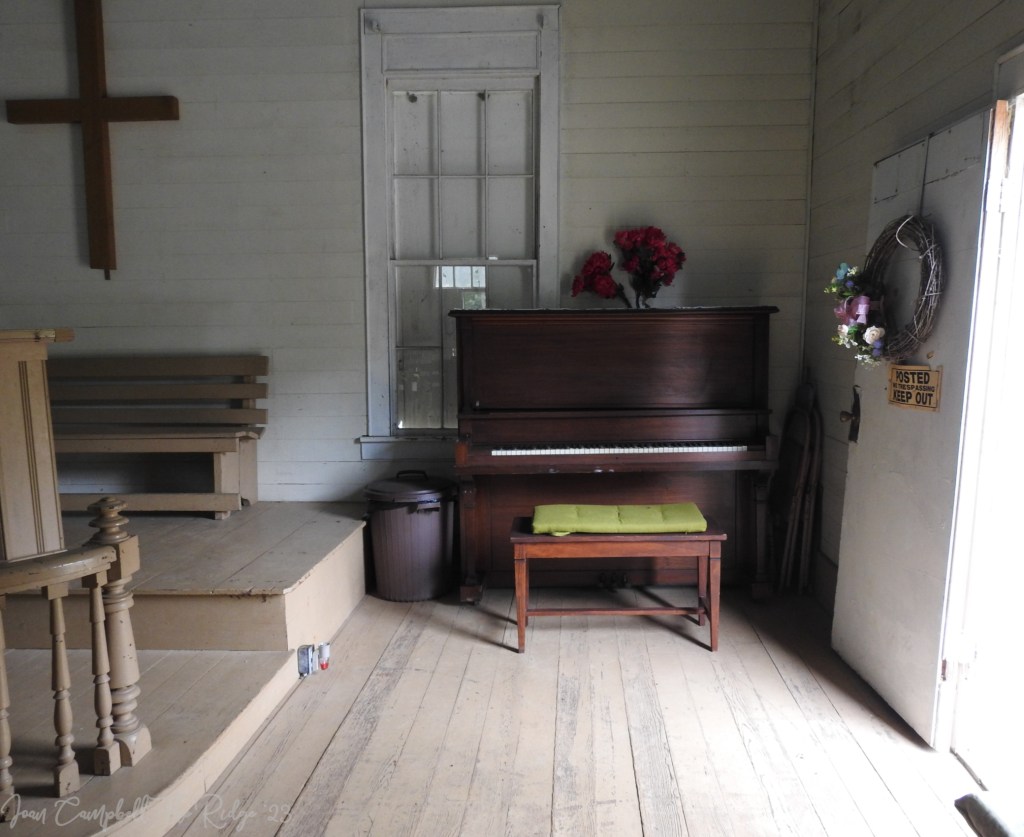
When I think of it now, I think of my cousin playing the piano while we gather around to sing a few old hymns. I remember my sister standing right there by him singing away while pointing her cane sternly at any of her grandkids who might have even a single thought to misbehave. Before we leave the church, we gather around the pulpit to pray for blessings and safe travels for all the cousins as we head back home later in the evening. Perhaps we prayed standing very near the spot where Mama would have sat with her sisters as a young girl, prayed for her family and maybe prayed for her future and the children she might have….perhaps she prayed that they might someday make their way back to her home in Lowndesville and to The Ridge Church “Where Friends Meet”.

Notes:

  1. THE BROWNS – THE CHURCH IN THE WILDWOOD LYRICS
    1. The Church in the Wildwood – Wikipedia
  2. Amazing Grace > Lyrics | John Newton
  3. Be Still, My Soul > Lyrics | Katharina A. von Schlegel
  4. Victory in Jesus > Lyrics | Eugene M. Bartlett
  5. I did find a blog written by a lady (Donna Bratcher) who lives down in South Carolina and writes about old buildings and churches there. Her blog is called Faded and Forgotten History. She was kind enough to send me an article from an old newspaper that she had used as a source for her blog, so I do have that bit of information. (If you’d like to read her blog about The Ridge Church, you can find it here.)